Preparing Your Dog for a Baby — The Work That Happens in Pregnancy, Not After

The arrival of a baby is the single biggest household change a dog experiences in its life. Routines fall apart overnight, exhausted parents give the dog less attention than they ever have, strange sounds and smells fill the house, and the dog is expected to navigate it all without any explanation and without acting out. Most dogs do navigate it, often beautifully. Some don't. The difference is almost entirely in what the household did in the months before the baby arrived — not in what happens once the baby is home.
This is the honest guide for expectant parents in regional South Australia. It covers the preparation that actually matters, the warning signs that mean your dog isn't coping, the first-meeting protocol that avoids the common mistakes, and the specific household patterns that keep a dog safe around an infant. The goal is not a dog that tolerates the baby. The goal is a dog that experiences the baby as a normal and non-threatening part of its household from day one.
The honest reality of why dogs struggle with new babies
Dogs read the household's state continuously. Through pregnancy, the household's state changes dramatically — tiredness, nausea, stress, hormonal shifts, a slowing-down of the walks and routines that used to anchor the dog's day. By the third trimester most dogs are already uncertain about what has changed and what is coming. They can smell the hormonal shifts well before any human in the household can.
Then the baby arrives. The dog is suddenly getting a fraction of its previous attention. The household's energy swings between exhaustion and acute vigilance. Strange cries and smells. Equipment appearing — prams, bouncers, cots. Visitors coming and going in waves. For a dog whose leadership structure is strong, this is a strange patch that gets normalised in a few weeks. For a dog whose leadership structure is loose, it is the catalyst for behaviours the household has never seen before: barking, destruction, separation anxiety, resource guarding, reactivity, occasionally snapping.
The window to prepare the dog is pregnancy — ideally the second trimester onwards. Trying to teach a dog to cope with a baby after the baby has arrived is possible but much harder, because the household is now at reduced capacity to deliver the structure the dog needs.
What to do before the baby arrives
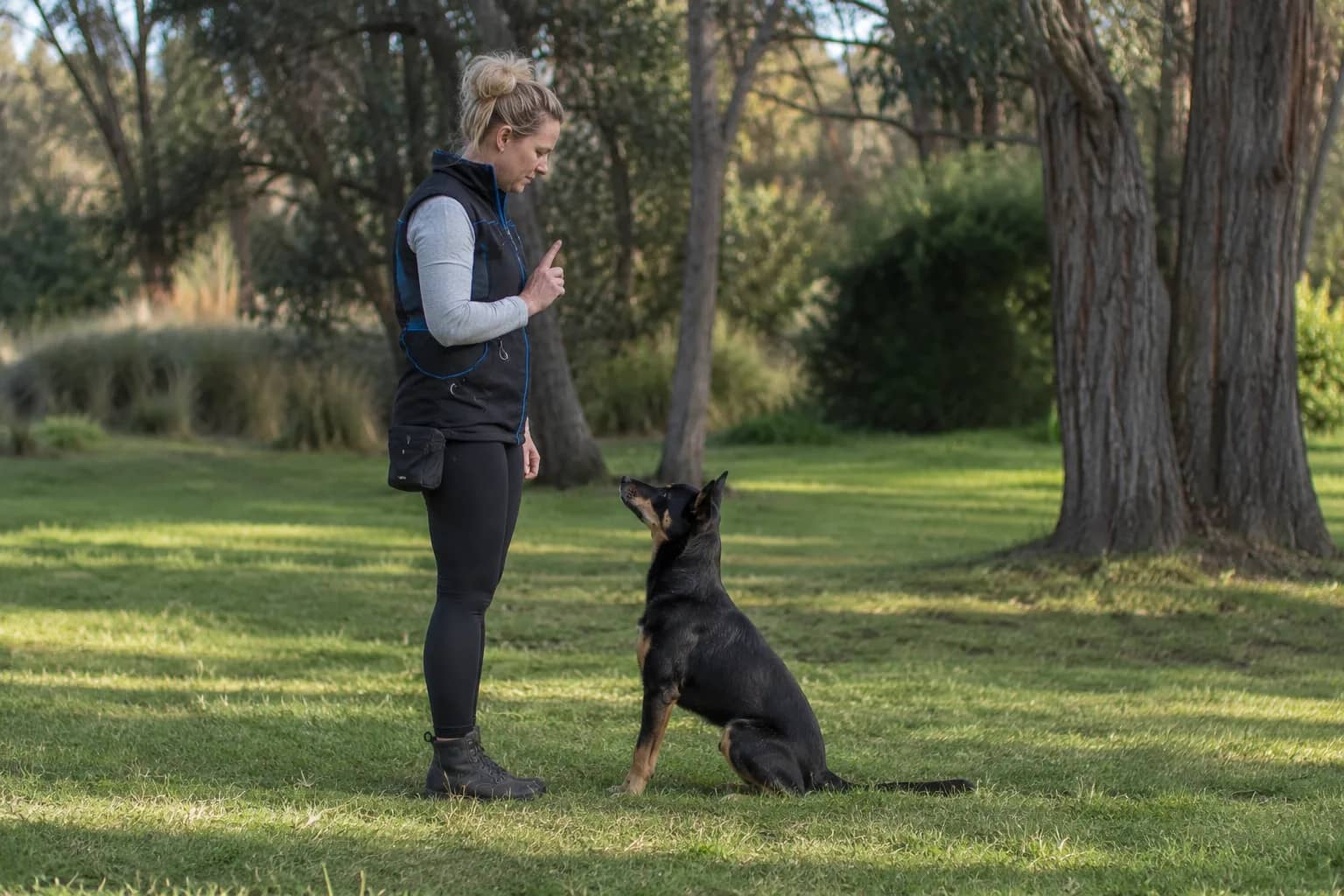
Tighten the leadership structure now. Not after the baby arrives. Who moves through doors first, where the dog is allowed to settle, how greetings are managed, what the dog does before meals and walks — all of this is the foundation that lets the dog navigate the baby. See our guide to calm leadership for the specifics. A dog that is deferring to the household leadership on day one of the pregnancy is a dog that will defer when a crying baby arrives.
Shift the dog's routine now, in stages, to the shape it will have after the baby. If walk times will change, change them now. If the dog will be sleeping in a different room, move it now. If particular furniture is becoming off-limits, make it off-limits now. The dog needs to associate the changes with "household decisions", not with "the baby arriving". A dog that loses its couch privileges the day the baby comes home blames the baby. A dog that lost them two months earlier doesn't connect them at all.
Introduce baby equipment early. Set up the cot, the pram, the bouncer, the change table — weeks before the baby is due. Let the dog investigate calmly and then move on. Don't make a ceremony of it. The equipment becomes background furniture, not novel exciting objects to be guarded or barked at.
Play baby sounds at low volume, daily. Recordings of newborn cries, both calm and distressed, played quietly in the background during normal household life. The dog hears the sound in a context where nothing stressful is happening, which prevents the sound becoming an arousal trigger when the real baby cries at 3am.
Reduce physical affection to realistic post-baby levels. This is the hardest one for pregnant parents, who often want more time with the dog before the baby arrives, not less. But a dog that is used to constant lap time and then suddenly loses it after the baby is born makes the connection — baby equals loss. A dog that has gradually shifted to the realistic post-baby level over the pregnancy doesn't experience it as a sudden loss.
Rehearse the baby handling you'll actually be doing. Carry a wrapped doll or a weighted swaddle around the house. Rock it, feed it (with a bottle), place it in the cot. The dog's response to a human carrying something baby-shaped is practised calmly before the real thing ever happens.
The first meeting
The first time your dog meets the baby is less important than most owners think, and it's less important than every other variable in the first few weeks. A good first meeting on top of bad household structure doesn't help. A relaxed first meeting on top of good structure is the natural continuation of what the dog has been practising for months.
That said, the protocol matters:
- Let the dog settle first. Before you walk in with the baby, give the dog a chance to greet the parent returning from hospital calmly, without the baby in sight. Separation for a day or two has created excitement; let the excitement discharge first.
- Baby comes in low-key. No fanfare, no "come look at the baby", no excited talking to the dog. The baby arrives like a quiet household event.
- Dog on lead for the first exposure, loose but attached. The parent holding the baby sits calmly. The other parent brings the dog in on a loose lead. The dog is allowed to sniff from a distance it chooses — some dogs will come close straight away, some will want to observe from the room's edge first. Either is fine.
- No forced face-to-face greeting. The dog does not need to sniff the baby's face. It needs to understand that the baby is now in the household. Face-to-face proximity is unnecessary and increases risk.
- End the first exposure calmly before the dog gets over-aroused. Short and successful beats long and chaotic.
If the dog's body language is relaxed throughout — loose body, soft eye, no stiffening — the first meeting is a success. If the dog is stiff, hard-eyed, or displaying any form of unease, don't push it. Separate and try again later. Do not force it.
The warning signs the dog isn't coping
In the first weeks after the baby arrives, watch for:
- Resource guarding appearing or escalating — around food, toys, beds, particular rooms, or around a particular parent. This is early insecurity presenting; address it immediately.
- Separation anxiety emerging — destructive behaviour when the baby is being settled, pacing, vocalising, inability to settle when the household is quiet. See our separation anxiety guide for the household work that resolves it.
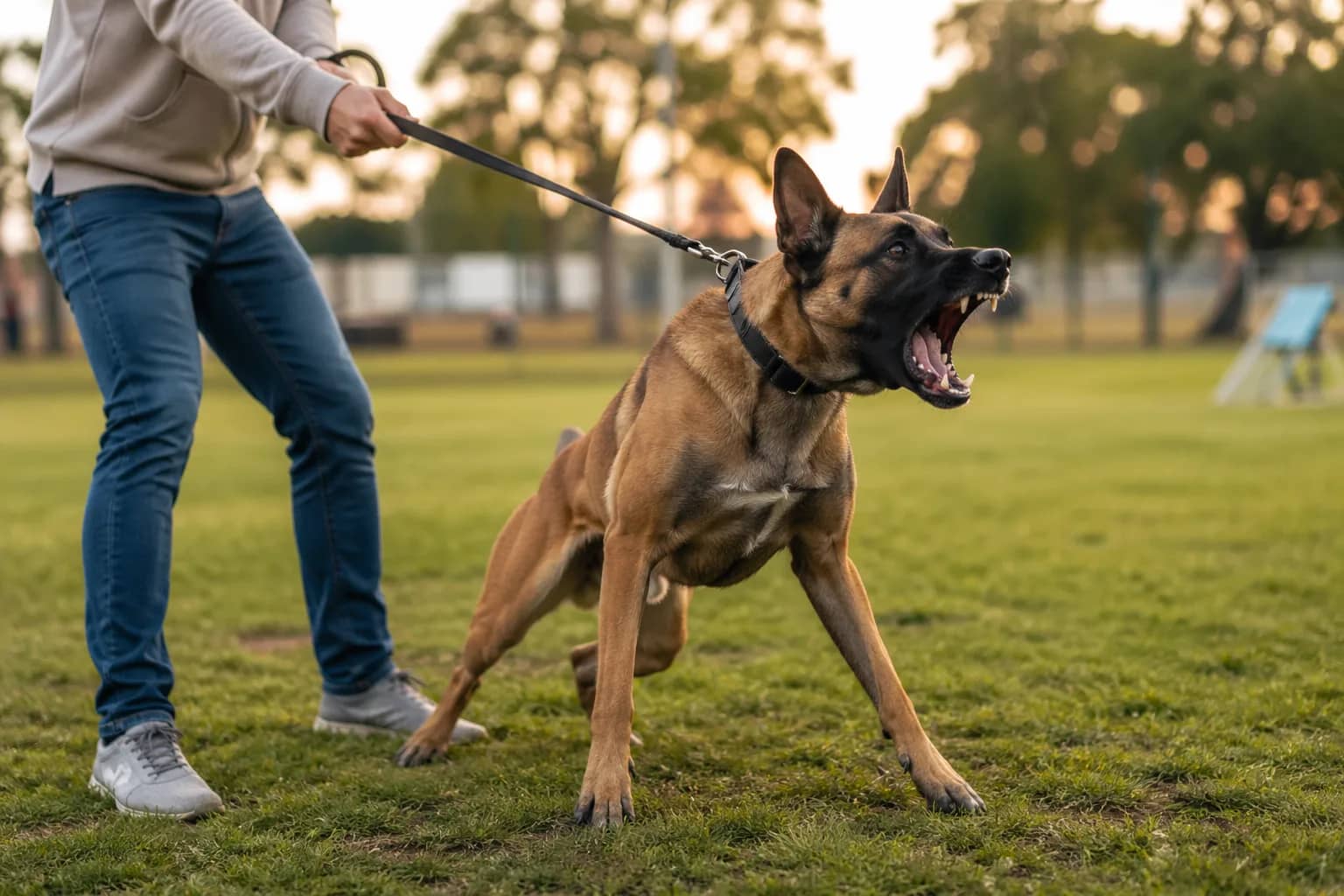
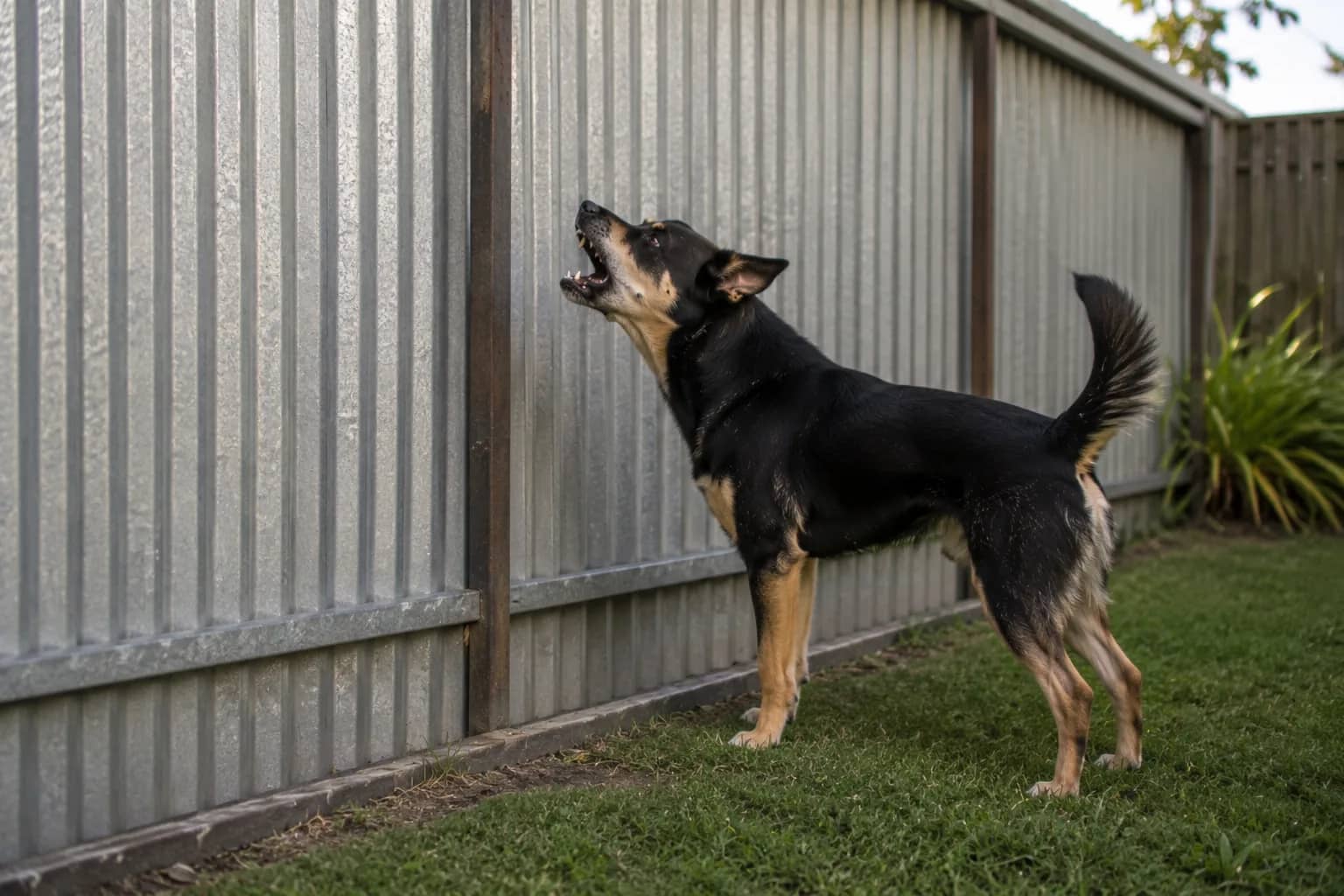
- Reactivity to the baby's sounds — specifically crying. A dog that barks or runs toward crying has become aroused by the trigger, which is a precursor to more concerning responses.
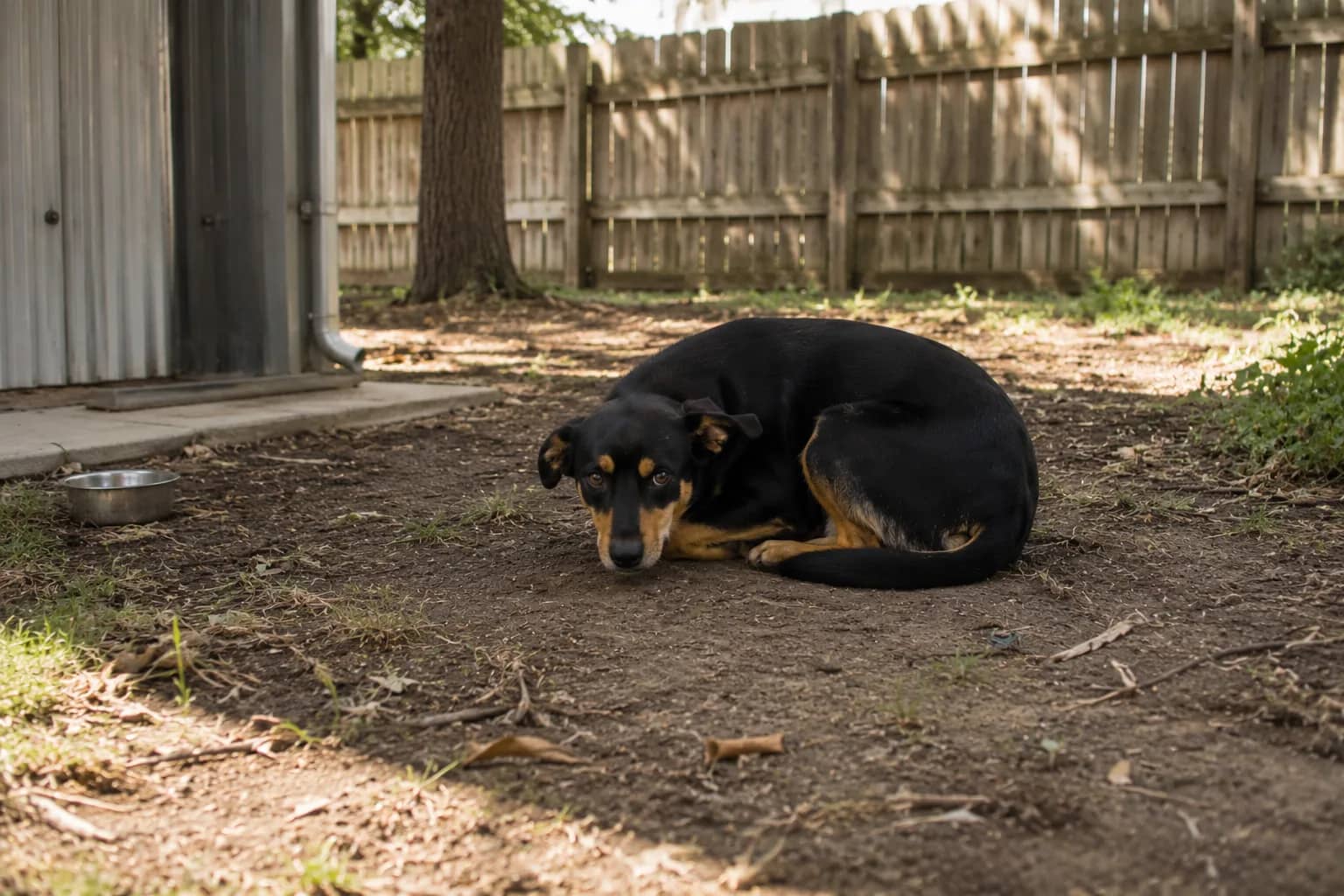
- Avoidance — the dog that previously liked being in the family's space now withdraws, hides, sleeps in a different room, avoids the parents when they're with the baby. This is a dog telling you it is overwhelmed. It is not a dog "being good"; it is a dog shutting down. Address it before it consolidates.
- Any snap, growl, lip curl or stiff freeze directed near the baby. This is a professional-help situation. Not a tomorrow situation; a this-week situation.
The non-negotiables for safety
Regardless of how well the dog is going:
- No dog is left unsupervised with a baby. Ever. Not for thirty seconds. Not with "the quietest dog in the world". Supervision means an adult in the room, awake, watching. If supervision isn't possible — the parent is in the shower, nipping outside, briefly asleep — the dog is in a different room with a closed door.
- The baby is at dog eye-height on the ground. As soon as the baby is on the floor on a mat, the risk profile changes dramatically. Many bites happen in this phase, not in the newborn weeks. Keep the dog separated when the baby is on the ground until the dog has been reliably reading the baby for months.
- The baby doesn't go in the dog's bed, food area or chew space. Those are the dog's zones. Mixing them is unnecessary and risky.
- The dog isn't disciplined around the baby. The dog associates discipline with proximity to the baby, which produces exactly the opposite of what you want.
When to bring a behaviourist in
Call before the baby arrives, not after. The pregnancy window is where the real work happens. Specific situations that benefit most from a pre-baby in-home consultation:
- Any existing reactivity, aggression or resource guarding in the dog
- First-time parent households where the leadership structure hasn't been tested
- Multi-dog households (the dynamics shift dramatically with a baby)
- Working-breed or high-arousal dogs (kelpies, German Shepherds, blue heelers, Belgian Shepherds)
- Dogs with any bite history, however old
- Rescue dogs with unknown history
In-home consultations across the Iron Triangle, Mid North, Clare Valley, Yorke Peninsula and Eyre Peninsula are the right format for this work — the household structure that produces a calm dog around a baby is best coached in the actual household. For families further afield, online coaching produces the same results on a slightly longer timeline.
The bigger picture
A dog that was prepared properly in pregnancy and that lives in a well-structured household is almost always a dog that becomes genuinely devoted to a baby — not grudgingly tolerant, but actually bonded. The babies of these households grow up with a dog who sleeps outside the bedroom door, who watches them play, who tolerates ear-pulls and face-touches, and who becomes one of the formative figures of their childhood. That is the outcome most parents want and almost all can have.
The work for it starts well before the baby arrives. Start with the Free Dog Behaviour Test — two minutes to see where your dog's structure sits — and reach out early if any of the warning signs above are already in play. The dogs that succeed in a baby household are the ones whose owners started preparing in the second trimester, not the ones whose owners waited to see how it went.
Not sure where to start with your dog?
Take the Free Dog Behaviour Test.
Two minutes. You’ll find out exactly what’s driving your dog’s behaviour — and what to do next.
Frequently asked questions
Written by
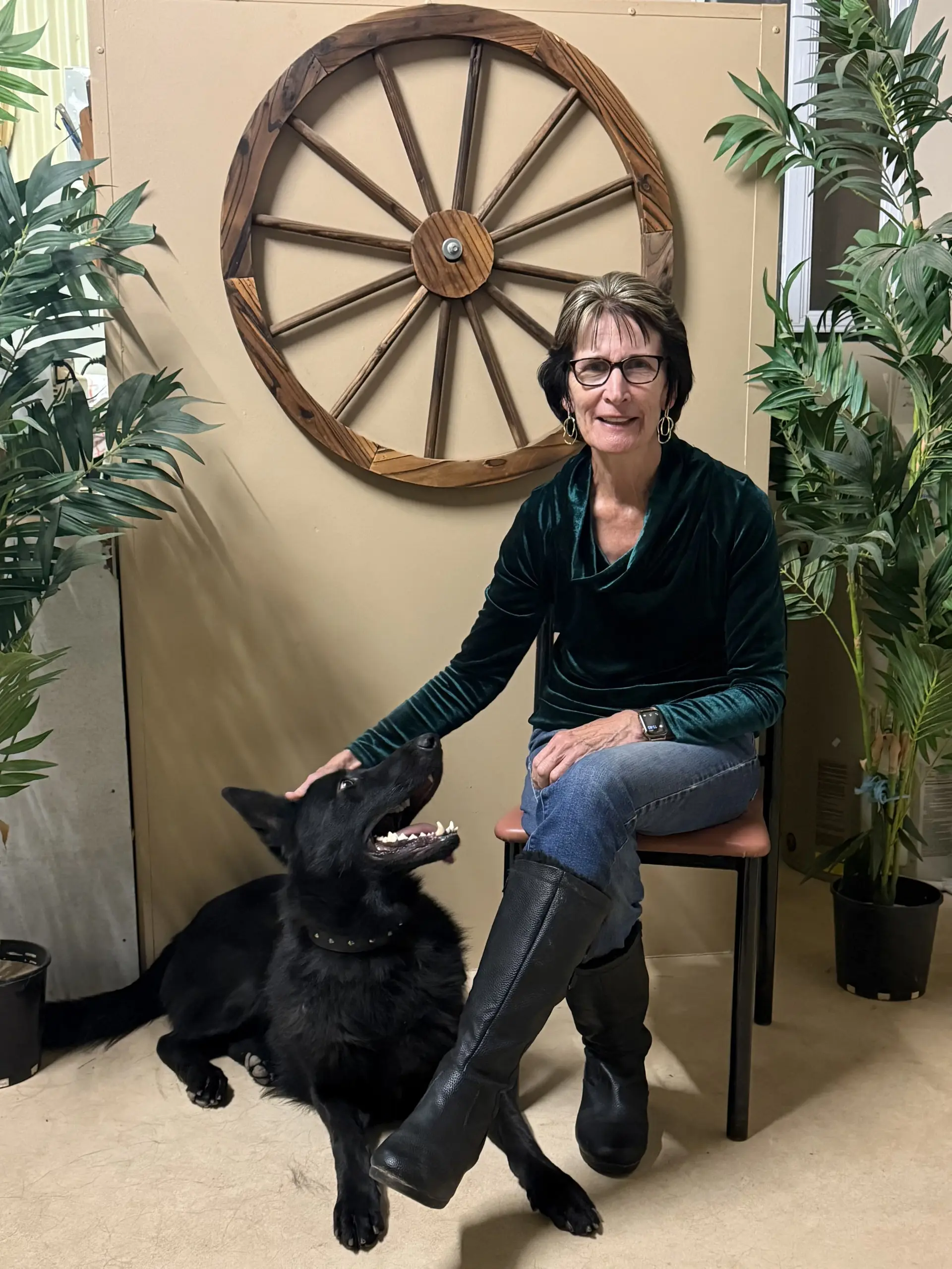
Pauline Cowey
Accredited Dog Behaviourist, Communicator, Owner Educator and Trainer based at Crystal Brook, South Australia. Decades of hands-on work resolving aggression, reactivity, anxiety and obedience cases across regional SA — through ethical, leadership-based methods.
Read Pauline’s full story →