
Service
Help for Aggressive Dogs in Regional South Australia
Aggressive behaviour rarely starts as aggression — it is almost always fear or arousal wearing a louder coat. The work is calming the underlying state, not punishing the symptom.
In short
If your dog has bitten, lunged with teeth, or come close to it, you need a behaviourist — not a "balanced" trainer with a slip lead and a YouTube channel. Aggressive dog training that works rebuilds the dog's emotional state through calm leadership, environmental control and structured exposure. Punishment-based methods may suppress the behaviour briefly. They reliably make it worse over time.
Sound familiar?
- Your dog has bitten — or come close — and you're afraid of what's next
- Aggression toward other dogs (on or off-lead)
- Aggression toward visitors, tradies, postal workers, kids
- Resource-guarding: food, toys, the couch, you
- Sudden change in temperament you can't explain
- A "balanced" trainer made it worse
Why this works where other methods do not
- E-collars and prong collars to "shut down" the behaviour
- Alpha rolls and physical corrections
- Suppressing the warning signs (growling, freezing) — until the dog stops warning
- Quick-fix promises followed by months of regression
- Calm leadership rebuilds the dog's emotional state
- Triggers are managed and gradually re-introduced under control
- Warning signs are listened to, not punished — they're the dog talking to you
- Long-term rehabilitation that holds because it changes the dog, not just the symptom
How it works
- 1
Free Behaviour Test
Two minutes to identify the underlying state driving the aggression.
- 2
Phone or video discovery call
For aggressive cases I want to talk first. We confirm the picture, talk safety, and decide if in-home is appropriate.
- 3
In-home behaviour consultation (3.5–4 hours)
Full environmental assessment, leadership reset, owner coaching, and an explicit safety and management plan.
- 4
Structured follow-up
Email plan, check-ins, and longer-term support — because aggression cases don't resolve in one session.
Inside the process
What actually happens when we work together
Aggression cases start before we meet in person. I want a phone or video call first — not for screening, but because aggression has specific safety implications and I need to understand the picture before I drive into the situation. We talk through the bite history if there is one, the triggers as you understand them, who is in the household, where the dog sleeps, where the incidents have happened. Sometimes this conversation surfaces a different diagnosis to what you were expecting; sometimes it confirms the case is straightforward enough for in-home; occasionally it tells me a vet behavioural consultation is the right starting point before I am involved.
The in-home consultation itself is three and a half to four hours and starts with the dog under management — leashed and crated as appropriate, or at minimum separated from where I will sit. The first thirty minutes are an environmental walk-through with you, dog absent. Then we bring the dog in calmly and I read it: its base state, its trigger thresholds, what it actually does when overwhelmed versus when in control. By the end of the first hour you will know whether you have a fear-based, frustration-based or arousal-based aggression pattern, and what each implies for the work.
The remainder of the session is leadership reset, environmental management redesign (where the dog sleeps, where it eats, where the safety zones are), and a structured safety and management plan you leave with. For genuine bite-history cases, a properly conditioned basket muzzle is part of the plan. The written follow-up arrives within 48 hours and runs longer than my other plans because aggression cases require a more detailed protocol. From there we book follow-up support — usually a mix of video check-ins and a second in-home if the case warrants it.
What changes
- A dog that can be safely managed in everyday life again
- Triggers no longer mean explosions — they mean calm
- A household that breathes
- Long-term rehabilitation, not surface-level suppression
- A plan you can actually execute, every day
Who this is for
- Owners of dogs that have bitten or are escalating
- Adopters of rescue dogs with unknown or difficult histories
- Owners of working / guarding breeds whose drive is being mis-handled
- Families dealing with resource-guarding around children
- Owners who've tried punishment-based methods and made things worse
Honestly — not for
- Owners looking for a one-session miracle — aggression rehab is months, not minutes
- Anyone unwilling to commit to leadership change in themselves
Expected outcomes
What you’ll notice — and when
The first measurable outcome of an aggression consultation is a household that feels safer the same day. Not because the dog has changed yet — it has not — but because you now have an explicit management plan, a clear safety routine, and a behaviourist on email. The mental load lifts immediately, and that lift is significant.
The first behavioural shifts usually appear in week one to week three. The dog softens in your presence as the new leadership baseline takes hold. The early-warning signs (the freeze before a snap, the hard stare, the lip lift) become more visible rather than less — which sounds counter-intuitive but is exactly what we want. A dog that is warning is communicating; a dog that has been punished out of warning has been made more dangerous, not less. We want the language back, and then we work with it.
Weeks four to twelve are where the structural rehabilitation happens. Trigger thresholds expand. The fence-line response collapses. Resource-guarding around food and the couch and the door fades because the dog no longer feels like it has to enforce the rules itself — you are. By the three-month mark, most aggression cases are managing everyday life without incident: visitors handled with structure, walks completed without explosions, multi-dog households running calmly.
Full rehabilitation is months, not weeks. Genuine bite-history cases I reassess at six and twelve months. The realistic long-term outcome is a dog that lives safely in its household and most ordinary public situations, with specific triggers (other dogs at close range, unsupervised children, specific environments) understood and managed. A small minority of cases do not reach a level of safety the household can live with — and where that is the case I will tell you honestly and early. The rest do.
Real owners. Real change.
Owners who’ve worked with Pauline on aggressive dog training
“We are both really pleased with Arthur's progress and it's only day 3. He's almost like a new dog! Understanding the why behind Pauline's method then being consistent in our actions as pet owners is the most important takeaway we gained from our session with Pauline. Highly recommended.”
“I only wish we had engaged Pauline sooner! Our family found her in-home training session to be informative and invaluable in helping us make real change to our relationship with our 7 year old Border Collie. It was so beneficial to complete the training in person and be able to ask questions along the way. We gained a much better understanding of how our own habits and behaviors were unintentionally reinforcing the behaviors we didn't want. In just a few short weeks, by following Pauline's simple rules, we have already seen a noticeable change in our dog. The literature provided by Pauline has also been an excellent resource, helping us stay on track and reinforce what we learned. We are looking forward to calm outings with our dog in the future!”
“very informative, simple but effective methods to use.”
Where I work
Aggressive Dog Training across regional SA
Pauline travels in-home across these regions — and works online with owners anywhere in Australia.

Upper Spencer Gulf
Spanning Port Pirie, Port Augusta and Whyalla, the Upper Spencer Gulf is home to working families, working dogs, and the long open spaces that both help and hurt dog behaviour. I run regular in-person consultation days across the whole USG from my Crystal Brook base — with bookings grouped together for the longer Whyalla and Port Augusta trips so the drive carries multiple cases.
Dog training the Upper Spencer Gulf
Eyre Peninsula
The Eyre Peninsula is vast — Port Lincoln is roughly 5 hours from Crystal Brook, Ceduna closer to 8. I work in-home across the peninsula on blocked consultation days, grouping bookings together to make the drive worthwhile — and online coaching is equally available for owners who prefer it or whose case is time-sensitive.
Dog training in Eyre Peninsula
Iron Triangle
The Iron Triangle — Port Pirie, Port Augusta and Whyalla — is one of the densest regional dog populations in South Australia. Heart of the Pack is based 25 minutes south of Port Pirie at Crystal Brook and runs regular in-person consultation days across all three towns, with bookings grouped together for the longer Whyalla trips so the drive carries multiple cases.
Dog training in Iron Triangle
Mid North
The Mid North is home base. Crystal Brook sits squarely in the middle of it, and my standard rotation covers most Mid North towns within an hour's drive — Jamestown, Peterborough, Burra, Gladstone, Snowtown, Laura, Wirrabara, Quorn — with regular in-person consultation days through the week.
Dog training in Mid North
Clare Valley
Clare Valley wine-country dog life is its own thing. Tourists, dog-friendly cellar doors, dog-dense events, and a population mix of long-time locals and tree-changers from Adelaide. I run regular in-person consultation days across the Clare Valley from my Crystal Brook base — about 50 minutes south — with bookings grouped together so each Clare day carries multiple consults.
Dog training in Clare Valley
Yorke Peninsula
The Yorke Peninsula is beach country — fishing trips, tourist holidays, working sheep properties, and family dogs that range from spoilt town dogs to long-line drivers on the harvest. I run regular in-person consultation days across the peninsula from my Crystal Brook base, with bookings grouped together so the drive (90 minutes to the Copper Coast, around 2 hours to Yorketown) carries multiple consults in the same trip.
Dog training in Yorke PeninsulaTown-specific pages
Aggressive Dog Training in your town
Local-context pages for aggressive dog training in the towns I work most often.
Related services
Often comes up alongside aggressive dog training
These are the services owners working on aggressive dog training most often need to look at too. If you're not sure which category your dog fits, the Free Behaviour Test sorts it in two minutes.
Service
Reactive Dog Training
Reactivity is over-arousal wearing a leash. Calm the arousal, the reactivity collapses.
Read moreFormat
In-Home Training
Your dog's behaviour lives in your environment. So the training does too.
Read moreFormat
Online Coaching
Because for most behaviour work, you are the variable — and that's what we coach.
Read moreRead more on this topic
aggression reactivity
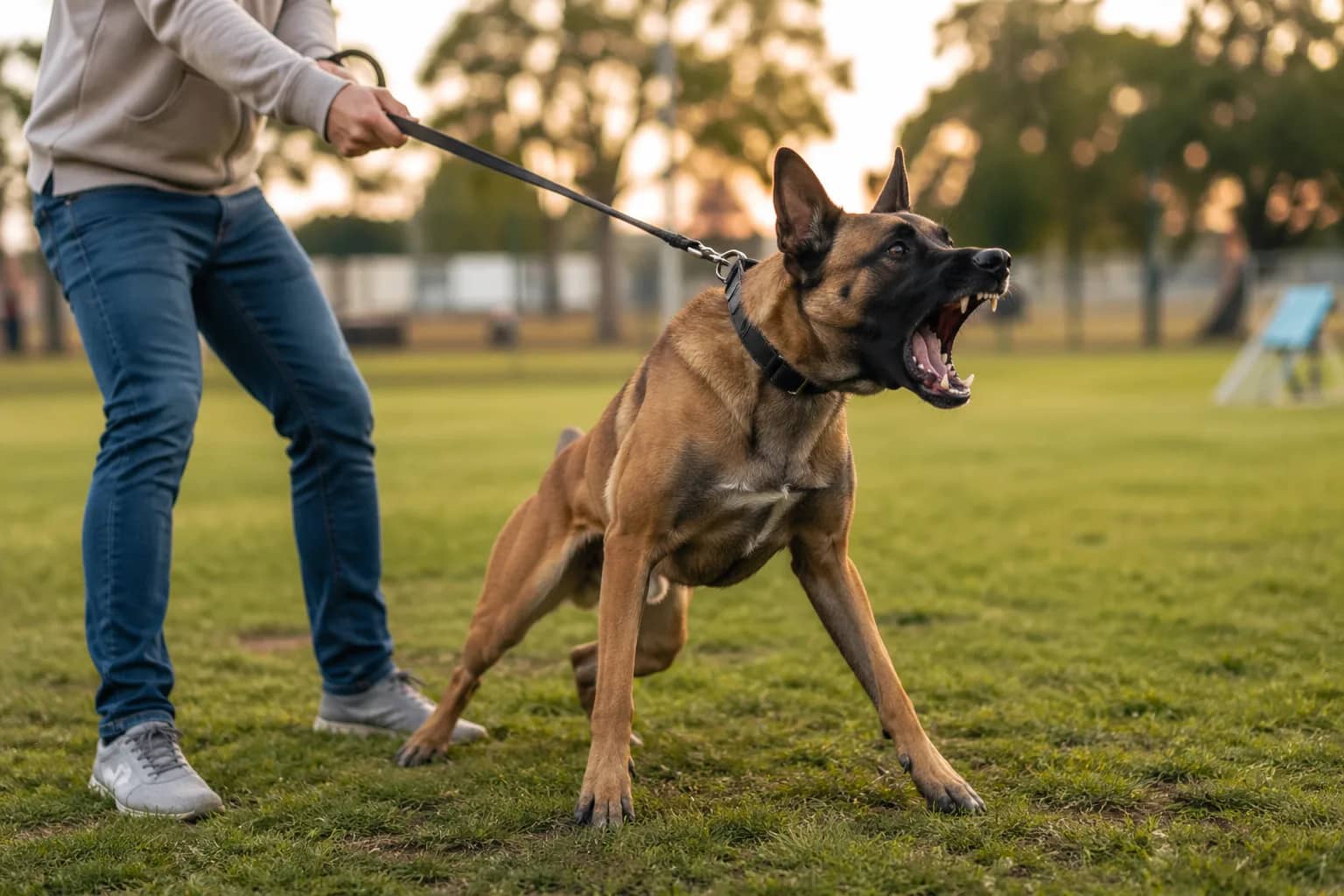
Why Aggressive Dog Training Methods Fail
Punishment-based aggressive dog training makes things worse. The science of why, and the ethical leadership-based approach used in regional SA.
14 min read·Apr 2026
aggression reactivity
Dog Aggression Training — What Actually Works
Honest guide to dog aggression training — what aggression is, why punishment fails, what ethical rehabilitation looks like, and what to look for.
11 min read·June 2026
choosing a trainer
When to See a Dog Behaviourist (Not Just a Trainer)
The specific signs your dog needs a behaviourist rather than a trainer — book-now triggers, warning signs, and the cost of waiting to decide.
10 min read·June 2026
choosing a trainer
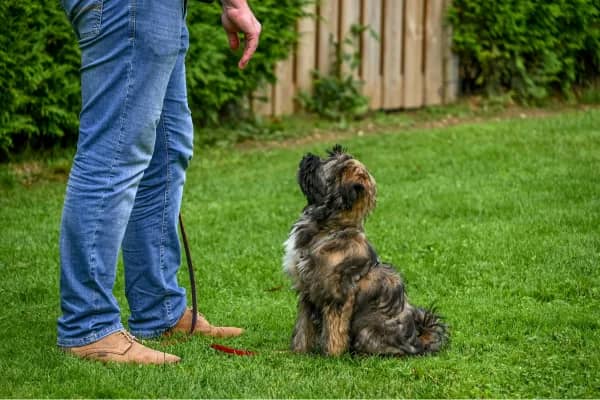
7 Signs Your Dog Trainer Is Using the Wrong Methods
Worried your dog trainer is doing more harm than good? 7 warning signs — and how to find an ethical, results-focused trainer in regional South Australia.
11 min read·May 2026
choosing a trainer
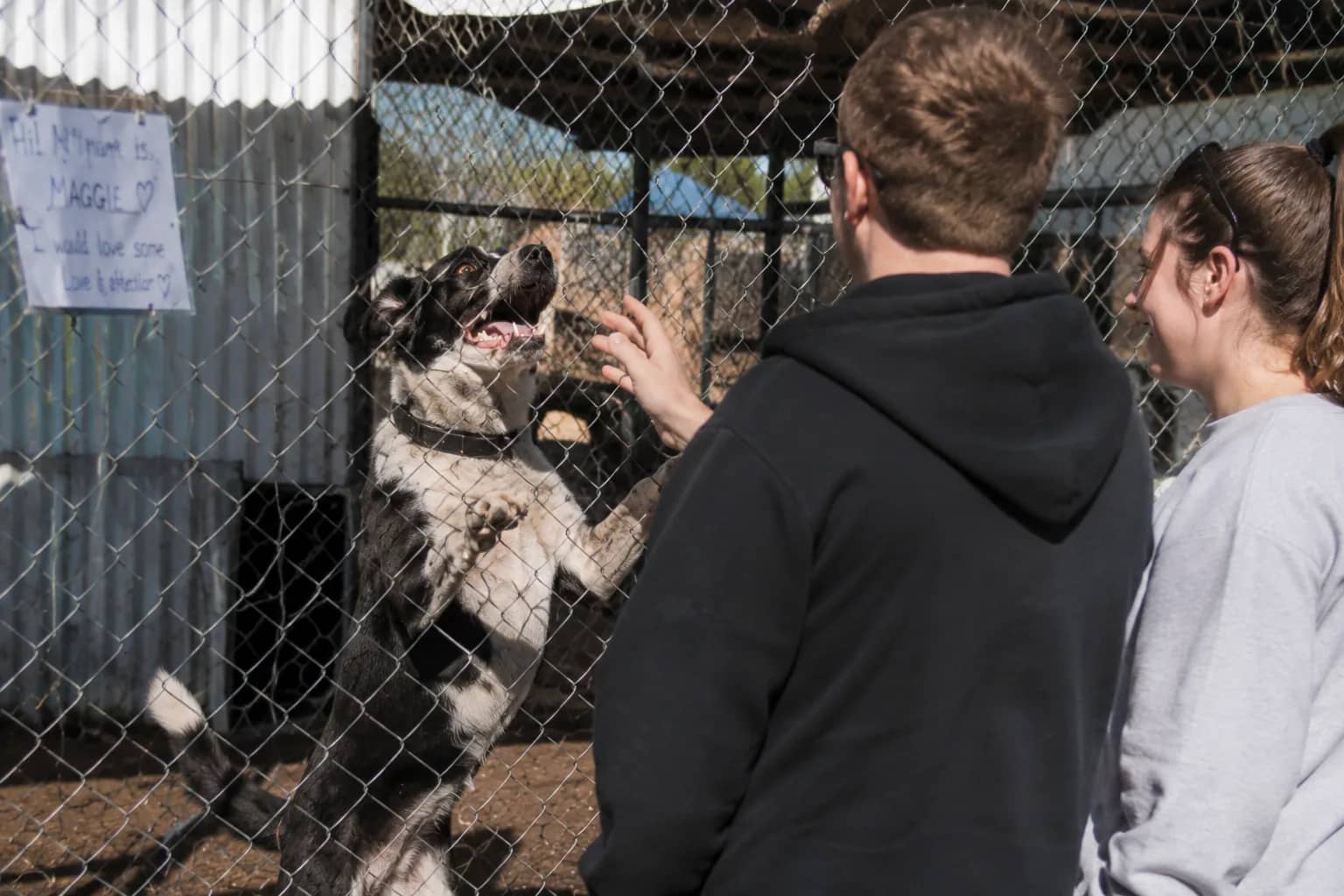
Rescue Dog Behaviour — The Critical First 30 Days
What to do — and not do — in the first month with a rescue dog. The decompression and leadership protocol Pauline uses across regional SA.
12 min read·Jan 2026
Aggressive Dog Training — frequently asked questions
Start here
Find out what is really going on with your dog — in 2 minutes.
The Free Dog Behaviour Test gives you (and Pauline) a clear starting point. No pressure, no spam, no obligation — just clarity.