
Format
In-Home Dog Training That Travels to You
Your dog's behaviour lives in your environment. So the training does too.
In short
In-home dog training is the most effective format for behaviour cases because the real triggers (your driveway, your couch, your kids, your other dog) are present — and so is the real environment your dog has been rehearsing in. We work where the problem lives.
Sound familiar?
- Tried group classes and it didn't transfer home
- Behaviour issues are environment-specific (your house, your yard, your neighbours)
- Multi-dog household — group dynamics matter
- Reactive or aggressive dog — can't safely attend group sessions
- Want the whole family on the same page
Why this works where other methods do not
- Group classes in a hall — your dog learns to behave in that hall
- Boot camps where the dog goes away and comes back trained
- YouTube DIY — no coaching, no accountability
- Drop-in puppy schools that disappear at 16 weeks
- Real environment, real triggers, real practice
- Owner coaching — you do the work and own the results
- A single consultation that often does more than six weeks of group class
- Travel across the Upper Spencer Gulf, Iron Triangle, Mid North, Clare Valley and Yorke Peninsula
How it works
- 1
Free Behaviour Test
Confirm in-home is the right format for your case.
- 2
Phone or video discovery call
I confirm your situation, your goals, and the logistics before we book.
- 3
In-home consultation (3.5–4 hours)
I come to your home, assess, coach you and your family, and leave you with a written plan.
- 4
Email support and follow-up
Ongoing check-ins as you embed the work.
Inside the process
What actually happens when we work together
An in-home consultation begins before I arrive. After your free behaviour test and a brief discovery call, I send you a short prep note that names what to have ready (the dog's bed, recent video if relevant, the family present, any specific environments you want to cover) and what NOT to do — most notably, do not exercise the dog into exhaustion before I arrive. I want to see the dog at its normal baseline.
I arrive, I sit down, I do not greet the dog. The first 15 minutes are conversation with you while the dog works out what to do with me. That sequence — the dog approaching, deciding I am not interested, eventually settling — is the first data point of the consultation. Then we walk the property: where the dog sleeps, where it eats, where it patrols, where the trigger lines run, where the gates and fences sit. By the time we have completed the walk-through I have a working diagnosis.
The middle two hours are coaching. We work the Five Rules of Leadership in your real environment with your real family. I show you the technique; you do it; I correct your application; you do it again until it works. If you have multiple dogs we work them in turn. If you have kids in the household we work them in too — kids are some of the best students I get, and dogs read consistency from kids fast.
You leave the session with a printed plan in your hand and a written version emailed inside 48 hours. The plan is specific to your dog, your environment, your week. From there, email follow-up runs for as long as the case needs — typically four to twelve weeks of active back-and-forth, with longer-term check-ins available for difficult-breed adolescents and complex multi-dog households.
What changes
- Training that holds where it matters — at home
- Whole-family coaching, not just one handler
- Specific solutions for your real environment
- Faster results than group formats for behaviour cases
Who this is for
- Regional SA owners outside reasonable distance of metro classes
- Owners of reactive, aggressive or anxious dogs that can't safely group-train
- Families who want every member on the same page
- Multi-dog households
Expected outcomes
What you’ll notice — and when
The first outcome of an in-home consultation is something visible to anyone in the household: the dog softens. Inside the first hour, the dog's default body language changes. Less pacing. Less hyper-vigilance. More settling. This is not training; it is the dog responding to a new emotional climate in the room. Family members who were not present during the consult notice it when they come home that evening.
Week one of consistent application is when the structural changes start showing. The door routine works. The meal routine works. The settle-on-mat protocol holds. Multi-dog interactions calm down because the structure is now clear. Most owners describe the household as 'less loud' inside the first seven days, even when nothing visible has been done about the original presenting issue. That is because the original presenting issue was always downstream of a household culture, and the culture has shifted.
Weeks two to six work the specific issue you booked the consult for. Reactivity, recall, jumping, multi-dog tension, anxiety — each follows its own curve, but the leadership foundation set in the in-home consult is what makes the issue-specific work transfer. Owners regularly report that the issue they thought they were paying me to fix had already half-resolved by the time they got to the issue-specific work.
By the three-month mark, in-home consultations have typically produced a household that runs the way the owner imagined when they got the dog. Reliable obedience, calm settles, manageable triggers, dogs that fit into family life rather than running it. The work after that is consistency, and the email support pattern naturally tapers as the owner builds confidence. About 40% of my in-home clients book a follow-up consultation at the adolescent threshold or for a second dog joining the household; the rest never need to see me again.
Real owners. Real change.
Owners who’ve worked with Pauline on in-home training
“We are both really pleased with Arthur's progress and it's only day 3. He's almost like a new dog! Understanding the why behind Pauline's method then being consistent in our actions as pet owners is the most important takeaway we gained from our session with Pauline. Highly recommended.”
“I only wish we had engaged Pauline sooner! Our family found her in-home training session to be informative and invaluable in helping us make real change to our relationship with our 7 year old Border Collie. It was so beneficial to complete the training in person and be able to ask questions along the way. We gained a much better understanding of how our own habits and behaviors were unintentionally reinforcing the behaviors we didn't want. In just a few short weeks, by following Pauline's simple rules, we have already seen a noticeable change in our dog. The literature provided by Pauline has also been an excellent resource, helping us stay on track and reinforce what we learned. We are looking forward to calm outings with our dog in the future!”
“very informative, simple but effective methods to use.”
Where I work
In-Home Training across regional SA
Pauline travels in-home across these regions — and works online with owners anywhere in Australia.

Upper Spencer Gulf
Spanning Port Pirie, Port Augusta and Whyalla, the Upper Spencer Gulf is home to working families, working dogs, and the long open spaces that both help and hurt dog behaviour. I run regular in-person consultation days across the whole USG from my Crystal Brook base — with bookings grouped together for the longer Whyalla and Port Augusta trips so the drive carries multiple cases.
Dog training the Upper Spencer Gulf
Eyre Peninsula
The Eyre Peninsula is vast — Port Lincoln is roughly 5 hours from Crystal Brook, Ceduna closer to 8. I work in-home across the peninsula on blocked consultation days, grouping bookings together to make the drive worthwhile — and online coaching is equally available for owners who prefer it or whose case is time-sensitive.
Dog training in Eyre Peninsula
Iron Triangle
The Iron Triangle — Port Pirie, Port Augusta and Whyalla — is one of the densest regional dog populations in South Australia. Heart of the Pack is based 25 minutes south of Port Pirie at Crystal Brook and runs regular in-person consultation days across all three towns, with bookings grouped together for the longer Whyalla trips so the drive carries multiple cases.
Dog training in Iron Triangle
Mid North
The Mid North is home base. Crystal Brook sits squarely in the middle of it, and my standard rotation covers most Mid North towns within an hour's drive — Jamestown, Peterborough, Burra, Gladstone, Snowtown, Laura, Wirrabara, Quorn — with regular in-person consultation days through the week.
Dog training in Mid North
Clare Valley
Clare Valley wine-country dog life is its own thing. Tourists, dog-friendly cellar doors, dog-dense events, and a population mix of long-time locals and tree-changers from Adelaide. I run regular in-person consultation days across the Clare Valley from my Crystal Brook base — about 50 minutes south — with bookings grouped together so each Clare day carries multiple consults.
Dog training in Clare Valley
Yorke Peninsula
The Yorke Peninsula is beach country — fishing trips, tourist holidays, working sheep properties, and family dogs that range from spoilt town dogs to long-line drivers on the harvest. I run regular in-person consultation days across the peninsula from my Crystal Brook base, with bookings grouped together so the drive (90 minutes to the Copper Coast, around 2 hours to Yorketown) carries multiple consults in the same trip.
Dog training in Yorke PeninsulaSee it in action
Before and after — real in-home training consultations
Real footage from in-home consultations. Each clip is the change inside the session — not edited in post.
Archie
By the end of the consultation Archie was moving through the household calmly, greeting a visitor without spiralling, and settling on his bed within minutes rather than staying wound up.
Three household dogs
By the end of the consultation all three dogs were settled independently in different spaces, calm without the owners in sight and moving through the house without shadowing every household member.
Related services
Often comes up alongside in-home training
These are the services owners working on in-home training most often need to look at too. If you're not sure which category your dog fits, the Free Behaviour Test sorts it in two minutes.
Format
Online Coaching
Because for most behaviour work, you are the variable — and that's what we coach.
Read moreService
Aggressive Dog Training
Aggressive behaviour rarely starts as aggression — it is almost always fear or arousal wearing a louder coat. The work is calming the underlying state, not punishing the symptom.
Read moreService
Reactive Dog Training
Reactivity is over-arousal wearing a leash. Calm the arousal, the reactivity collapses.
Read moreRead more on this topic
choosing a trainer
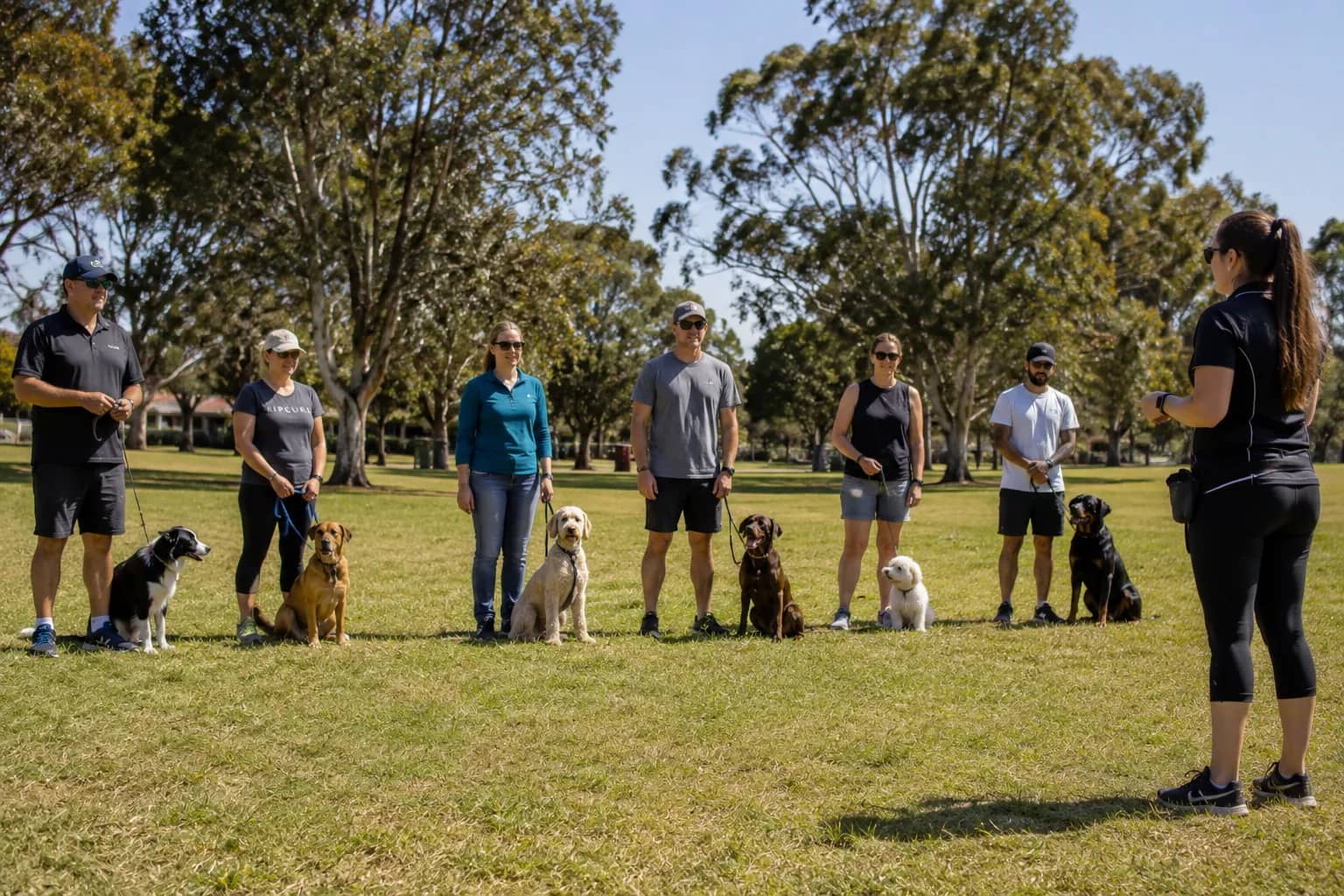
In-Home vs Group vs Online Dog Training — Compared
Three formats, three use-cases. How to choose between in-home, group and online dog training as a regional South Australian owner.
9 min read·Jan 2026
choosing a trainer
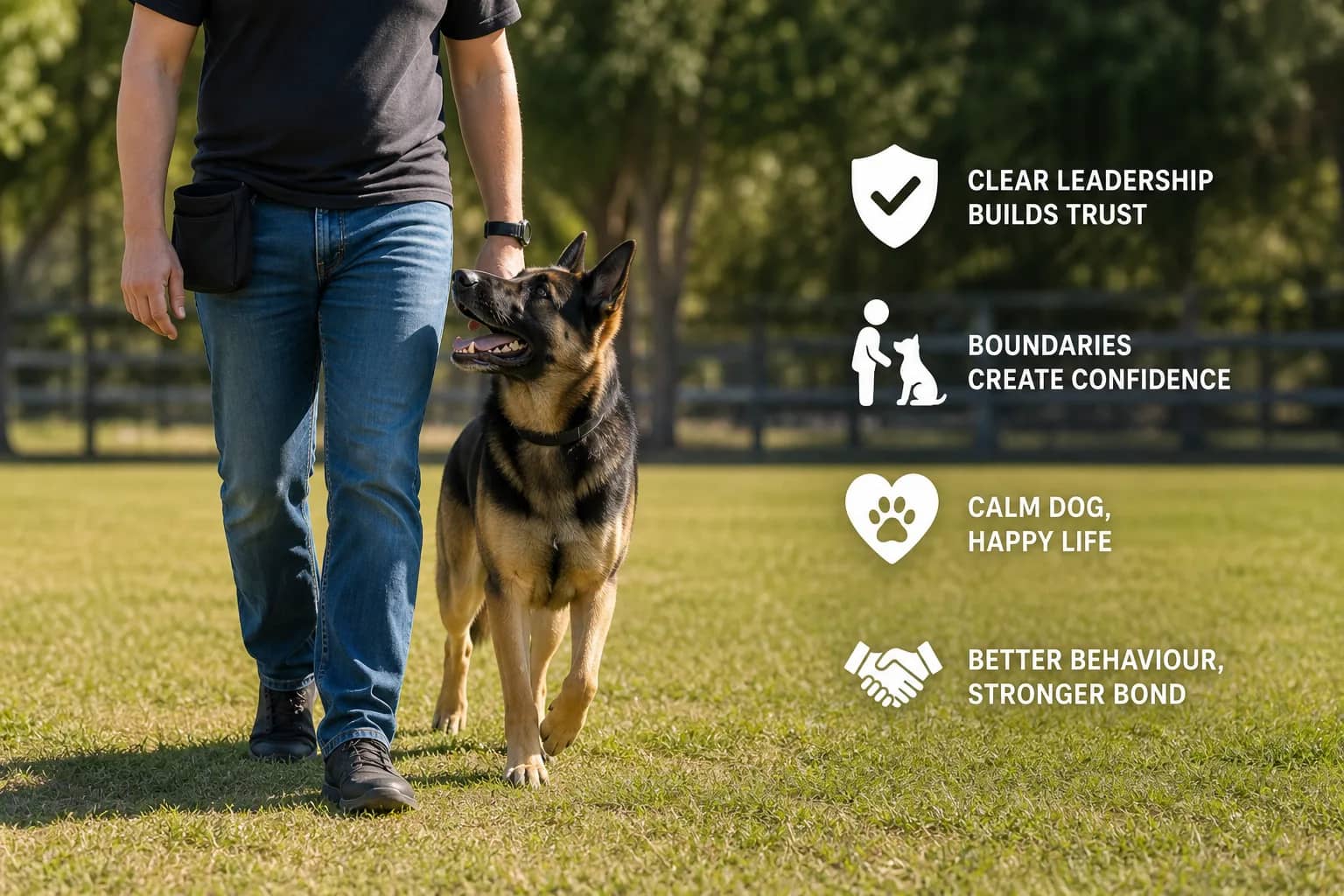
How Much Does a Dog Behaviourist Cost in Australia?
Honest breakdown of what a dog behaviourist costs in Australia — typical fees, what the price includes, and why cheaper is often more expensive.
10 min read·June 2026
obedience leadership
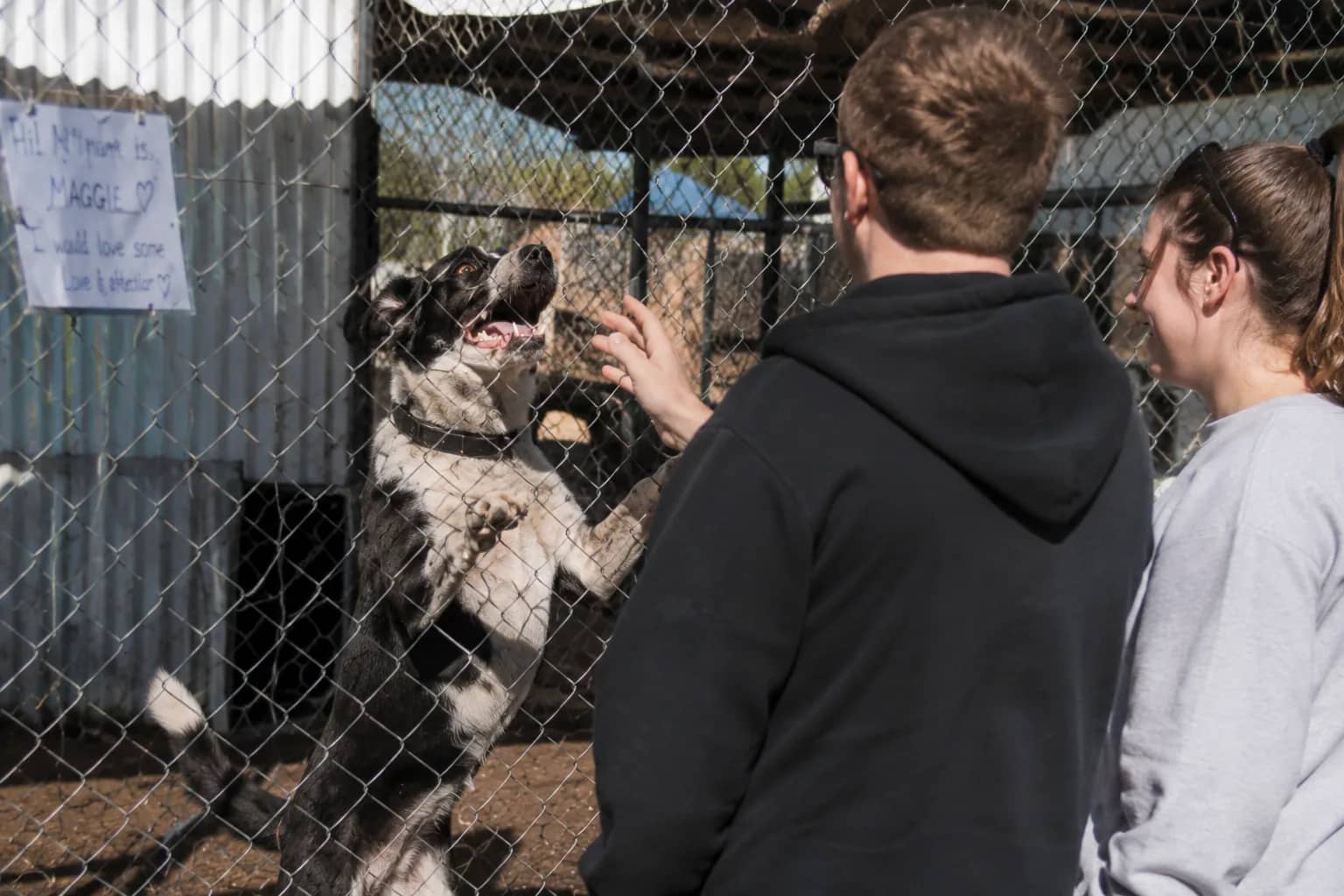
How to Introduce a Rescue Dog to Your Home
Step-by-step guide to introducing a rescue dog — the first 24 hours, first three days, first month, and introductions to family and existing pets.
11 min read·June 2026
obedience leadership
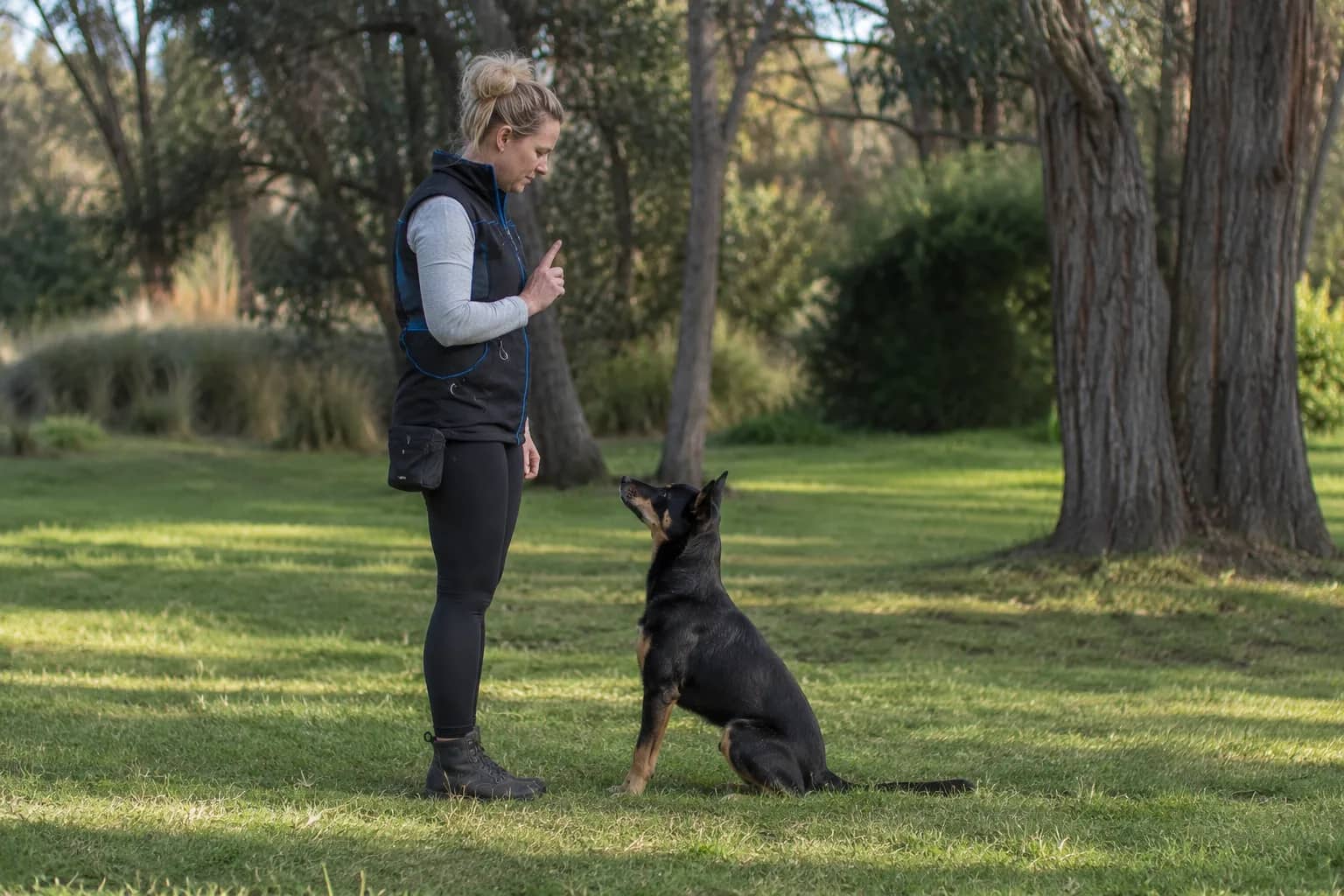
Calm Leadership: The Real Reason Your Dog Won't Listen
If your dog ignores you, the problem isn't training — it's leadership. Here's what calm, clear leadership actually looks like across regional SA households.
12 min read·May 2026
choosing a trainer
Rescue Dog Behaviour — The Critical First 30 Days
What to do — and not do — in the first month with a rescue dog. The decompression and leadership protocol Pauline uses across regional SA.
12 min read·Jan 2026
In-Home Training — frequently asked questions
Start here
Find out what is really going on with your dog — in 2 minutes.
The Free Dog Behaviour Test gives you (and Pauline) a clear starting point. No pressure, no spam, no obligation — just clarity.