Why Calm Leadership — Not Tricks — Is the Key to a Well-Behaved Dog

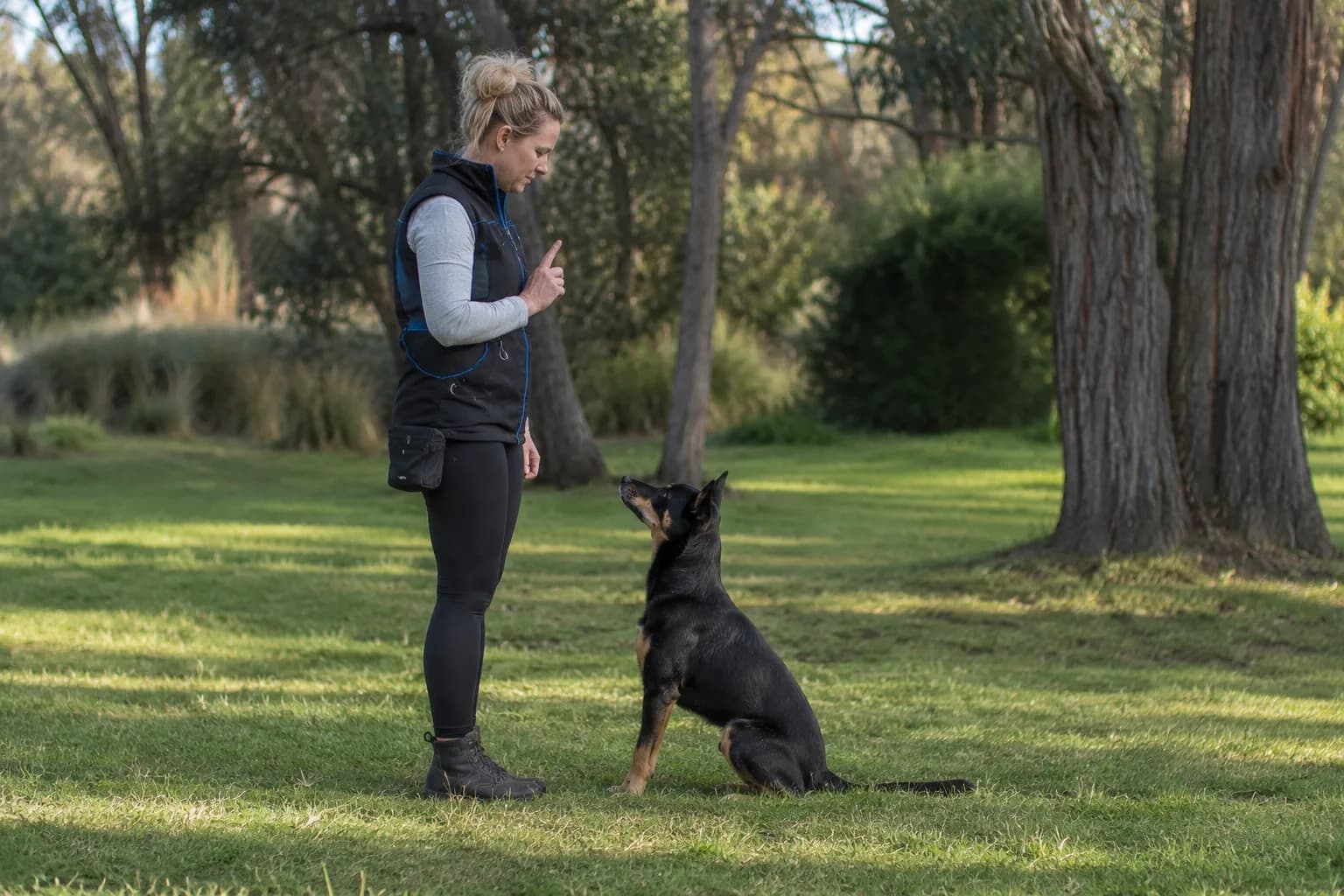
The reason your dog doesn't listen is rarely a training problem. It's a leadership gap. This article explains what calm, clear leadership actually looks like in a dog owner — and why a single session of leadership reset typically changes more than six weeks of group obedience classes.
Most owners come to me convinced they have a training problem. They have spent months on commands, treats, head halters, no-pull harnesses, and YouTube videos. The dog still pulls. Still lunges. Still ignores them at the off-lead beach.
What they actually have is a leadership gap. Once we close that gap — which usually starts inside the first session — the rest follows on its own.
What "leadership" really means (and what it isn't)
The word "leadership" gets a bad reputation because it's been hijacked by dominance trainers — people who think leadership means alpha rolls, force, and "showing the dog who's boss." That is not what leadership means.
Real leadership is calm. It's clear. It's consistent. It's confident. None of those involve force.
When you watch a competent leader — at work, at home, anywhere — what you see is someone who:
- Doesn't escalate to get attention
- Knows what they want and asks for it once
- Doesn't take ten attempts to follow through
- Stays steady when others lose composure
- Doesn't need to threaten to be respected
That is exactly what your dog needs to see from you.
Why this matters more than training
A dog with leadership can almost always be trained. A trained dog without leadership cannot reliably be commanded.
This is the order of operations that most trainers get wrong. They start with sit and stay and recall, and they wonder why the dog "knows the commands" but won't perform them under distraction. The answer is that the commands were taught — but the relationship underneath wasn't.
Your dog will do anything for someone it trusts. It will do almost nothing for someone it doesn't. Establish the trust first; the commands follow effortlessly.
The four pillars of calm leadership
Across decades of working with dogs across the Mid North, Clare Valley and beyond, I've watched the same four pillars hold up every successful household.
1. Calm energy comes first — always
If you arrive home and greet your dog with high-pitched baby talk and excited movement, you're telling your dog that arrival is a high-arousal event. Then you wonder why the dog explodes every time someone comes home.
If you give a command in a tense, anxious voice, you're telling your dog there is something to be tense about. Then you wonder why your dog responds with anxiety.
Calm energy isn't about being boring. It's about being grounded. Your dog reads your state before it hears your words, and it mirrors what it reads.
2. Boundaries before commands
Most owners try to teach commands without first establishing where their dog is allowed to be, what it's allowed to do, and what is off-limits. So the dog "knows" sit but doesn't respect the kitchen, the couch, the front door, the lead.
Boundaries are the unspoken rules of the household. Without them, every command becomes a negotiation. With them, your dog stops asking the question — and you stop needing to answer it.
3. Guide, don't bribe
Treats teach a dog that compliance is transactional. Guidance teaches a dog that compliance is relational.
There's a place for occasional food rewards. There is no place for a household built on them. If your dog only listens when there's something in your hand, what you have is a vending machine relationship — not a partnership.
For everyday work, the most effective communication tools are:
- Your voice (calm, clear, low)
- Your body (still, oriented, unbothered)
- Your timing (response within 1–2 seconds, not 5)
- Your presence (you're paying attention)
These are free, and they never run out.
4. Follow through, every time
Half-followed-through commands teach dogs that commands are optional. If you say "off the couch" and your dog stays on the couch and you give up — your dog has just learned that "off" means "maybe, sometimes."
The fix is not to escalate. It is to follow through, calmly, every single time. The first few times feel like work. After that, your dog starts listening on the first ask — because it has learned that you mean what you say.
Why most "training" makes this worse
Here's the trap I see most regional SA owners fall into. They take their dog to a class. They learn commands. They practice the commands. The dog gets graded "passed." They come home and… nothing transfers.
The commands transferred. The leadership didn't.
Group classes (where available — they're rare in regional SA) almost never teach leadership. They teach skills. The dog now has more vocabulary but the same relationship. So the vocabulary becomes inert.
This is why most behaviour cases need in-home work, not group classes — because the work that matters happens in the relationship, in the real environment.
What changes when leadership is established
Owners I work with usually feel the shift in their dog before the consultation ends. The change is small but unmistakable: the dog softens. It looks at the owner differently. It stops scanning for the next thing to react to.
Inside a week, you'll typically see:
- Calmer arrivals and departures
- Less reactivity on lead
- Faster recall (often without needing to call)
- Settled behaviour around the house (instead of pacing)
- A dog that defers to you instead of charging ahead
Inside a month, you'll typically see:
- The original problem behaviour reducing significantly
- Family members feeling more confident handling the dog
- Visitors and tradies handled calmly
- The dog asking for permission instead of taking initiative
The work is consistency. Old human habits are stickier than old dog habits — and that's the part Pauline coaches you through.
A note on "dominance" — what it isn't
Leadership is not dominance. Dominance is force-based, threat-based, and usually counter-productive.
The old "alpha" model — physical corrections, alpha rolls, pinning the dog — is debunked science. Wolves don't even behave like that in the wild (the original "alpha" research was based on captive wolves in artificial groupings). Dogs certainly don't.
What does work — universally, across breeds, across ages — is the calm, clear, consistent leadership described in this article.
Will this work for my dog?
Yes — every breed, every age, every history. The method is built on how dogs naturally communicate as a species. The application varies:
- Working breeds (kelpies, heelers, German Shepherds, Belgian Shepherds): need leadership earlier and clearer because the underlying drive is stronger. Particularly relevant for Iron Triangle working dog owners.
- Soft breeds (Cavalier King Charles, Maltese, Labradoodles): need consistent gentle leadership; over-handling can damage them.
- Senior dogs: respond just as fast as puppies once leadership is established. Habits are downstream of relationship, not age.
- Rescue dogs: need decompression first (2–3 weeks of structure-only), then leadership work. More on rescue dog first 30 days here.
What this looks like in practice
A real example, lightly anonymised. A family in Clare Valley called about their two-year-old Australian Shepherd. He was lunging at every dog on lead, ignoring recall off-lead at the property, and "having meltdowns" at the cellar door where the family ran a small wine business.
We didn't start with the lead, the recall, or the cellar door. We started with the kitchen.
The dog was getting petted on demand, fed on demand, allowed to push past the family at every doorway. There were no consequences for ignoring the humans because there was nothing to ignore — the dog was running the household and the humans were just… present.
In three hours, with the whole family there, we restructured the household. Within 48 hours, the dog stopped pulling on lead. Within two weeks, recall on the property was reliable. Within a month, the dog was settling at the cellar door instead of reacting.
Same dog. Same training. Same family. The difference was leadership.
Where to start
If any of this resonates — if you've been suspecting that the problem isn't actually with your dog — start with the Free Dog Behaviour Test. Two minutes, no commitment, no spam. You'll come out the other side with a much clearer read on what's actually driving things.
Or, if you'd rather just talk: contact Pauline or call directly. She personally replies within 1 business day.
The dog you have can be the dog you wanted. The training is rarely the hard part — the leadership is.
Not sure where to start with your dog?
Take the Free Dog Behaviour Test.
Two minutes. You’ll find out exactly what’s driving your dog’s behaviour — and what to do next.
Frequently asked questions
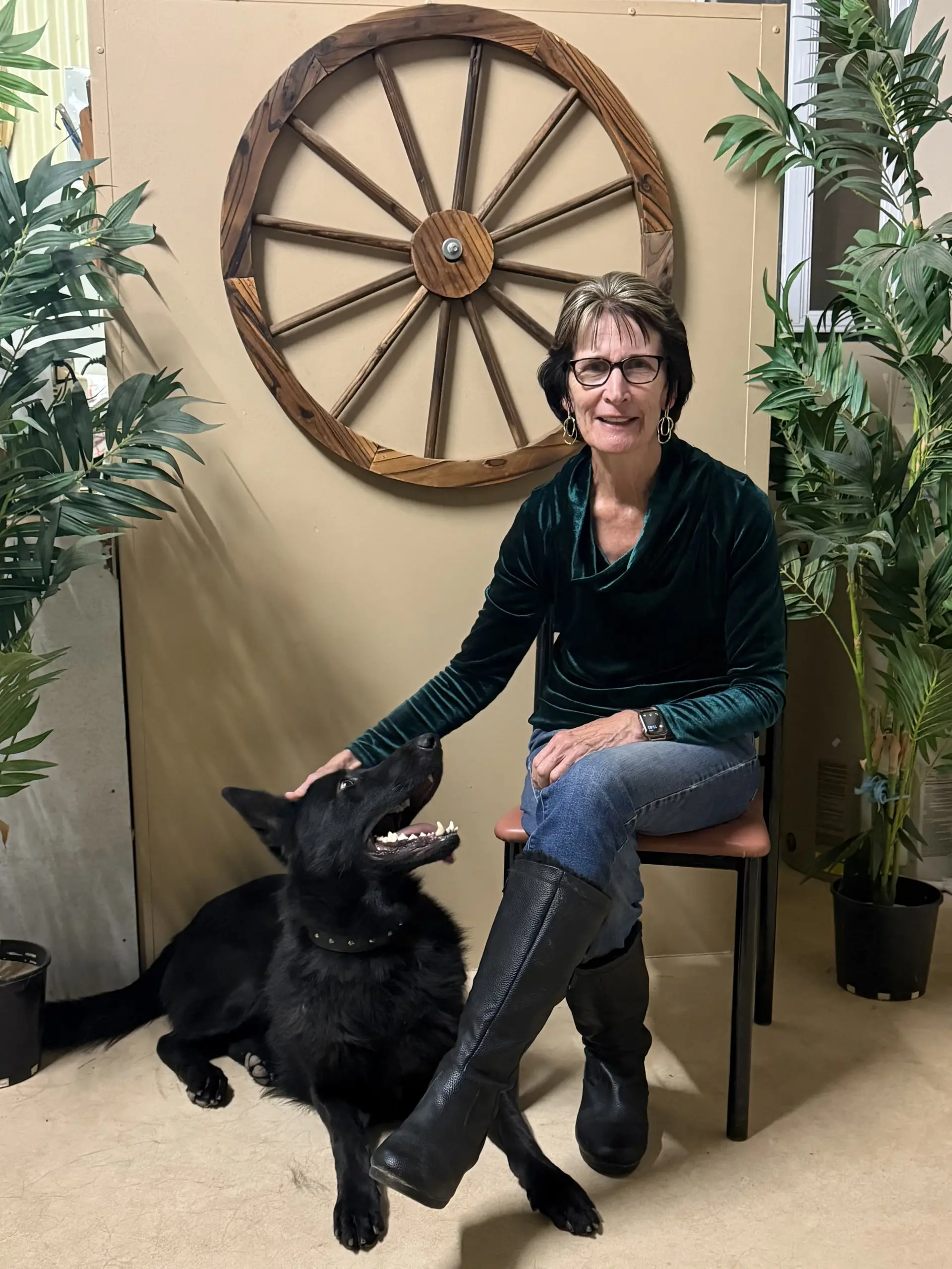
Written by
Pauline Cowey
Accredited Dog Behaviourist, Communicator, Owner Educator and Trainer based at Crystal Brook, South Australia. Decades of hands-on work resolving aggression, reactivity, anxiety and obedience cases across regional SA — through ethical, leadership-based methods.
Read Pauline’s full story →