
Service
Barking Dog Training — Stop the Noise For Good
Barking is a symptom. Find the cause, the noise stops on its own.
In short
There are four common reasons dogs bark excessively: alert (something out there), demand (give me a thing), boredom (no outlet) and anxiety (I am scared). Each one needs a different fix. Bark collars and anti-bark devices punish the symptom and miss the cause every time.
Sound familiar?
- Barking at every car, person, leaf on the fence
- Demand barking — at you, at meals, at the door
- Non-stop barking when you're not home (often noise-complaint territory)
- Boredom barking in the yard
- Barking that's drawing council attention or neighbour complaints
Why this works where other methods do not
- Bark collars (citronella, vibration, e-collar)
- Yelling at the dog — confirms there's something to bark at
- Anti-bark ultrasonic devices
- "Just ignore it" — when the dog has been rehearsing the bark for months
- Identify the trigger and the underlying state
- Remove the practise opportunity (environmental management)
- Calm leadership so the dog defers to you rather than self-reports
- Owner habits that don't accidentally reinforce demand barking
How it works
- 1
Free Behaviour Test
Identify which of the four barking types you actually have.
- 2
In-home consultation
Leadership reset, environmental management, owner habits.
- 3
Type-specific protocol
Each barking type has a specific protocol. We build one for yours.
Inside the process
What actually happens when we work together
Barking cases start with a diagnosis, because the four barking types respond to four different interventions and getting that wrong wastes weeks. In the first ten minutes of the consultation I want to understand the triggers, the duration, the times of day, the contexts (you home or away, dog inside or out, alone or with another dog) and ideally I want video. Once we know whether you have alert, demand, boredom or anxiety barking — or, most commonly, two of them stacked — we work the appropriate protocol.
For alert barking we focus on environmental management first. Where can the dog see the trigger from? What is the line of sight that runs constantly through the property? We restructure the dog's access so the trigger is no longer a 200-times-a-day rehearsal opportunity. Then we work the leadership reset that gives the dog permission to defer the alert to you rather than self-report it.
For demand barking the work is almost entirely with you. Every household with demand barking has a reinforcement pattern, and the dog has trained you very efficiently. We name the pattern, we agree how to stop reinforcing it, we plan for the predictable extinction-burst week (when the barking will get worse before it stops), and we hold the line. Demand barking collapses fast — usually within two weeks — but only if the household holds the change consistently.
For boredom and anxiety barking, the protocols are deeper. Boredom barking needs a genuine outlet plan, which for most regional dogs is structured work rather than more exercise. Anxiety barking sits inside the separation anxiety toolkit. In all four cases, the written plan and the email support carry you through the first six to eight weeks until the new pattern is locked in.
What changes
- A calm, alert dog that doesn't volunteer noise
- Demand barking extinguished without confrontation
- A dog that settles in the yard
- Compliant under local council nuisance-dog regulations
Who this is for
- Households dealing with council noise complaints
- Apartment / townhouse dogs (yes, even in regional SA)
- Working from home with a dog that barks through every Zoom call
- Yards backing onto public spaces (parks, paths, shops)
Expected outcomes
What you’ll notice — and when
For demand barking, the outcome is fast and dramatic. Inside week one most demand-barking patterns are already breaking down — the predictable extinction burst peaks in days three to five, then the noise drops noticeably from day six onward, and by week two the household is usually clean. The relapse risk is high in the first month if the reinforcement pattern creeps back in; after about week six the new pattern holds without active vigilance.
Alert barking is a slower curve. The first measurable change is volume — the bursts get shorter as the dog learns to defer to the owner. By week three the dog is alerting once and stopping, rather than rehearsing the same alert sequence for 90 seconds. By week six the dog is mostly choosing not to bark at the lower-grade triggers (the cyclist, the daily postal delivery) and reserving its noise for genuine novelty. Environmental management — restructuring the dog's line of sight to the road or the fence — remains in place permanently because removing the rehearsal opportunity is what makes the training stick.
Boredom barking outcomes track to the outlet plan. Once a dog has a genuinely satisfying daily outlet (typically structured work rather than aerobic exercise), the surplus energy that fed the barking dries up. Most boredom barking cases improve significantly in the first two weeks and stabilise by week six.
For households with council nuisance complaints, the most important outcome is having a written plan to show council inside week one. Most council compliance situations reset once the council sees a credible plan in place; the training underneath then carries the dog into long-term compliance. By the three-month mark, the vast majority of barking cases I work on are below the threshold where complaints would be raised — and most owners describe their house as quieter than it has been in years.
Real owners. Real change.
Owners who’ve worked with Pauline on barking dog training
“We are both really pleased with Arthur's progress and it's only day 3. He's almost like a new dog! Understanding the why behind Pauline's method then being consistent in our actions as pet owners is the most important takeaway we gained from our session with Pauline. Highly recommended.”
“I only wish we had engaged Pauline sooner! Our family found her in-home training session to be informative and invaluable in helping us make real change to our relationship with our 7 year old Border Collie. It was so beneficial to complete the training in person and be able to ask questions along the way. We gained a much better understanding of how our own habits and behaviors were unintentionally reinforcing the behaviors we didn't want. In just a few short weeks, by following Pauline's simple rules, we have already seen a noticeable change in our dog. The literature provided by Pauline has also been an excellent resource, helping us stay on track and reinforce what we learned. We are looking forward to calm outings with our dog in the future!”
“very informative, simple but effective methods to use.”
Where I work
Barking Dog Training across regional SA
Pauline travels in-home across these regions — and works online with owners anywhere in Australia.

Upper Spencer Gulf
Spanning Port Pirie, Port Augusta and Whyalla, the Upper Spencer Gulf is home to working families, working dogs, and the long open spaces that both help and hurt dog behaviour. I run regular in-person consultation days across the whole USG from my Crystal Brook base — with bookings grouped together for the longer Whyalla and Port Augusta trips so the drive carries multiple cases.
Dog training the Upper Spencer Gulf
Eyre Peninsula
The Eyre Peninsula is vast — Port Lincoln is roughly 5 hours from Crystal Brook, Ceduna closer to 8. I work in-home across the peninsula on blocked consultation days, grouping bookings together to make the drive worthwhile — and online coaching is equally available for owners who prefer it or whose case is time-sensitive.
Dog training in Eyre Peninsula
Iron Triangle
The Iron Triangle — Port Pirie, Port Augusta and Whyalla — is one of the densest regional dog populations in South Australia. Heart of the Pack is based 25 minutes south of Port Pirie at Crystal Brook and runs regular in-person consultation days across all three towns, with bookings grouped together for the longer Whyalla trips so the drive carries multiple cases.
Dog training in Iron Triangle
Mid North
The Mid North is home base. Crystal Brook sits squarely in the middle of it, and my standard rotation covers most Mid North towns within an hour's drive — Jamestown, Peterborough, Burra, Gladstone, Snowtown, Laura, Wirrabara, Quorn — with regular in-person consultation days through the week.
Dog training in Mid North
Clare Valley
Clare Valley wine-country dog life is its own thing. Tourists, dog-friendly cellar doors, dog-dense events, and a population mix of long-time locals and tree-changers from Adelaide. I run regular in-person consultation days across the Clare Valley from my Crystal Brook base — about 50 minutes south — with bookings grouped together so each Clare day carries multiple consults.
Dog training in Clare Valley
Yorke Peninsula
The Yorke Peninsula is beach country — fishing trips, tourist holidays, working sheep properties, and family dogs that range from spoilt town dogs to long-line drivers on the harvest. I run regular in-person consultation days across the peninsula from my Crystal Brook base, with bookings grouped together so the drive (90 minutes to the Copper Coast, around 2 hours to Yorketown) carries multiple consults in the same trip.
Dog training in Yorke PeninsulaSee it in action
Before and after — real barking dog training consultations
Real footage from in-home consultations. Each clip is the change inside the session — not edited in post.
Archie
When somebody knocked again at the end of the consultation, Archie had a quick look toward the door and walked away calmly without barking.
Halo (Maremma)
When somebody knocked again at the end of the consultation, Halo stood calmly next to his owner without moving or barking.
Coco (Dachshund)
By the end of the consultation Coco settled calmly on her bed while someone knocked on the glass door — no barking, no dash toward the door, no reaction at all.
Related services
Often comes up alongside barking dog training
These are the services owners working on barking dog training most often need to look at too. If you're not sure which category your dog fits, the Free Behaviour Test sorts it in two minutes.
Service
Reactive Dog Training
Reactivity is over-arousal wearing a leash. Calm the arousal, the reactivity collapses.
Read moreService
Separation Anxiety
A dog that panics when you leave is not being naughty. It is genuinely afraid — and forcing through it makes it worse, every time.
Read moreService
Obedience Training
Obedience that holds in the paddock, the beach, the cafe and the chaos — because it comes from relationship, not bribery.
Read moreRead more on this topic
anxiety barking
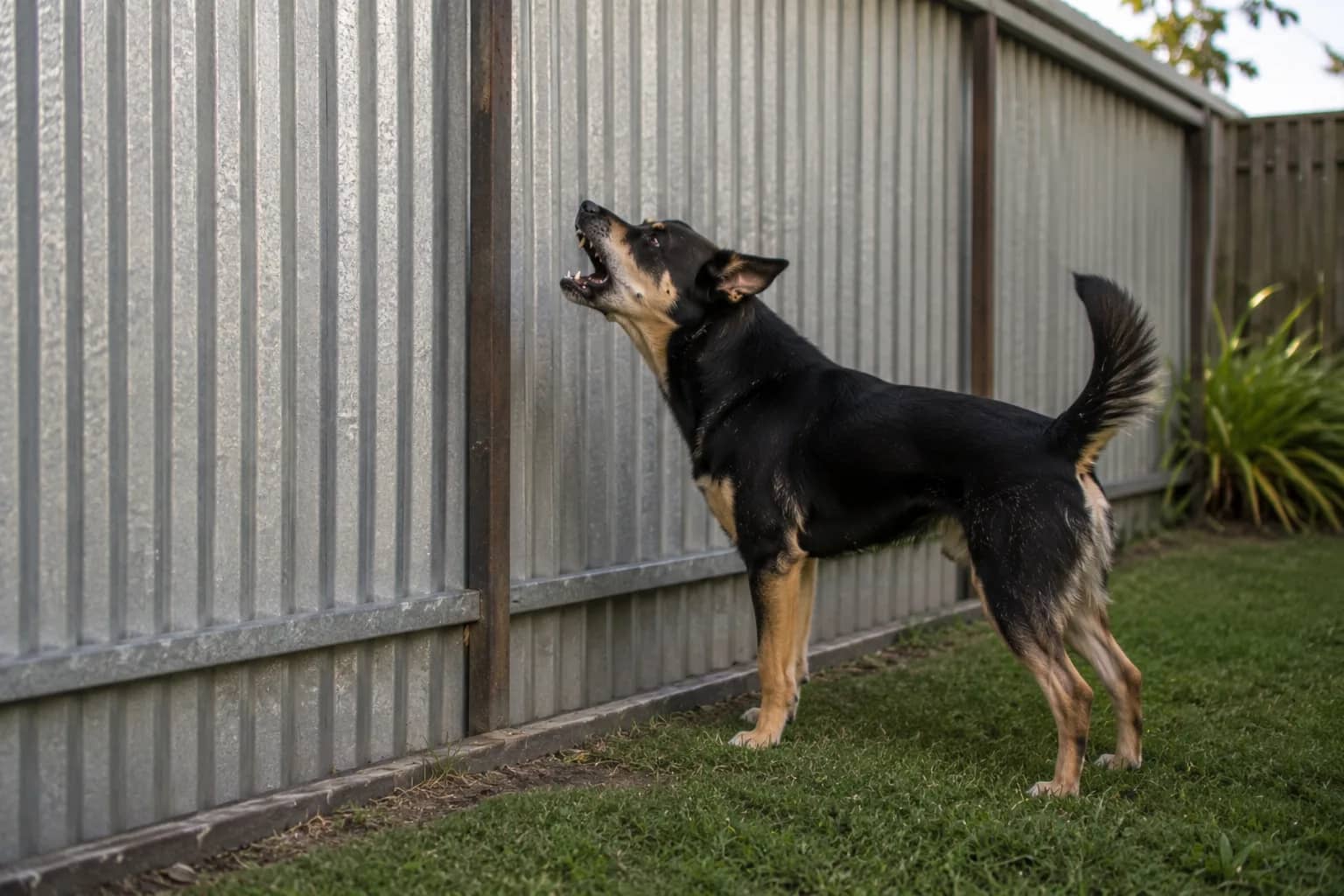
Stop Your Dog Barking at Everything — No Bark Collar
Why bark collars don't work long-term, and the four-type framework Pauline uses to resolve nuisance barking across regional SA homes.
11 min read·Mar 2026
anxiety barking
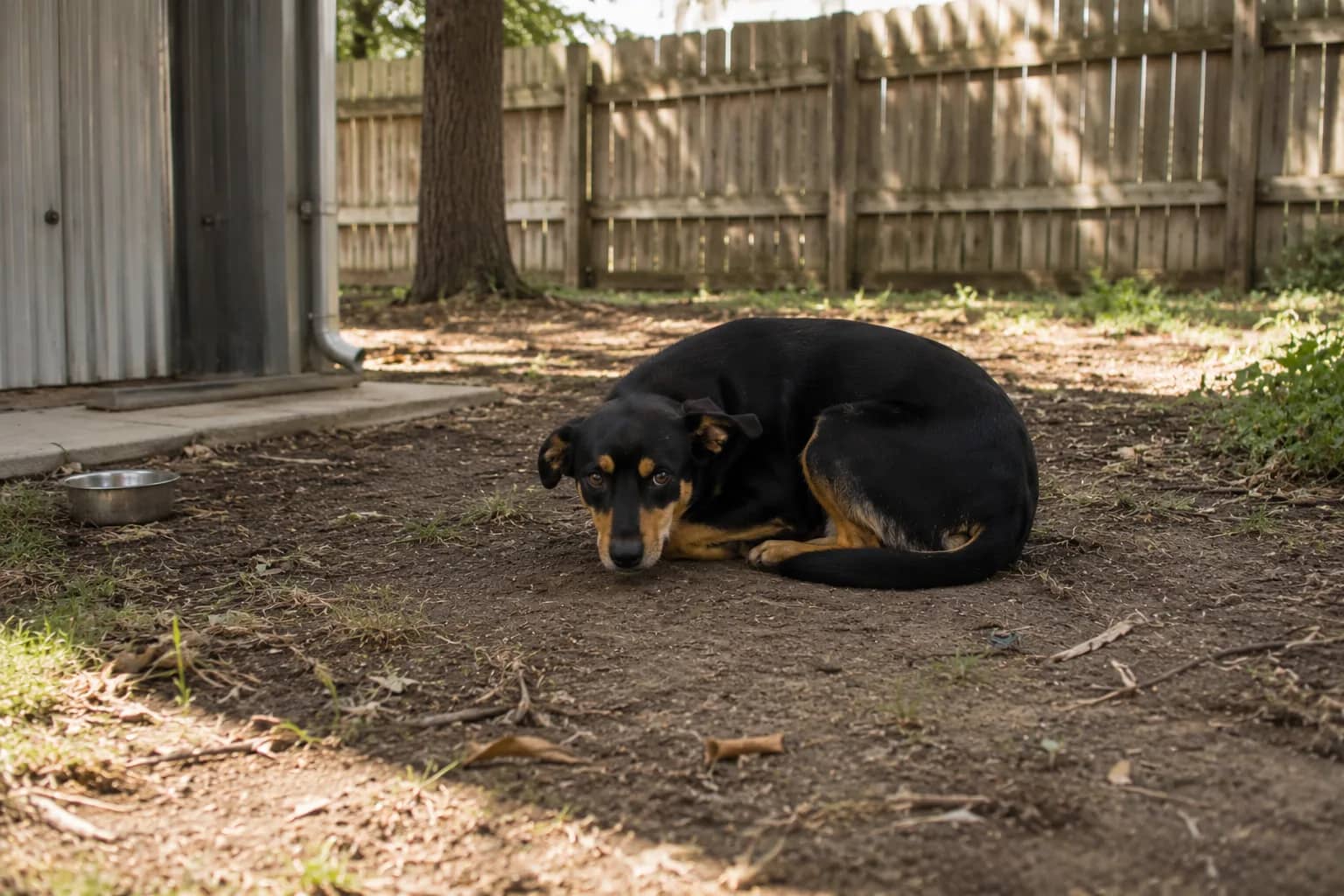
Separation Anxiety in Dogs: How to Tell, How to Help
Boredom or genuine separation anxiety? How to tell, and the desensitisation approach that resolves SA in regional SA households (including FIFO families).
13 min read·Feb 2026
obedience leadership
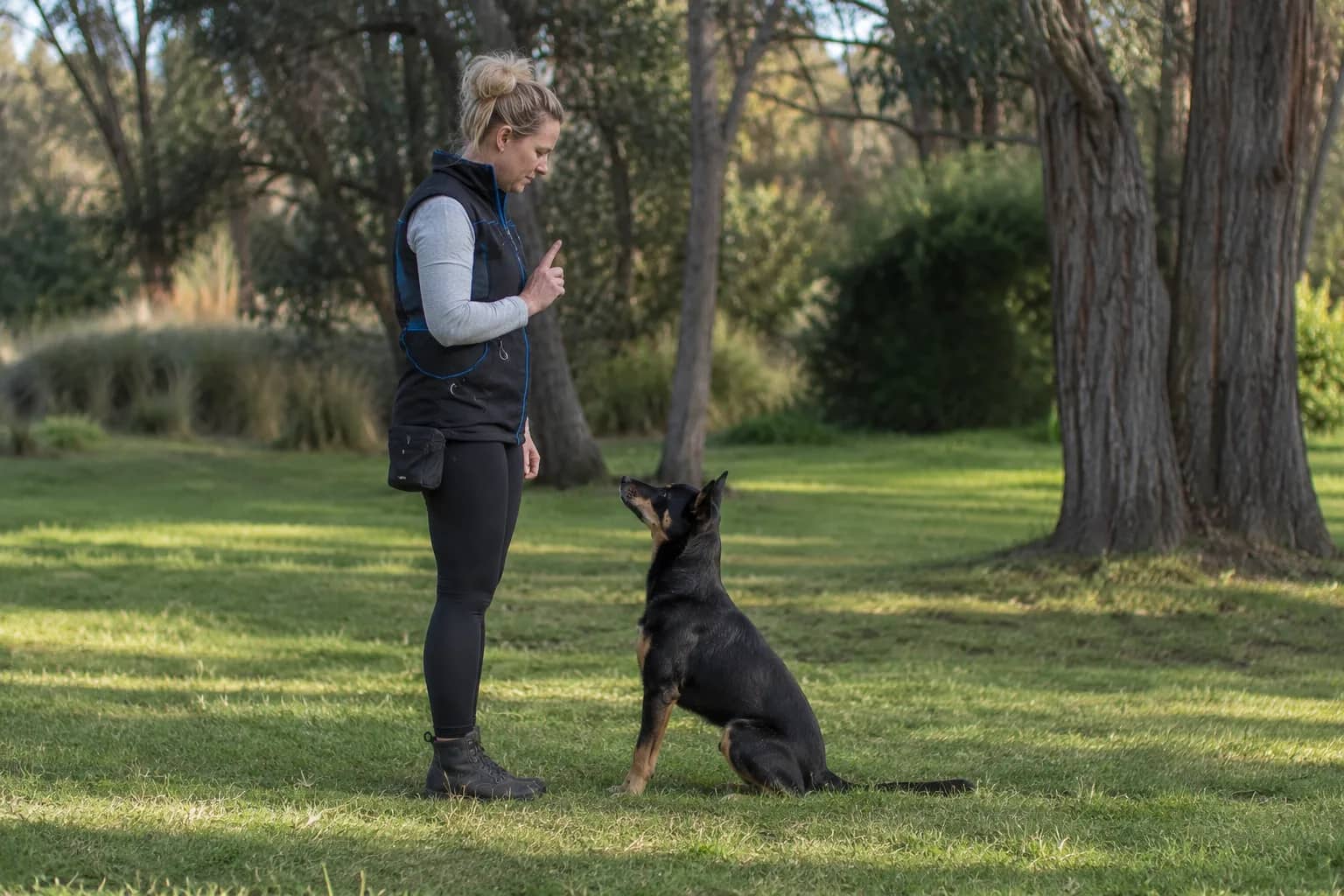
Calm Leadership: The Real Reason Your Dog Won't Listen
If your dog ignores you, the problem isn't training — it's leadership. Here's what calm, clear leadership actually looks like across regional SA households.
12 min read·May 2026
Barking Dog Training — frequently asked questions
Start here
Find out what is really going on with your dog — in 2 minutes.
The Free Dog Behaviour Test gives you (and Pauline) a clear starting point. No pressure, no spam, no obligation — just clarity.