
Service
Separation Anxiety Training (Regional South Australia)
A dog that panics when you leave is not being naughty. It is genuinely afraid — and forcing through it makes it worse, every time.
In short
Separation anxiety is a panic disorder, not a behaviour problem. A truly anxious dog is in genuine distress when alone — heart racing, drooling, sometimes self-harming. The fix is desensitisation under calm leadership, not crate-and-cry, and not "let them get used to it."
Sound familiar?
- Destruction the moment you leave — doors, frames, carpets
- Howling, screaming or non-stop barking when alone
- Self-injury (chewing paws, scratched flank)
- Refuses to eat unless you're home
- Follows you from room to room, can't settle anywhere alone
- Toileting indoors only when you're out
Why this works where other methods do not
- Crate training a panicking dog (often catastrophic)
- "Let them cry it out" — escalates the panic
- Long-distance day-care or "tire them out" approaches
- Calming chews, ThunderShirts, lavender — managing symptoms, not cause
- Calm leadership lowers baseline arousal so the dog can learn
- Graduated desensitisation at thresholds your dog can succeed at
- Owner habits adjusted (dramatic exits/returns drive anxiety up)
- Drug-free protocol — the anxiety itself gets resolved, not masked
How it works
- 1
Free Behaviour Test
Confirm it's genuine separation anxiety, not boredom barking or under-exercised arousal — they look similar and need different fixes.
- 2
Video diagnostic
I'll ask you to record what your dog does when alone. Without this, we're guessing.
- 3
In-home or online consultation
Full assessment, leadership reset, desensitisation plan tailored to your dog's threshold.
- 4
Graduated desensitisation protocol
Patient, structured, drug-free. We extend alone-time at thresholds your dog can succeed at — typically eight to sixteen weeks of progression with email support throughout.
Inside the process
What actually happens when we work together
Separation anxiety cases start with a video diagnostic. Before we do anything else, I need to see what your dog actually does when alone — and crucially, what it does in the first 15 minutes, the middle 30, and the back end of an absence. The behaviour is wildly different across those windows, and the diagnosis depends on which pattern is dominant. You set up a camera, leave the house in your normal way, and send me the clip.
My preference for every anxiety case is in-home. Sitting in your real environment, reading your dog in the room, and watching how the household interacts gives me information no video can. For owners outside the drive radius, online coaching is a workable alternative — but where the geography allows, in-person is always the format I recommend. We start with what the video tells us. Then we audit the build-up to your departures, the departures themselves, the goodbyes, the returns, the routines around door handles and shoes and car keys, and the cues your dog has learned to read as 'they are leaving.' Most owners are unintentionally amplifying the anxiety through the way they manage their own departure ritual; we reset that first.
The active training is a desensitisation protocol structured to your dog's current threshold. If your dog panics at 10 minutes, we work in 8-minute graduated absences; if 2 minutes is your dog's ceiling, we work in 60-second blocks. The work is patient, repetitive, and measured in small wins. We do not skip steps. We never let the dog panic to a baseline we have already moved past.
I don't support medicating a dog. In my experience, once dog owners follow this method the dog's anxiety can be handled without the need for medication. Email support runs for the full duration of the protocol — typically eight to sixteen weeks, with bi-weekly check-ins and ad hoc questions answered within one business day.
What changes
- Calm goodbyes — no whining, no panic
- A dog that settles when you leave the room
- Sustainable time alone, gradually extended
- A household that can leave for work, dinner, holidays
- A regulated nervous system in your dog — not just managed behaviour
Who this is for
- FIFO and shift-work households where routines shift suddenly
- Households that adopted during lockdowns and never re-introduced alone-time properly
- Rescue dogs with attachment trauma
- Owners returning to office work after years of remote
Expected outcomes
What you’ll notice — and when
The first sign of progress is your dog settling within the first ten minutes of an absence rather than escalating. That is the inflection point. Once we can hold that pattern reliably, every subsequent extension is technical work — adding time, adding contexts, adding variety — rather than the desperate firefighting most separation anxiety owners come to me from.
Week one to three is mostly about you. Your departure ritual changes. Your goodbye is removed. The build-up cues — picking up the keys, putting on shoes, going to the door — get rehearsed at random times when you are not leaving, until they no longer predict an absence. The dog's anxiety baseline drops simply because the world stops broadcasting departure signals every time you reach for your keys.
Weeks four to eight are the desensitisation work proper. Graduated absences extend on a schedule the dog can succeed at. By week six most cases can hold a 30-minute absence calmly; by week eight, two hours. The owner is now leaving the house for normal errands without rebuilding from zero each time, and the dog is sleeping or settling rather than vigilantly tracking the door.
By the three to four month mark, most cases can manage a normal working day. Some need ongoing support to handle longer absences (overnight, weekend trips) and that is normal. A small number of severe cases — typically dogs with attachment trauma or specific neurological components — need ongoing management rather than full resolution; for these, the outcome is a dog that lives a calm, manageable life with sensible boundaries on alone-time rather than a dog that can be left for twelve hours. I will tell you honestly which category your dog is in well before we are eight weeks deep, so you can plan around the realistic outcome.
Real owners. Real change.
Owners who’ve worked with Pauline on separation anxiety
“We are both really pleased with Arthur's progress and it's only day 3. He's almost like a new dog! Understanding the why behind Pauline's method then being consistent in our actions as pet owners is the most important takeaway we gained from our session with Pauline. Highly recommended.”
“I only wish we had engaged Pauline sooner! Our family found her in-home training session to be informative and invaluable in helping us make real change to our relationship with our 7 year old Border Collie. It was so beneficial to complete the training in person and be able to ask questions along the way. We gained a much better understanding of how our own habits and behaviors were unintentionally reinforcing the behaviors we didn't want. In just a few short weeks, by following Pauline's simple rules, we have already seen a noticeable change in our dog. The literature provided by Pauline has also been an excellent resource, helping us stay on track and reinforce what we learned. We are looking forward to calm outings with our dog in the future!”
“very informative, simple but effective methods to use.”
Where I work
Separation Anxiety across regional SA
Pauline travels in-home across these regions — and works online with owners anywhere in Australia.

Upper Spencer Gulf
Spanning Port Pirie, Port Augusta and Whyalla, the Upper Spencer Gulf is home to working families, working dogs, and the long open spaces that both help and hurt dog behaviour. I run regular in-person consultation days across the whole USG from my Crystal Brook base — with bookings grouped together for the longer Whyalla and Port Augusta trips so the drive carries multiple cases.
Dog training the Upper Spencer Gulf
Eyre Peninsula
The Eyre Peninsula is vast — Port Lincoln is roughly 5 hours from Crystal Brook, Ceduna closer to 8. I work in-home across the peninsula on blocked consultation days, grouping bookings together to make the drive worthwhile — and online coaching is equally available for owners who prefer it or whose case is time-sensitive.
Dog training in Eyre Peninsula
Iron Triangle
The Iron Triangle — Port Pirie, Port Augusta and Whyalla — is one of the densest regional dog populations in South Australia. Heart of the Pack is based 25 minutes south of Port Pirie at Crystal Brook and runs regular in-person consultation days across all three towns, with bookings grouped together for the longer Whyalla trips so the drive carries multiple cases.
Dog training in Iron Triangle
Mid North
The Mid North is home base. Crystal Brook sits squarely in the middle of it, and my standard rotation covers most Mid North towns within an hour's drive — Jamestown, Peterborough, Burra, Gladstone, Snowtown, Laura, Wirrabara, Quorn — with regular in-person consultation days through the week.
Dog training in Mid North
Clare Valley
Clare Valley wine-country dog life is its own thing. Tourists, dog-friendly cellar doors, dog-dense events, and a population mix of long-time locals and tree-changers from Adelaide. I run regular in-person consultation days across the Clare Valley from my Crystal Brook base — about 50 minutes south — with bookings grouped together so each Clare day carries multiple consults.
Dog training in Clare Valley
Yorke Peninsula
The Yorke Peninsula is beach country — fishing trips, tourist holidays, working sheep properties, and family dogs that range from spoilt town dogs to long-line drivers on the harvest. I run regular in-person consultation days across the peninsula from my Crystal Brook base, with bookings grouped together so the drive (90 minutes to the Copper Coast, around 2 hours to Yorketown) carries multiple consults in the same trip.
Dog training in Yorke PeninsulaTown-specific pages
Separation Anxiety in your town
Local-context pages for separation anxiety in the towns I work most often.
Related services
Often comes up alongside separation anxiety
These are the services owners working on separation anxiety most often need to look at too. If you're not sure which category your dog fits, the Free Behaviour Test sorts it in two minutes.
Format
Online Coaching
Because for most behaviour work, you are the variable — and that's what we coach.
Read moreFormat
In-Home Training
Your dog's behaviour lives in your environment. So the training does too.
Read moreService
Obedience Training
Obedience that holds in the paddock, the beach, the cafe and the chaos — because it comes from relationship, not bribery.
Read moreRead more on this topic
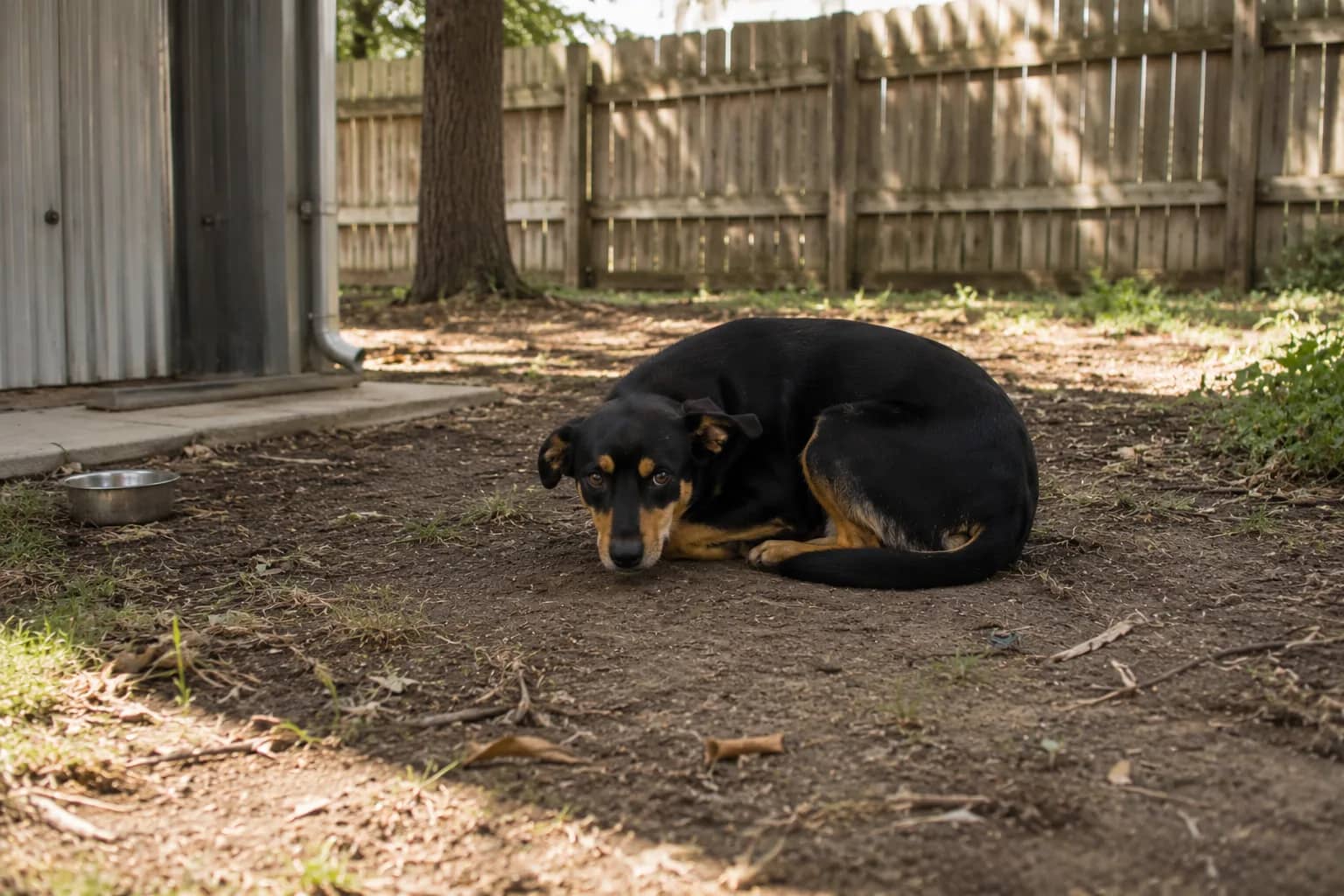
anxiety barking
Separation Anxiety in Dogs: How to Tell, How to Help
Boredom or genuine separation anxiety? How to tell, and the desensitisation approach that resolves SA in regional SA households (including FIFO families).
13 min read·Feb 2026
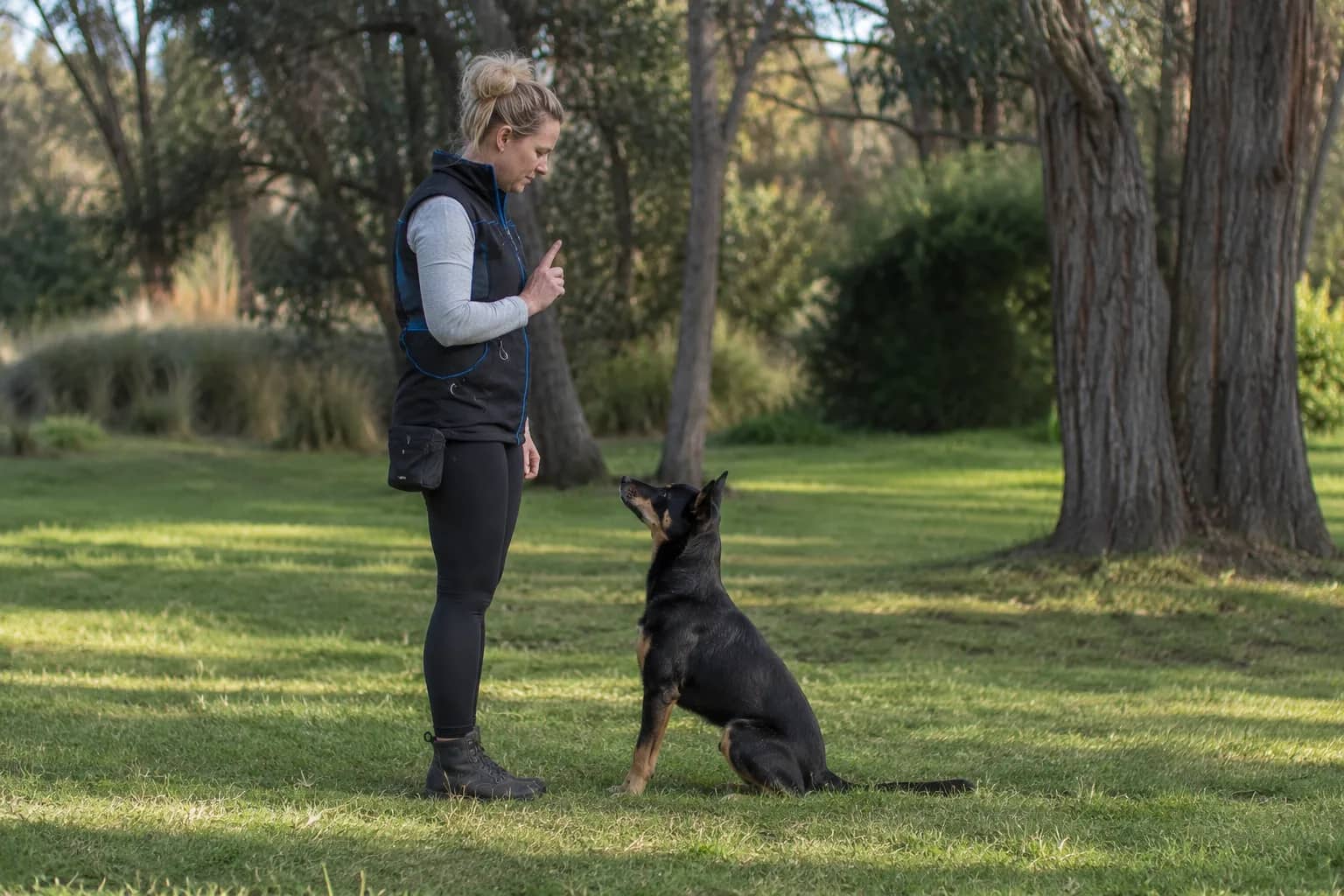
obedience leadership
Calm Leadership: The Real Reason Your Dog Won't Listen
If your dog ignores you, the problem isn't training — it's leadership. Here's what calm, clear leadership actually looks like across regional SA households.
12 min read·May 2026
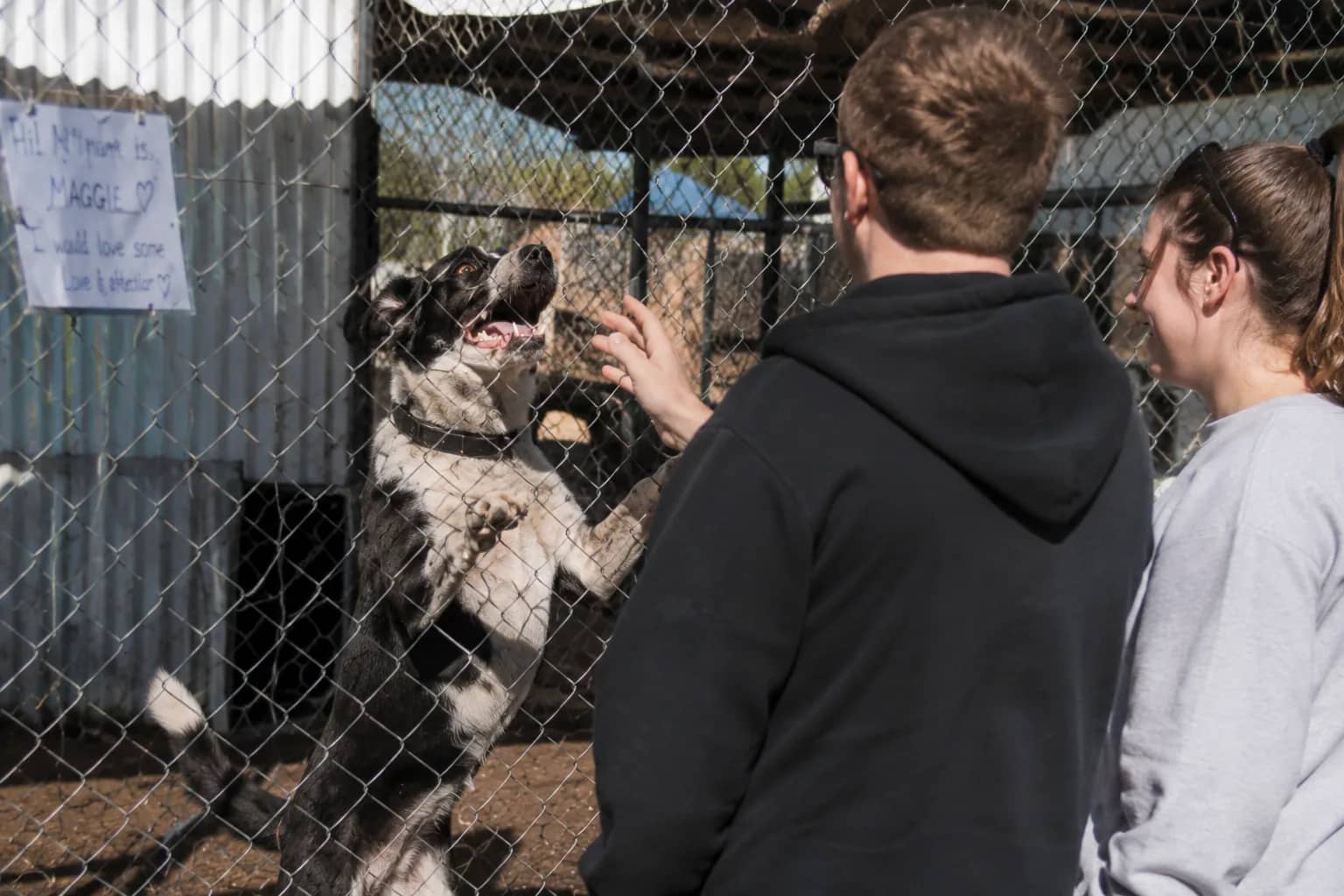
choosing a trainer
Rescue Dog Behaviour — The Critical First 30 Days
What to do — and not do — in the first month with a rescue dog. The decompression and leadership protocol Pauline uses across regional SA.
12 min read·Jan 2026
Separation Anxiety — frequently asked questions
Start here
Find out what is really going on with your dog — in 2 minutes.
The Free Dog Behaviour Test gives you (and Pauline) a clear starting point. No pressure, no spam, no obligation — just clarity.