German Shepherd Training in Regional SA — What the Breed Actually Demands

German Shepherds are one of the most common large breeds across regional South Australia, and one of the most frequently mishandled. The temperament that makes them brilliant guardians and partners also makes them unforgiving of weak leadership. This is what GSD owners in the Iron Triangle, the Mid North and the wider Upper Spencer Gulf need to know — the working/show/pet-line gap, the cases I see most, and what the breed actually demands from its people.
There is a particular type of phone call I take, often from a Port Augusta or Whyalla household, that starts the same way: "We've got a German Shepherd, he's 14 months old, and we're at our wits' end." Sometimes it's reactivity on lead. Sometimes it's a fence-line problem with the neighbours. Sometimes it's separation anxiety so bad the dog has chewed through the back door. Sometimes the dog has just bitten someone and the family is talking about surrender.
The GSD is one of the breeds I see most across regional SA, and consistently one of the breeds owners underestimate the most. Not because owners are careless — most aren't. Because the GSD is so commonly portrayed as a calm, noble family dog (which it can be) that the work required to get it there is rarely discussed.
This is what the breed actually asks of you, what's hard about it in regional SA specifically, and how to do right by a Shepherd that's struggling.
A real temperament profile
A correctly bred German Shepherd is:
- Highly intelligent and quick to learn. This is a double-edged sword. A GSD learns the right things faster than most breeds, and the wrong things just as fast.
- Genetically protective. Bred for stock guarding, then policing and military work. Watchfulness is part of the package, not a flaw.
- Strongly bonded. GSDs attach hard, often to one person. That bond is the leverage you have; it's also the source of severe separation anxiety when it goes wrong.
- Sensitive. Despite the size and the bark, most GSDs are emotionally sensitive dogs. Heavy-handed methods damage them faster than they damage softer breeds.
- Reactive when stressed. Under-led or under-stimulated, a GSD's go-to is to escalate. Reactivity, fence aggression and stranger barking are predictable downstream effects of an under-met dog.
- Stoic about physical discomfort. Joint and back issues get hidden for a long time. Worth knowing as the dog ages.
A well-led GSD is one of the most useful and gentle large breeds in the world. An under-led one is one of the most dangerous, because the size, the bark and the bite force are all genuinely capable of doing harm.
Working-line vs show-line vs pet-line — and why it matters
Most regional SA owners don't know what line of GSD they have, and the distinction matters more than people realise.
Working-line
Bred for police, military, protection sport, search and rescue. Higher drive, more nerve, leaner build, often darker colours (sable, black, bicolour). The dogs Belgian Shepherd / Malinois owners are sometimes accidentally getting from German Shepherd litters.
Working-line GSDs need a job in the way a working kelpie does — daily structured work, mental engagement, an outlet that's been deliberately built. Without it, you'll see fence reactivity, stranger reactivity, household hyper-vigilance and, in extreme cases, redirected aggression.
Show-line (West German "high line" and American)
Bred for the show ring. The sloping back, heavier build, often plush black-and-tan coat that most people picture when they hear "German Shepherd." Lower drive than working-line on average, but still genuinely a Shepherd — still watchful, still bonded, still sensitive.
Most pet households are better suited to show-line GSDs. The drive is more manageable; the leadership requirements are still real but less unforgiving.
Pet-line / backyard-bred
This is most regional SA Shepherds. Bred without paperwork, often without intentional selection beyond "the parents looked nice." Temperament varies wildly. Health issues — hips, elbows, EPI, degenerative myelopathy — are more common.
The breed standard is essentially a coin flip with these dogs. Some are calm and stable; some are nervy, fear-aggressive or anxious. The leadership work is the same in either case, but you may be working with a more reactive base nervous system than a properly bred dog would give you.
If you're buying a GSD puppy, the line matters. If you're working with the dog you already have, the line tells you what to expect — not what's possible.
The common cases I see across the Upper Spencer Gulf
A few patterns dominate German Shepherd consultations across Port Pirie, Port Augusta, Whyalla and the surrounding Mid North.
On-lead reactivity
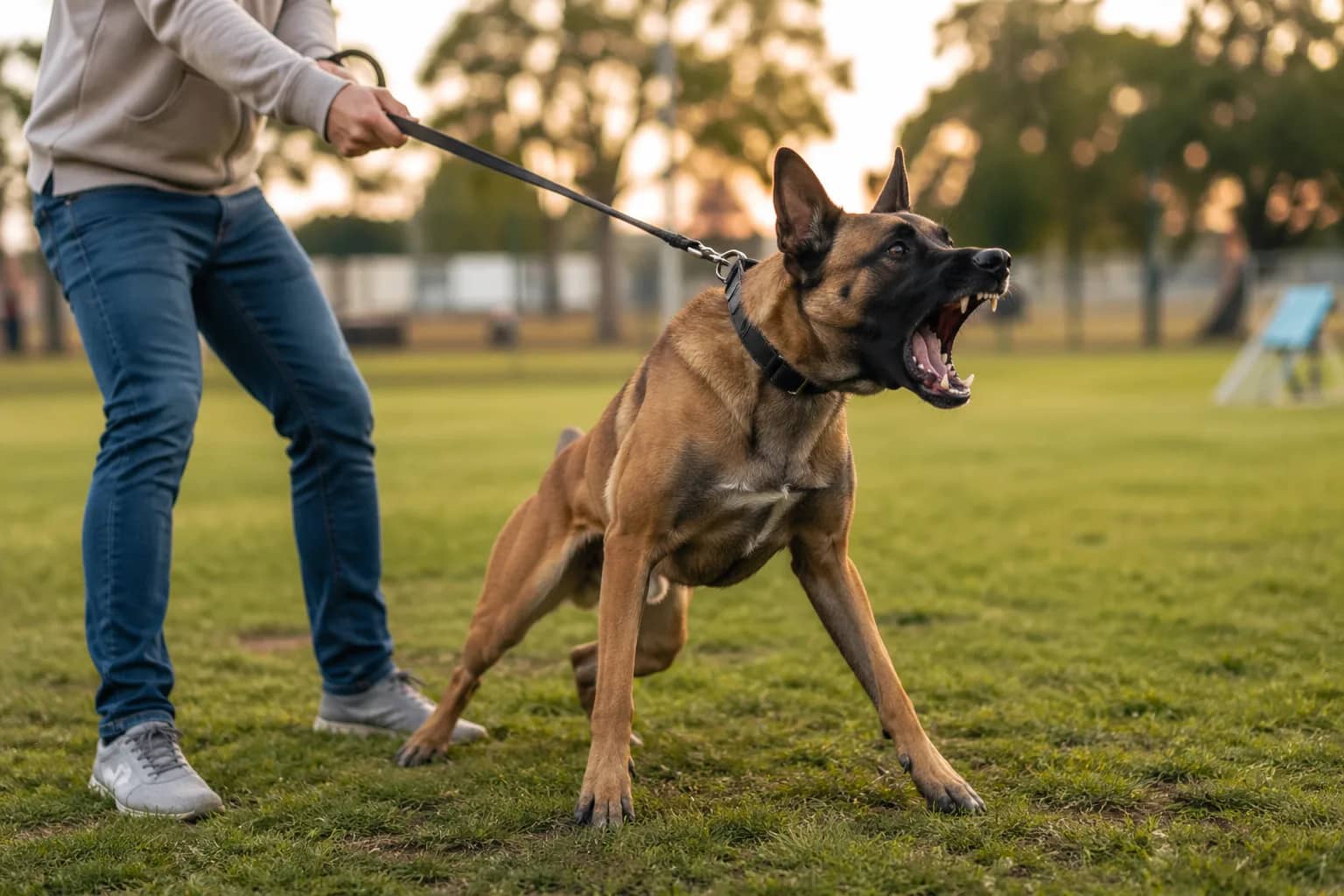
The most common GSD case in the Iron Triangle. The dog is fine off-lead at the property, fine in the back yard, fine with the family — but on lead in town, sees another dog at 40 metres and explodes.
This is almost never aggression. It's frustration meeting an inability to communicate, often compounded by the lead transmitting your tension straight into the dog. The fix is threshold work, calm leadership on the lead, and a deliberate plan to stop the rehearsal of the explosion.
Fence-line aggression
Common in town blocks across all three Iron Triangle towns. The dog patrols the fence, barks and lunges at every passing dog, every passing pedestrian, every passing car. By the time the owner calls, the behaviour is so practised the dog is already in the yard waiting for the next trigger.
Two things together fix this: removing visual access to the trigger (shadecloth, hedging, supervised yard time only) and addressing the underlying state with leadership work. Trying to "train through" fence aggression without first removing the rehearsal almost never works.
Adolescent challenge
GSD adolescence runs roughly 10 to 24 months, and it's where most Shepherds lose the plot — or rather, where their owners discover that the plot was always a bit thinner than they realised. The dog stops responding to cues that worked at 8 months. Pulls harder. Tests the door. Pushes past the owner. Sometimes starts growling at one specific family member.
This is not the dog "turning." This is the dog reaching the age where soft early training stops carrying it. The fix is a leadership reset — clearer boundaries, calmer follow-through, the unambiguous return of structure. Done right, adolescent GSDs respond fast.
Separation anxiety in shift-work households
The Upper Spencer Gulf runs on shift work — Nyrstar in Port Pirie, the OneSteel and GFG works in Whyalla, FIFO into the mining operations further north, 12-hour rotations in the processing facilities. GSDs bonded hard to one person and left alone unpredictably for 12 hours at a stretch are textbook separation anxiety candidates.
The dogs aren't broken. The schedule chaos is what cracks them. The fix is structured settle work, environmental management, and where needed, a deliberate plan that uses both partners in the household to share the bond. Full SA framework here.
Reactivity to one family member
Less common but distinctive. The dog has decided one person in the household — often a teenage child, sometimes a partner — is not part of the leadership structure. Growls when that person walks past. Resource guards from them. Sometimes refuses to be handled by them.
This is a household leadership problem, not a dog problem. The targeted person needs to be coached into the leadership work alongside everyone else. Once the dog reads the same consistent signal from every adult in the household, the targeting resolves.
The leadership demands GSDs put on owners
Of every breed I work with, German Shepherds are among the most leadership-dependent. They are not a "raise yourself" breed. They are a "raise me deliberately or watch me become a problem" breed.
What that means in practice:
- Every adult in the household needs to be on the same page. Mixed messages from different humans break a GSD faster than they break softer breeds. The dog reads the inconsistency as a leadership gap and tries to fill it.
- Energy management is constant. A bouncing, shouting household produces a bouncing, barking dog. The single most effective intervention in many GSD consults is asking the family to slow themselves down.
- Follow-through has to be 100%, not 80%. A GSD that learns that "off the couch" means "maybe, sometimes" will test that boundary forever. The same dog under consistent follow-through tests it once and lets it go.
- The dog has to defer at doorways, at thresholds, at feeding time. Not because deference is intrinsically important, but because those small daily moments are where the dog's mental model of who's in charge gets written.
- The breed forgives less. Soft breeds tolerate years of inconsistent leadership and turn out mostly fine. GSDs don't. A six-month patch of inconsistency in adolescence cements behaviours that take a year to undo.
None of this is dominance. None of it involves force. It's the calm, clear, consistent leadership pattern every dog responds to — applied with the consistency a Shepherd specifically requires.
Why force-based methods fail badly with this breed
This is worth saying explicitly because GSD owners are repeatedly steered toward e-collars, prong collars and "balanced" trainers, particularly online.
A German Shepherd is a sensitive, intelligent, protectively bred dog. Add a corrective tool to a reactive Shepherd and you have not addressed the reactivity — you have added a layer of anticipated pain to the trigger. The dog now associates the trigger (the other dog, the postal worker, the kid on the bike) with both the original arousal and the e-collar pop. Reactivity gets worse, not better. Bite history sometimes follows.
The dogs I've seen with the worst behavioural outcomes are almost always dogs that were corrected hard during adolescence. The owners were doing what they were told. The advice was wrong. More on why aggressive training methods fail here.
What Pauline's approach looks like with a GSD
The method is the same one I apply to every dog. With a Shepherd specifically, the first session typically covers:
- A full household audit. Every adult in the family needs to understand what's changing and why. GSDs need consistent leadership from everyone, not just the primary handler.
- Threshold mapping. For reactive dogs, identifying the distance at which the dog can still think and work — and never working closer than that until the foundation is built.
- The settle. A defined rest place, used consistently, that the dog goes to and stays at for sustained periods. Critical for any anxious or hyper-vigilant Shepherd.
- Environmental management. Removing the rehearsals — fence visual access, doorway charging, lead reactivity opportunities — for the two to four weeks the leadership reset is bedding in.
- A structured outlet. Daily mental work appropriate to the line. Working-line dogs need real work; show-line and pet-line dogs need at least 20 minutes of structured engagement.
- Recall, properly built. Not optional for a GSD. The breed's size, drive and protective instinct make off-lead reliability non-negotiable.
Most owners feel the household change inside the first week. By a month, the dog the family was thinking about surrendering is usually most of the way back.
A note on adolescents specifically
If you have a Shepherd between 10 and 24 months and you're reading this because something has just gone wrong — a growl, a snap, a sudden refusal to obey — please don't panic and don't escalate.
The single most damaging response to adolescent Shepherd behaviour is to "lay down the law" with corrections. The dog isn't being defiant. The dog is in the developmental stretch where the early relationship is being stress-tested, and the test is reading correctly whether you respond with calm authority or with anger.
Reduce the rehearsal opportunities. Slow the household down. Tighten the routine. Get expert eyes on the dog quickly. These cases are absolutely fixable, but the longer the adolescent behaviour is allowed to consolidate, the longer the rehab.
How Pauline works with GSD owners across regional SA
Heart of the Pack is based at Crystal Brook in the Mid North, 25 minutes south of Port Pirie. I work in-home across the Iron Triangle, the Upper Spencer Gulf, the Mid North, the Clare Valley, the Yorke Peninsula and the Eyre Peninsula. German Shepherds are a significant portion of my caseload — pet-line, show-line and the occasional genuine working-line dog — across all of it.
For reactivity, fence aggression and adolescent challenge cases, in-home work is the right format. In-person is always my preferred format for any anxiety case as well — but if shift-work or distance rules in-home out, online coaching is a workable alternative that flexes around a rotating roster.
If you're not sure where you're at, start with the Free Behaviour Test — two minutes, no commitment, and you'll come out with a clearer read on what's actually driving the behaviour. If you'd rather go straight to a conversation, contact me directly. I personally reply within one business day.
A German Shepherd that's struggling is almost always a leadership problem first. Once that's addressed, the dog underneath is usually exactly the dog you hoped you were getting.
Not sure where to start with your dog?
Take the Free Dog Behaviour Test.
Two minutes. You’ll find out exactly what’s driving your dog’s behaviour — and what to do next.
Frequently asked questions
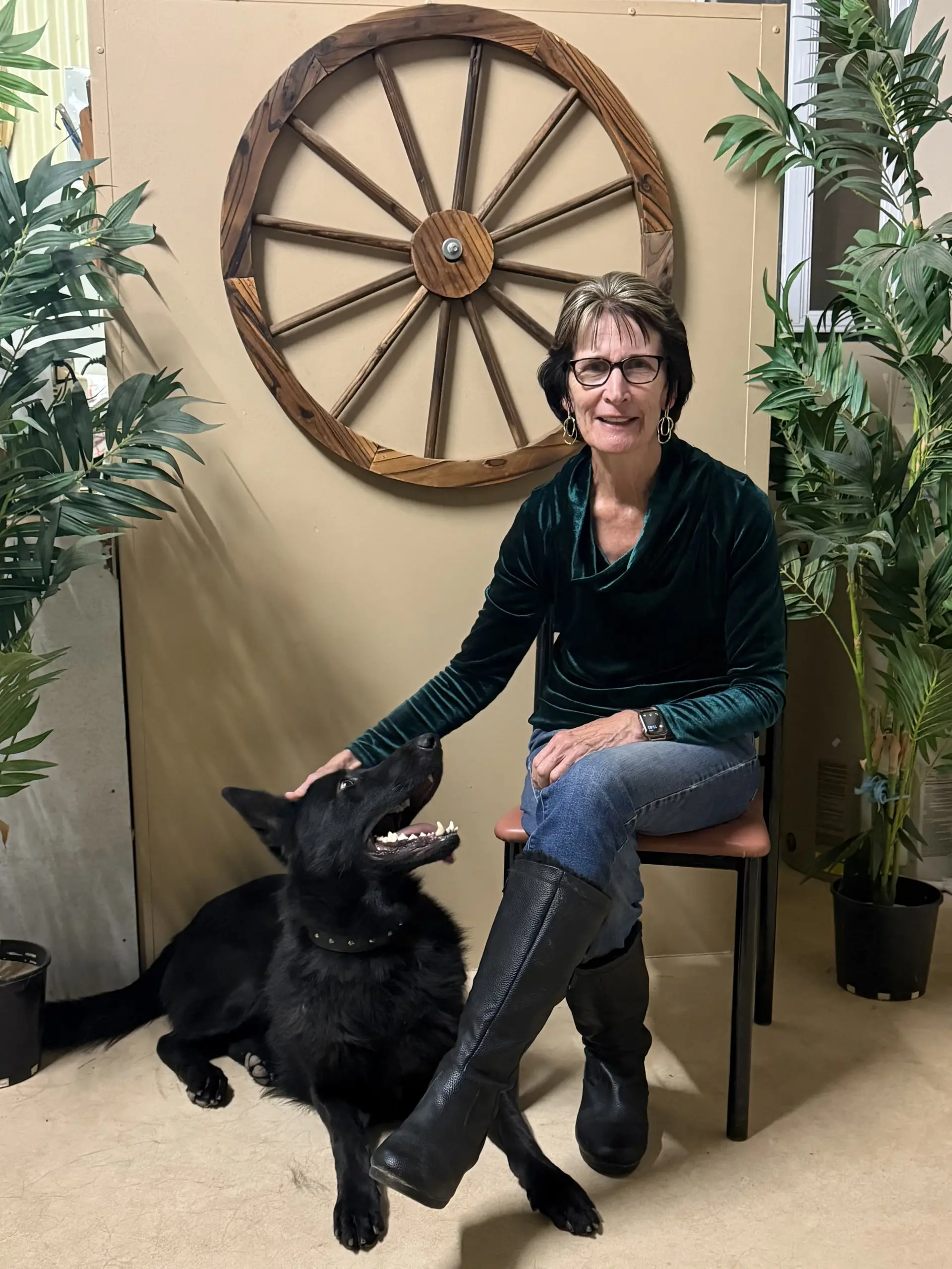
Written by
Pauline Cowey
Accredited Dog Behaviourist, Communicator, Owner Educator and Trainer based at Crystal Brook, South Australia. Decades of hands-on work resolving aggression, reactivity, anxiety and obedience cases across regional SA — through ethical, leadership-based methods.
Read Pauline’s full story →