
Service
Reactive Dog Training in Regional South Australia
Reactivity is over-arousal wearing a leash. Calm the arousal, the reactivity collapses.
In short
Reactive dog training works when it addresses arousal, not behaviour. A reactive dog isn't deciding to lunge — it's overwhelmed and exploding. The method here is to lower the underlying arousal through leadership, manage the environment so your dog isn't pushed past threshold, and rebuild calm exposure over time.
Sound familiar?
- Lunging, barking, screaming on lead at other dogs
- Frustrated greeter — fine off lead, awful on it
- Reacts to bikes, cars, runners, prams, kids
- Fence-fighting at home
- Can't walk the dog past the front gate without a meltdown
Why this works where other methods do not
- Counter-conditioning with high-value treats — works in a quiet room, fails on the street
- Aversive corrections that escalate arousal
- Avoidance forever ("just don't go where there are dogs")
- Generic "BAT" or "LAT" protocols applied without leadership
- Calm leadership lowers your dog's baseline arousal
- Threshold work in your real environment, not a controlled clinic
- Trigger exposure structured so your dog can succeed every time
- A dog that walks past a trigger because the trigger genuinely no longer matters
How it works
- 1
Free Behaviour Test
Identify whether the reactivity is fear, frustration or over-arousal — they look the same and need different approaches.
- 2
In-home consultation
Leadership reset at home, then real-world threshold work in your usual walking environment.
- 3
Threshold and exposure protocol
A step-by-step plan to rebuild calm at every distance, every trigger.
Inside the process
What actually happens when we work together
Reactivity work starts at home, not on the street, because the reactivity you see on lead is downstream of an arousal pattern that already exists indoors. A reactive dog is rarely calm in the lounge room before the trigger appears; it is already running at 70% of redline, and the trigger pushes it the rest of the way. We have to lower the baseline before we touch the behaviour.
The in-home consultation begins with that work. I sit, I watch, I see what the household actually looks like — where the dog patrols, where it postures, what it self-appoints to manage, how the family responds. We reset the leadership baseline through household routine adjustments, settle protocols, and the Five Rules. Inside an hour the dog's whole body relaxes — and that is the resting state we will be operating from when we hit the lead.
From there we go to the street. We work in your real walking environment with your real triggers — the neighbour's dog, the bike on the cycle path, the magpie that always nests in that gum tree. We do not flood the dog and we do not stage triggers that are too easy. We work at the threshold where your dog can still think, and we rebuild the response from there. By the end of the session you and your dog have walked past at least one previously catastrophic trigger calmly.
The written plan after the consult gives you a week-by-week progression: which walks, which times, which distances, what to do if it goes wrong. Email follow-up covers the inevitable plateaus and setbacks. Reactivity work typically needs one in-home plus three to six weeks of email coaching; for severe cases or cases with multiple trigger categories, a follow-up in-home around week four locks in the gains.
What changes
- Walks past triggers without erupting
- Calm, loose lead even when another dog appears
- A dog that looks to you for direction instead of escalating
- Off-lead access in regional SA paddocks, beaches and parks
Who this is for
- On-lead reactive dogs of any breed
- Frustrated greeters who explode on lead and play fine off it
- Dogs that have escalated from reactivity toward aggression
- Owners exhausted from "walk avoidance" routines
Expected outcomes
What you’ll notice — and when
The first outcome is one calm walk past a trigger. That is the proof. Inside the first consultation, almost every reactive dog walks past at least one of its usual triggers without erupting — at the right distance, in the right state, with the right handler input. That single moment is what the rest of the work is built on, and you will remember it for years.
Week one to three is establishing a new norm. Walks become predictable. You and the dog work the same routes at the same times in the same order, building a string of small wins. Trigger distance shrinks gradually — what was a 50-metre threshold becomes 30 metres becomes 15. By week three most reactive dogs are completing their normal walks without major incidents, with the occasional escalation handled by the handler rather than spiralling.
Weeks four to twelve consolidate. New environments come online — different streets, the park, the foreshore, the cafe. The threshold continues to compress, and at some point in this window most reactive dogs reach the point where the trigger genuinely no longer matters. Not suppressed; uninterested. The bark falls away, the lunge does not appear, the dog walks past with a glance and continues on. That is not magic; it is the dog's nervous system regulating around a calm, consistent leader.
Long-term, the realistic outcome for a dedicated owner is a dog that walks anywhere in regional South Australia without reactivity issues — beach, town, paddock track, busy market days included. The dog will always be more sensitive than a non-reactive dog and will always need handler awareness around certain triggers. That is fine. What changes is that the household runs without the constant adrenaline that reactivity demands, and walks become something both of you look forward to.
Real owners. Real change.
Owners who’ve worked with Pauline on reactive dog training
“We are both really pleased with Arthur's progress and it's only day 3. He's almost like a new dog! Understanding the why behind Pauline's method then being consistent in our actions as pet owners is the most important takeaway we gained from our session with Pauline. Highly recommended.”
“I only wish we had engaged Pauline sooner! Our family found her in-home training session to be informative and invaluable in helping us make real change to our relationship with our 7 year old Border Collie. It was so beneficial to complete the training in person and be able to ask questions along the way. We gained a much better understanding of how our own habits and behaviors were unintentionally reinforcing the behaviors we didn't want. In just a few short weeks, by following Pauline's simple rules, we have already seen a noticeable change in our dog. The literature provided by Pauline has also been an excellent resource, helping us stay on track and reinforce what we learned. We are looking forward to calm outings with our dog in the future!”
“very informative, simple but effective methods to use.”
Where I work
Reactive Dog Training across regional SA
Pauline travels in-home across these regions — and works online with owners anywhere in Australia.
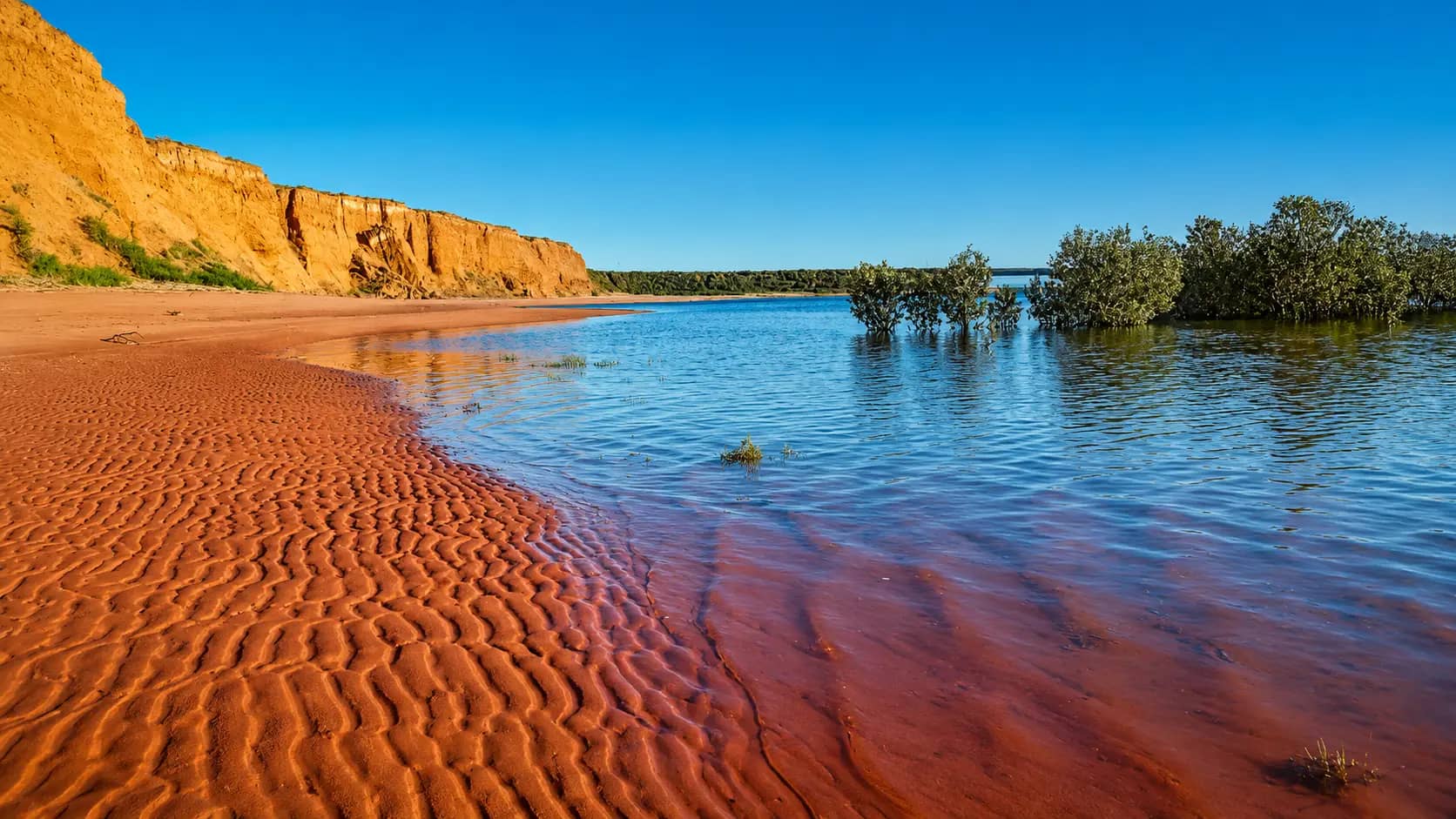
Upper Spencer Gulf
Spanning Port Pirie, Port Augusta and Whyalla, the Upper Spencer Gulf is home to working families, working dogs, and the long open spaces that both help and hurt dog behaviour. I run regular in-person consultation days across the whole USG from my Crystal Brook base — with bookings grouped together for the longer Whyalla and Port Augusta trips so the drive carries multiple cases.
Dog training the Upper Spencer Gulf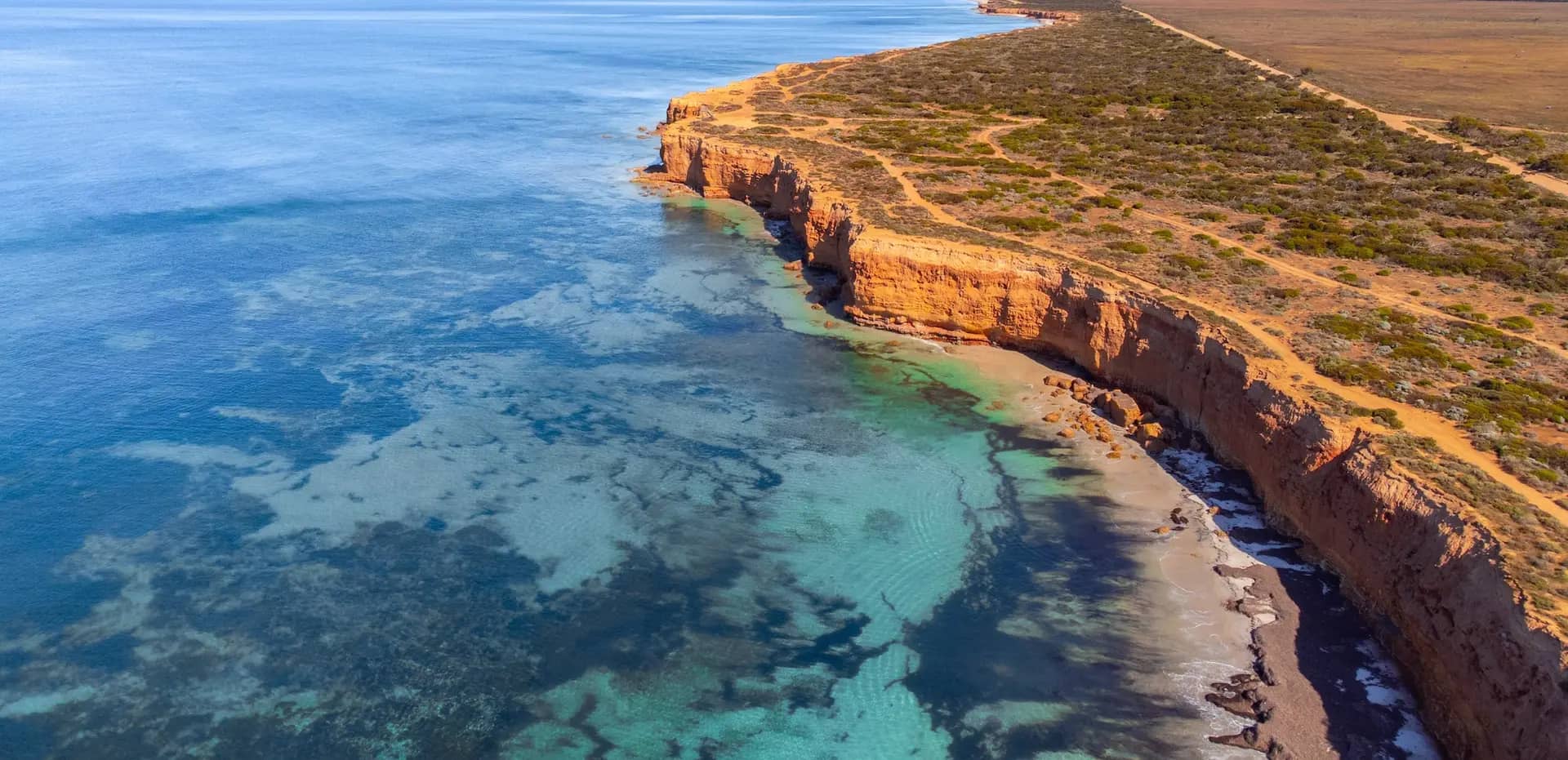
Eyre Peninsula
The Eyre Peninsula is vast — Port Lincoln is roughly 5 hours from Crystal Brook, Ceduna closer to 8. I work in-home across the peninsula on blocked consultation days, grouping bookings together to make the drive worthwhile — and online coaching is equally available for owners who prefer it or whose case is time-sensitive.
Dog training in Eyre Peninsula
Iron Triangle
The Iron Triangle — Port Pirie, Port Augusta and Whyalla — is one of the densest regional dog populations in South Australia. Heart of the Pack is based 25 minutes south of Port Pirie at Crystal Brook and runs regular in-person consultation days across all three towns, with bookings grouped together for the longer Whyalla trips so the drive carries multiple cases.
Dog training in Iron Triangle
Mid North
The Mid North is home base. Crystal Brook sits squarely in the middle of it, and my standard rotation covers most Mid North towns within an hour's drive — Jamestown, Peterborough, Burra, Gladstone, Snowtown, Laura, Wirrabara, Quorn — with regular in-person consultation days through the week.
Dog training in Mid North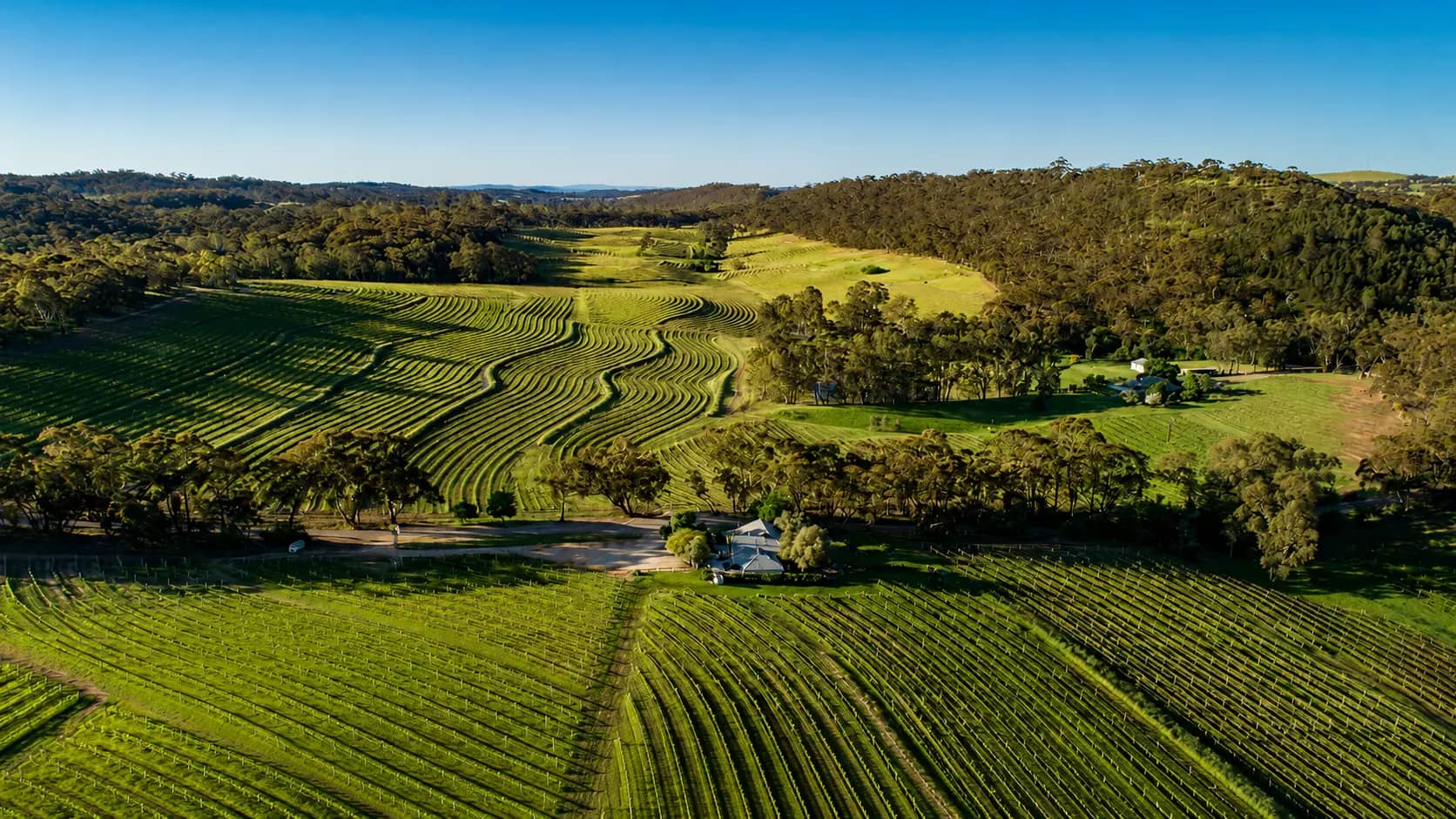
Clare Valley
Clare Valley wine-country dog life is its own thing. Tourists, dog-friendly cellar doors, dog-dense events, and a population mix of long-time locals and tree-changers from Adelaide. I run regular in-person consultation days across the Clare Valley from my Crystal Brook base — about 50 minutes south — with bookings grouped together so each Clare day carries multiple consults.
Dog training in Clare Valley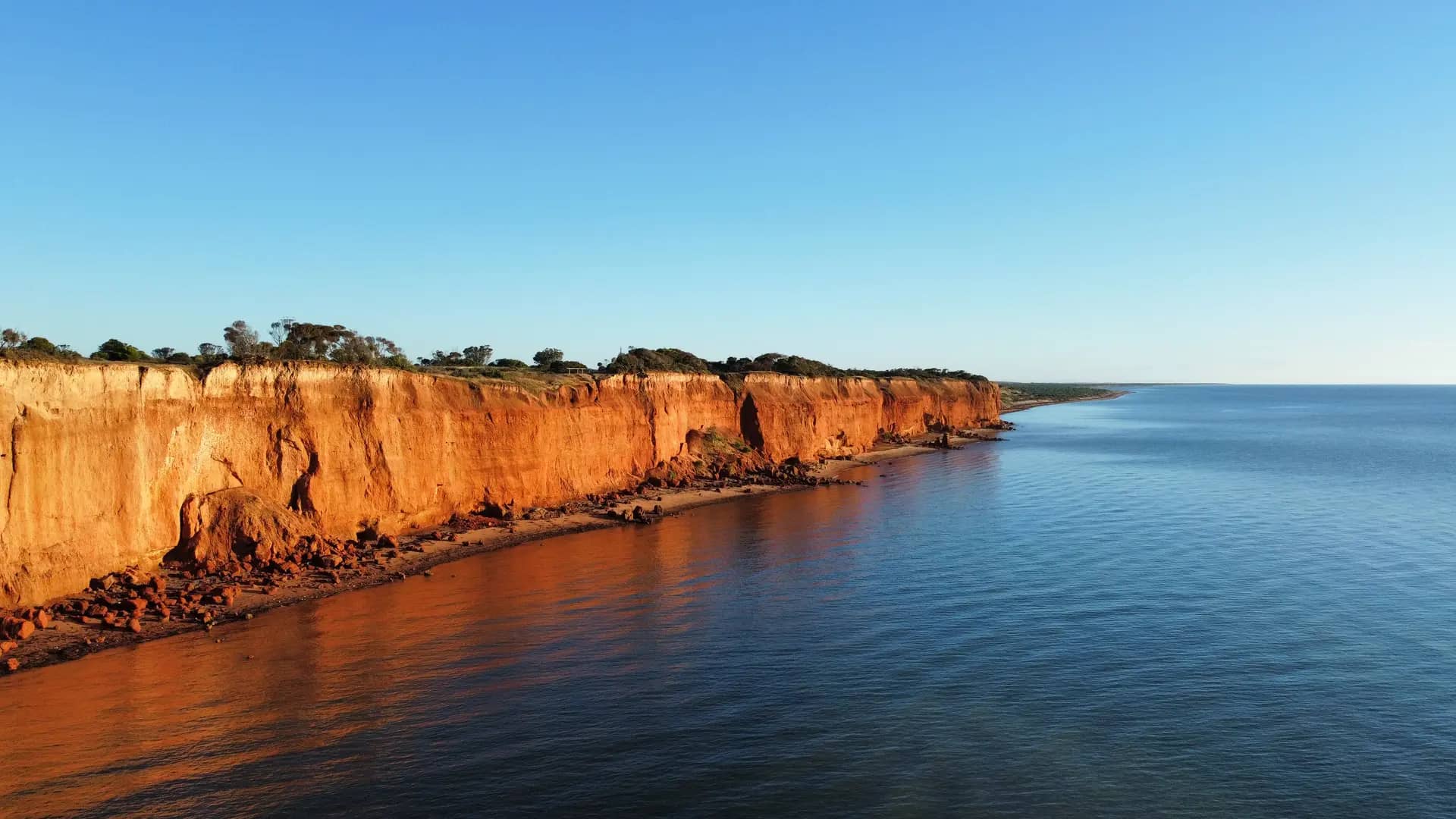
Yorke Peninsula
The Yorke Peninsula is beach country — fishing trips, tourist holidays, working sheep properties, and family dogs that range from spoilt town dogs to long-line drivers on the harvest. I run regular in-person consultation days across the peninsula from my Crystal Brook base, with bookings grouped together so the drive (90 minutes to the Copper Coast, around 2 hours to Yorketown) carries multiple consults in the same trip.
Dog training in Yorke PeninsulaTown-specific pages
Reactive Dog Training in your town
Local-context pages for reactive dog training in the towns I work most often.
Related services
Often comes up alongside reactive dog training
These are the services owners working on reactive dog training most often need to look at too. If you're not sure which category your dog fits, the Free Behaviour Test sorts it in two minutes.
Service
Aggressive Dog Training
Aggressive behaviour rarely starts as aggression — it is almost always fear or arousal wearing a louder coat. The work is calming the underlying state, not punishing the symptom.
Read moreService
Obedience Training
Obedience that holds in the paddock, the beach, the cafe and the chaos — because it comes from relationship, not bribery.
Read moreService
Barking Dog Training
Barking is a symptom. Find the cause, the noise stops on its own.
Read moreRead more on this topic
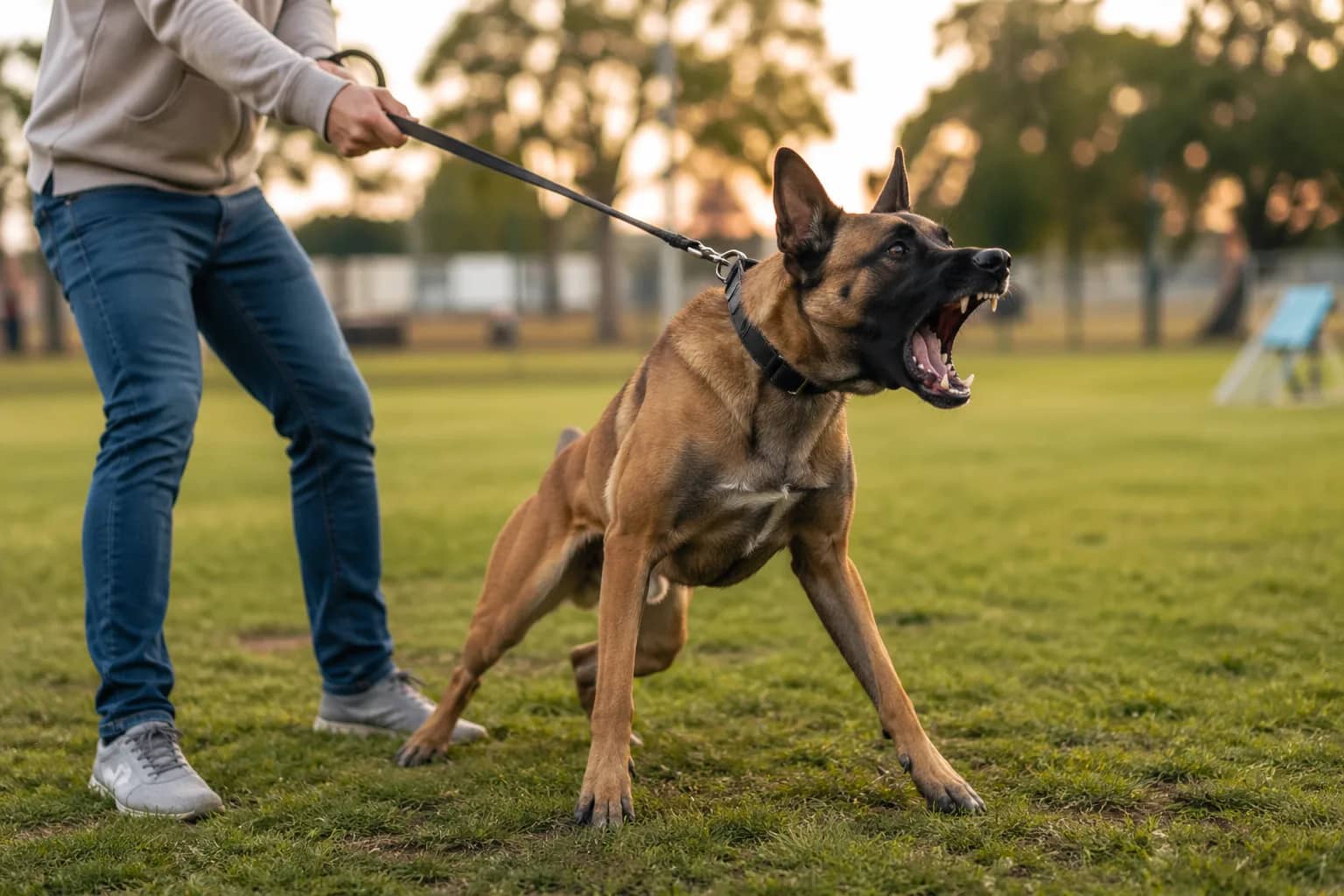
aggression reactivity
Why Aggressive Dog Training Methods Fail
Punishment-based aggressive dog training makes things worse. The science of why, and the ethical leadership-based approach used in regional SA.
14 min read·Apr 2026
obedience leadership
Stop the Pulling: Calm Lead Walking for Your Dog
Loose-lead walking — without head halters, no-pull harnesses or gimmicks. The leadership-based method that works for regional SA dogs.
10 min read·Mar 2026
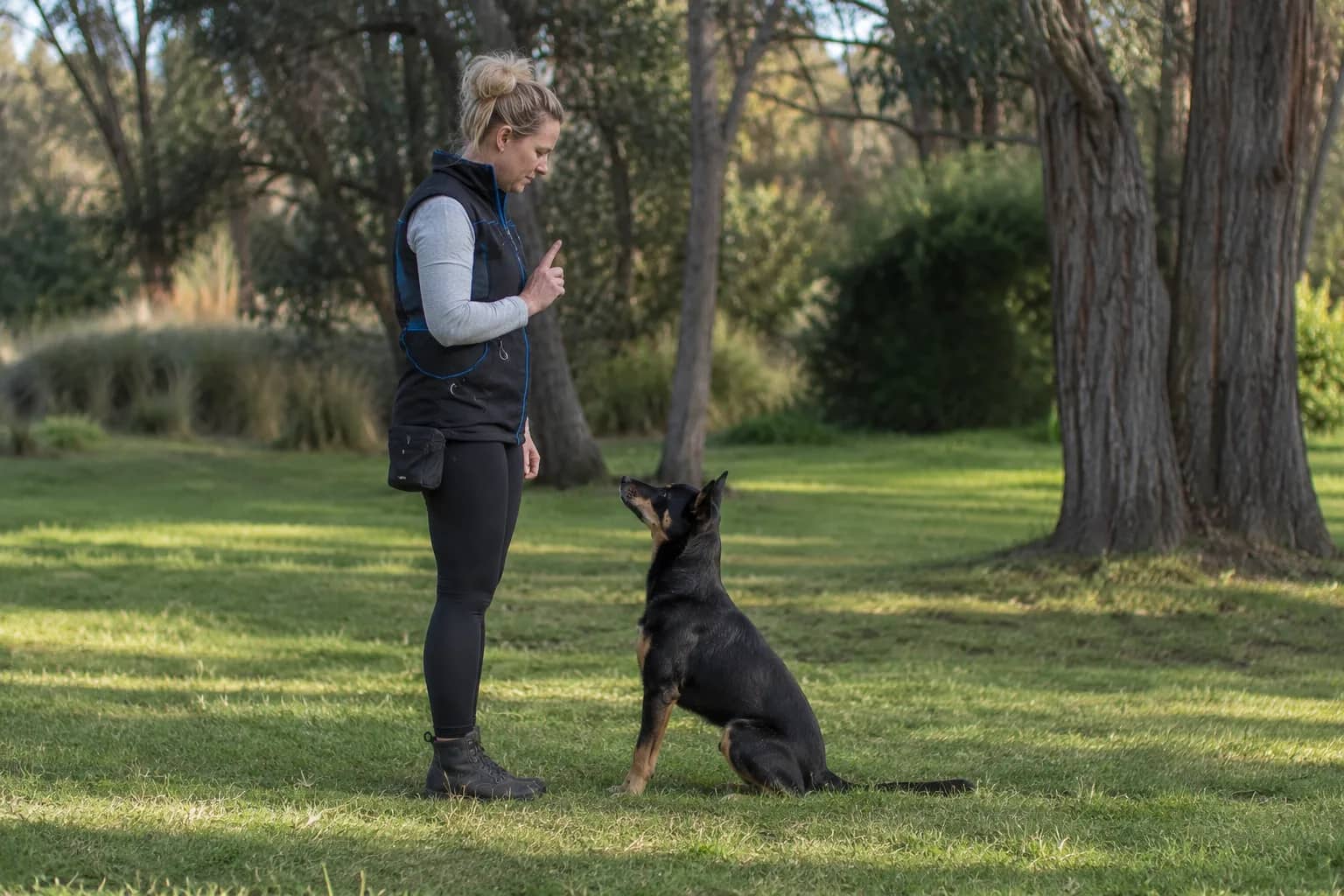
obedience leadership
Calm Leadership: The Real Reason Your Dog Won't Listen
If your dog ignores you, the problem isn't training — it's leadership. Here's what calm, clear leadership actually looks like across regional SA households.
12 min read·May 2026
Reactive Dog Training — frequently asked questions
Start here
Find out what is really going on with your dog — in 2 minutes.
The Free Dog Behaviour Test gives you (and Pauline) a clear starting point. No pressure, no spam, no obligation — just clarity.