Thinking About a Christmas Puppy? Here's What Nobody Tells You


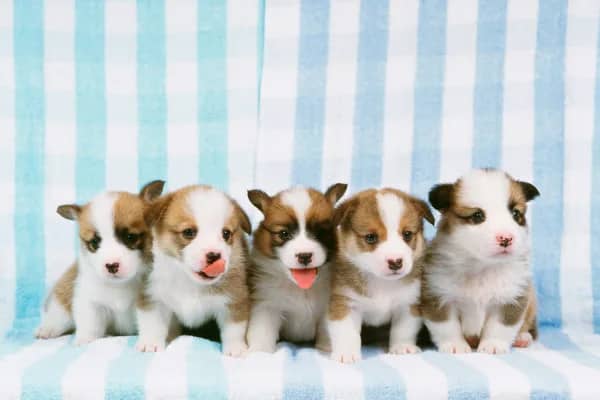
A puppy at Christmas is, for most households, one of the happiest and most memorable things that can happen. It is also one of the most predictable causes of the behavioural cases I see at the eight-month mark the following year. The two things are not contradictory. The difference between the Christmas puppy that thrives and the Christmas puppy that becomes a behaviour case comes down to a few decisions made before the puppy arrives and a few protocols held during the chaos of the first fortnight.
This is the honest guide for households in regional South Australia thinking about a Christmas puppy. It covers whether getting a puppy at Christmas is actually a good idea, what to look for when choosing the puppy, the specific pitfalls of the Christmas-week arrival, how to protect the puppy from well-meaning visitors, and what to do if you are already past the planning stage and the puppy is coming home December 24th regardless.
Is a Christmas puppy actually a good idea?
The answer depends almost entirely on one variable: whether the puppy is being added to a household that has already decided to add a puppy, or whether the puppy is a Christmas-morning surprise.
A puppy as a planned addition that happens to arrive in December is fine. The household has budgeted, researched the breed, prepared the home, and planned for the first fortnight's routine. The timing is incidental.
A puppy as a Christmas-morning surprise is almost always a bad idea. The receiving household hasn't planned, hasn't researched the breed for their lifestyle, hasn't budgeted beyond the initial cost, and often hasn't thought past the first two weeks. The puppy walks into chaos — presents being unwrapped, visitors arriving in waves, children overstimulated, meals disrupted, routines non-existent. These are the puppies most likely to end up in rescue by August.
If you are being gifted a puppy, say thank you and then quietly ask the gifter if the puppy can arrive in mid-January instead. If you are gifting a puppy, consider a photo and an IOU for January rather than the live animal on Christmas morning. The puppy's first fortnight sets patterns that last the dog's life; those patterns are best set in a calm household, not a chaotic one.
Choosing the right puppy — the part most households skip
The single most important decision is not where you buy the puppy but what breed you choose. Across regional South Australia the pattern I see most often is a household choosing a working breed — a kelpie, a border collie, a blue heeler, a German shepherd — based on cuteness, local availability, or family history, without matching the breed to their actual lifestyle.
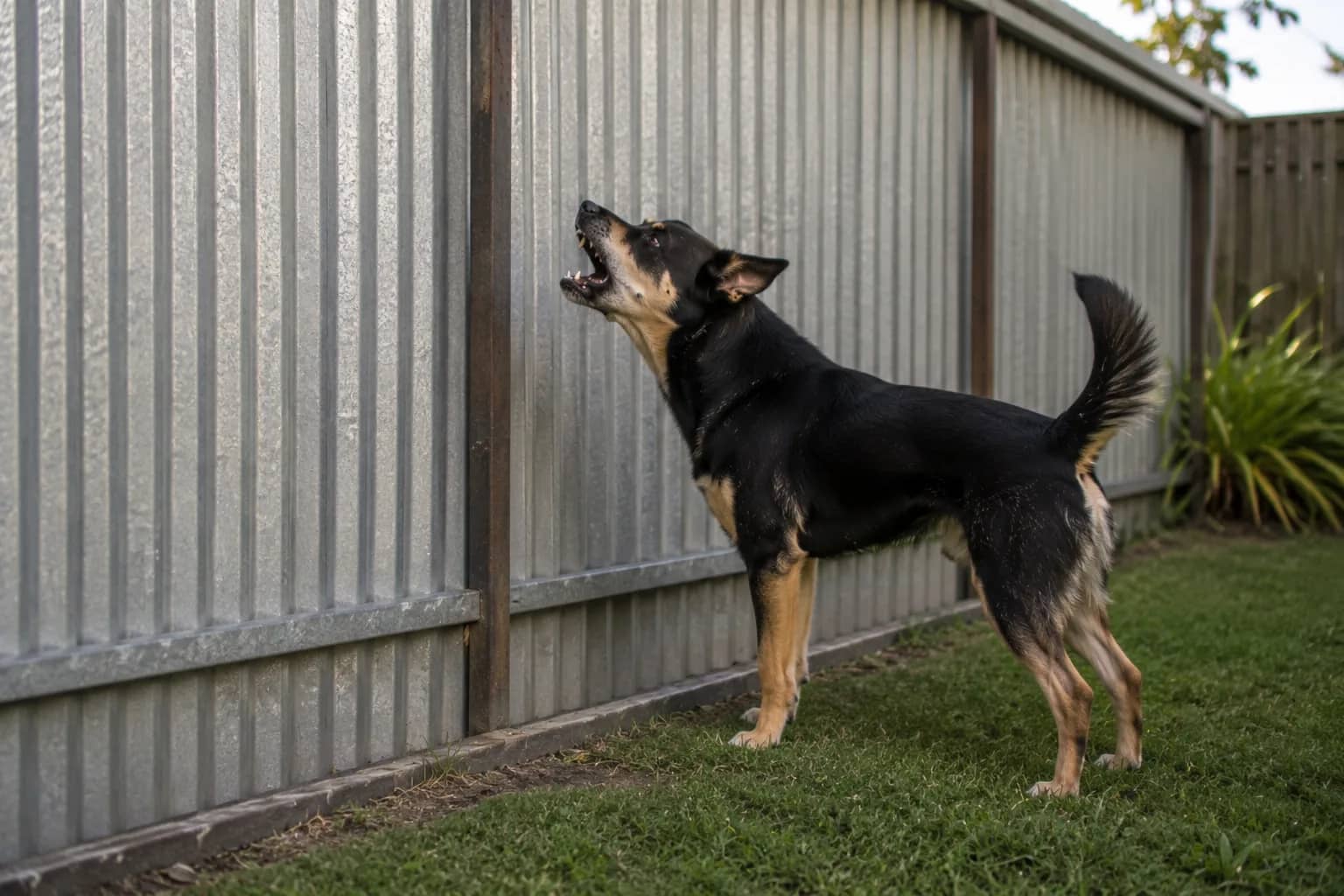
A working-bred puppy in a household that gives it a job will thrive. A working-bred puppy in a household that treats it as a pet without an outlet will develop reactivity, destructiveness, and often aggression by the adolescent window. This is the single most common breed-mismatch pattern I see.
Before you commit:
Honest hours. How many hours a day will the puppy actually have active engagement — not just presence, active engagement? If the honest answer is less than two, choose a lower-drive breed than you were going to. For breed-specific guidance see our pieces on kelpies, German shepherds and blue heelers.
Realistic household structure. Puppies pick up patterns from the household in days. A chaotic household creates chaotic dogs. A structured household creates settled dogs. If your household isn't structured yet, structure it before the puppy arrives — not after.
Breeder vs rescue. Both can work. A reputable breeder gives you a known-temperament puppy from known lines. A rescue gives you a dog whose history is partially unknown but who will often grow up grateful. Avoid pet shops, backyard litters, and gumtree ads where the breeder won't let you meet the mother on their property. Those puppies disproportionately end up as behaviour cases.
Match to your actual household, not an idealised one. Children under five, elderly household members, multi-dog homes, FIFO or shift-work schedules — each of these shifts what the right puppy choice is. Be honest about the household you have, not the one you plan to have.
The Christmas-week pitfalls
Assuming the decision is made and the puppy is coming home in December, these are the specific pitfalls:
Over-handling. Every visitor wants to hold the puppy. Children carry it from room to room. Grandparents feed it bits of ham. By the end of day two, the puppy is exhausted, over-stimulated and unable to settle. Over-handled puppies in the first fortnight develop sleep deprivation, which in puppies looks like hyperactivity — the opposite of what owners expect. The fix: a strict handling rule. The puppy is held by the primary household only, for the first week. Visitors admire from a distance.
Visitor chaos. Christmas households often have twenty people through them across a few days. For a new puppy this is socialisation on steroids — and almost always too much, too fast. One or two calm visitors is socialisation. Twelve excited visitors in one afternoon is flooding. The fix: a defined quiet space the puppy retreats to (an exercise pen, a laundry, a bedroom), where it is undisturbed. The puppy is brought out for short, calm greetings and then returned to the safe space.
Food chaos. Kids feed scraps. Grandma gives the puppy a chop bone. Someone leaves the Christmas pudding out. Half the behaviour cases I see with a new Christmas puppy involve a gastro episode in the first week that disrupts toilet training and sets the pattern back by a fortnight. The fix: the puppy's food is the puppy's food. Scraps are not negotiable.
Toilet training in chaos. The first week is where the toilet training pattern is set. If the household is distracted, the puppy learns that accidents inside are tolerated. If the household is attentive, the puppy learns that outside is where this feeling resolves. See our puppy toilet training guide for the full protocol. In Christmas week, double down on the frequency — every forty-five minutes, not every hour.
Sleep disruption. Puppies need eighteen to twenty hours of sleep a day in the first fortnight. In a Christmas household they often get twelve, half of which is interrupted. Chronic sleep deprivation in a puppy produces exactly the "hyper" and "won't settle" behaviours that then become the owner's primary concern. The fix: enforce rest periods ruthlessly. Puppy goes in the pen. Pen is quiet. Puppy sleeps. For two hours. Then comes out again for forty-five minutes. Rinse and repeat.
Kids and puppy without supervision. The two highest-risk combinations in any household. Not forever — just in the first fortnight. Children should not be alone with the puppy without an adult present, every time. Puppies bite. Children scream. Puppies bite harder. Patterns form.
The Christmas Day protocol that works
If the puppy must arrive on Christmas Day, these are the specific moves:
- The puppy arrives before any other visitors. First thing in the morning, into a calm house. Not into a house that already has fourteen people in it.
- The puppy has a defined safe space set up in advance. Pen, bed, water, chew. The puppy goes in there to decompress for a full hour before meeting anyone beyond the primary household.
- Introductions are staged. One person at a time, calmly, for a few minutes each. The puppy is not passed around.
- The puppy's rest periods are respected regardless of visitor expectations. Grandma can wait. The puppy sleeps.
- The puppy's first night is in its intended sleeping arrangement. Not on the couch, not in a bed, not in the kids' room. Wherever the puppy will be sleeping on an ordinary Tuesday in February, that's where it sleeps on Christmas night.
- The entire household knows the rules in advance. No treats, no handling by children without supervision, no walking around with the puppy, no excited squealing. If the whole household is briefed, the whole household holds the line.
The adolescent window — why Christmas puppies predictably wobble
Christmas puppies, in my experience, hit a predictable rough patch at around eight to nine months old — late August the following year, give or take. This is the adolescent window that every puppy hits, and it is particularly rough for puppies whose foundation was built in a chaotic first fortnight.
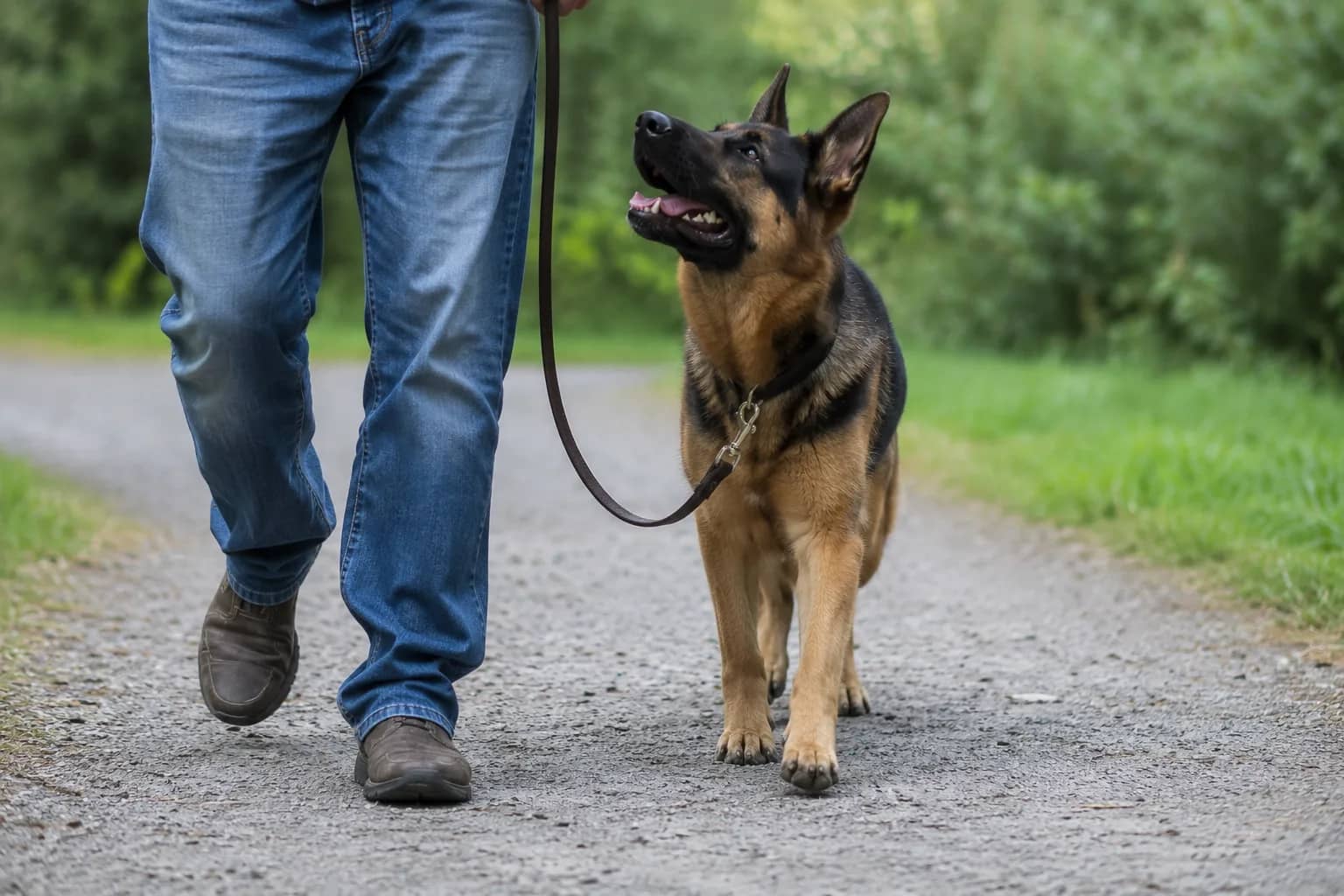
The signals: a puppy that was previously reliable starts ignoring commands, pushing boundaries, having toilet accidents again, barking at things it previously ignored, pulling on lead. Owners describe it as "the puppy forgot everything". The puppy hasn't forgotten. The adolescent brain is re-testing every rule, and the rules that were installed properly hold, and the rules that were installed loosely do not.
The households that get through this cleanly are the ones that installed structure from the first week. The households that struggle are the ones that didn't. If you are already in the adolescent patch and realising the first fortnight didn't go to plan, don't panic — but don't delay. Early intervention here is dramatically more effective than waiting another three months.
Where to start
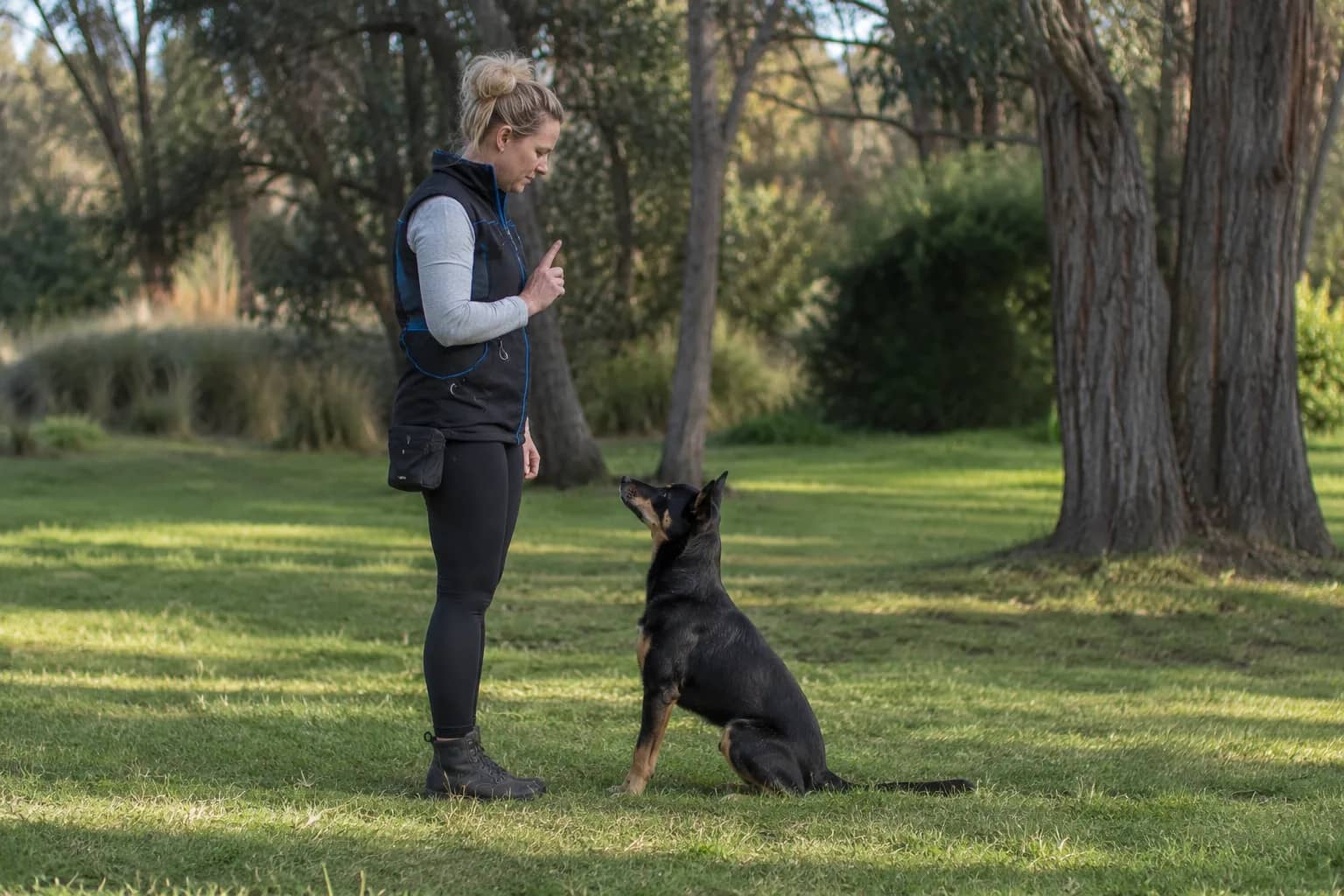
If you are planning a Christmas puppy, the single best thing you can do before the puppy arrives is get the household structure sorted. Half the problems of the first year disappear when the household has already decided — in advance — where the puppy will sleep, who feeds it, what the rules are, and how visitors will be managed.
The Free Dog Behaviour Test takes two minutes and will tell you whether your household is set up for an easy puppy phase. For in-home puppy training across the Iron Triangle, Mid North, Clare Valley, Yorke Peninsula and Eyre Peninsula, a one-session foundation visit in the first fortnight is worth more than ten group classes at eight months. For regions further afield, online coaching sets the same foundation.
Christmas puppies can be wonderful. The ones that are wonderful are the ones that arrived into a household that knew what it was doing. The planning you do in October and November is the difference between the dog becoming the best thing that ever happened to your family and becoming the stressful eighteen-month project you didn't sign up for.
Not sure where to start with your dog?
Take the Free Dog Behaviour Test.
Two minutes. You’ll find out exactly what’s driving your dog’s behaviour — and what to do next.
Frequently asked questions
Written by
Pauline Cowey
Accredited Dog Behaviourist, Communicator, Owner Educator and Trainer based at Crystal Brook, South Australia. Decades of hands-on work resolving aggression, reactivity, anxiety and obedience cases across regional SA — through ethical, leadership-based methods.
Read Pauline’s full story →