How to Toilet Train a Puppy — Without Punishment or Wasted Weeks

Toilet training is the first household skill a new puppy learns, the first one most owners get wrong, and the single most predictable source of frustration in the first six weeks of a puppy's life. Done well, it takes two to four weeks and the puppy is reliably clean inside by week eight. Done badly, it drags on for months, undermines the owner's confidence in the whole project, and quietly sets up patterns — anxiety, submissive urination, stress wees, wobbling again at adolescence — that linger well past the one-year mark.
This is the practical guide for owners across regional South Australia. It covers why toilet training is more about the owner than the puppy, what a realistic timeline actually looks like at each developmental window, the specific mistakes that undo weeks of good work, and when accidents mean something more than "the puppy forgot".
The honest truth about why puppies have accidents
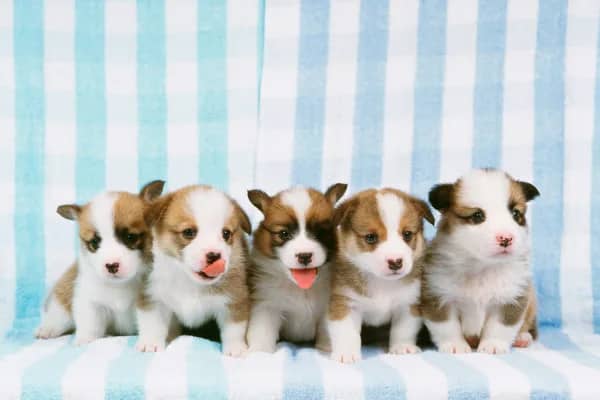
A puppy under about sixteen weeks of age physiologically cannot hold its bladder for long. The muscles that control continence are still developing. Expecting a ten-week-old puppy to "hold on" for four hours while you duck into town is like expecting a toddler in nappies to do the same. The puppy is not disobedient. The puppy is not spiteful. The puppy is a mammal with an immature nervous system that fills a small bladder quickly and empties it the moment the signal fires.
Toilet training a puppy is therefore not primarily about teaching the puppy anything. It is about the owner reading the puppy's rhythm — when it will need to go — and making sure the puppy is outside, on the right surface, at exactly the moment the signal fires. The puppy then learns, through dozens of successful repetitions, that outside-on-grass is where this particular feeling resolves. Inside-on-carpet is not punished; it simply never gets practised.
Owners who grasp this early get a reliably-clean puppy inside four to six weeks. Owners who treat it as a learning task the puppy must figure out alone often take four to six months — and leave scars behind.
The timeline that actually works
Weeks 8 to 10 (puppy arrives, early establishment). Expect accidents. Lots of them. Your job is prediction and prevention — not correction. The puppy goes outside immediately on waking, immediately after eating, immediately after any play burst, and otherwise every forty-five minutes to an hour during the day. Night-time, the puppy will need one or two toileting breaks. This is normal; it ends in a few weeks.
Weeks 10 to 14 (pattern consolidation). Accidents reduce but don't disappear. The puppy starts to show you a signal — circling, sniffing, moving to a particular spot, pawing at a door. Read the signal; move the puppy outside; praise the toilet; repeat. By the end of this window most puppies have a reliable daytime pattern and can sleep through most of the night with one break.
Weeks 14 to 20 (real reliability setting in). The puppy's bladder control grows. Accidents become rare. The puppy may start to ask to go out, often by standing at a particular door. By twenty weeks a well-trained puppy is reliably clean inside, with occasional one-off accidents triggered by excitement, illness or a change in routine.
Months 6 to 14 (the adolescent wobble). This is the window owners don't expect. The adolescent brain re-tests every household rule, including toilet training. Some puppies have an accident streak at eight or nine months — not because they forgot, but because the household structure that was holding the pattern has loosened. Tighten the structure, re-establish the predictability, and the pattern comes back inside a fortnight.
Adult reliability. Once the household structure holds through adolescence, toilet training is for life. Adult toilet accidents in a previously-reliable dog are almost always a medical issue (urinary tract infection, kidney issue, incontinence in older dogs), an anxiety issue (new situation, separation), or a leadership issue (the household's structure has shifted). None of them are the dog being "naughty".
The five mistakes that break toilet training
Over hundreds of consultations across regional SA, I see the same five mistakes consistently derailing what should be straightforward work:
Punishing accidents. The old "rub the puppy's nose in it" advice is active welfare harm. It teaches the puppy that toileting itself is dangerous — which means the puppy will try to hide it next time, finding corners, behind furniture, under rugs. Punishment also damages the trust foundation that every other training piece sits on top of. Never punish an accident. Clean it with an enzymatic cleaner and move on.
Rewarding too late. Rewarding the puppy ten seconds after it has finished toileting outside doesn't connect in the puppy's mind to the toileting. The reward has to come in the moment — calm praise and a gentle touch as the puppy is finishing. Delayed reward is just a treat the puppy will take without learning anything from it.
Inconsistent surfaces. A puppy that is sometimes taken out onto grass, sometimes onto puppy pads inside, sometimes onto concrete, and sometimes onto a rug when nobody notices, has learned that any surface is acceptable. Pick one surface — grass is easiest — and use it consistently for the first six weeks. You can broaden later.
Over-confining or under-confining. A puppy left to roam a whole house unsupervised will toilet wherever it happens to be. A puppy locked in a crate for eight-hour stretches will be forced to toilet where it sleeps, which breaks the natural puppy instinct to keep the den clean and makes future training harder. The middle ground is what works: supervised freedom in the puppy's main living area, with a small defined safe space (an exercise pen, a laundry, a gated room) for short periods when you can't watch directly.
Not reading the puppy's signal. By twelve weeks almost every puppy is giving some sort of pre-toileting signal — a sudden sniff, a circle, a change of pace, a trot to a particular spot. Owners who miss the signal clean up the mess ten minutes later. Owners who learn the signal are outside with the puppy in time to make the toileting happen in the right place. Signal-reading is the single highest-impact skill for this phase.
The regional SA realities
Toilet training in regional South Australia has some genuine advantages and a couple of specific challenges that metro guides don't address.
Winter nights at Mid North altitudes get cold. A puppy at Jamestown or Burra in July needs more motivation to go outside at 11pm than a Port Lincoln puppy in October. Keep the night routine short, well-lit, and warmly dressed. Don't skip toileting breaks because it's cold — the alternative is an accident on the carpet.
Farmhouse layouts help. Many regional SA houses have a laundry or back-porch area that opens straight onto grass. This is the ideal first setup — the puppy's safe space is adjacent to the outdoor surface, so transitions are instant and signals are easy to read.
Working-dog puppies learn surface distinctions earlier. Kelpies, blue heelers and farm-bred working breeds, raised around outdoor-focused households, tend to pick up outside-is-for-toileting faster than city-raised puppies. Lean into the advantage: get the puppy out often from day one.
Snakes. From September to March, don't let a puppy toilet unsupervised in long grass. Toileting trips at night need torchlight and a clear, mown patch. For more on this see our guide to snake avoidance for regional SA dogs.
Night toilet training
The first two or three weeks, expect one or two breaks per night. Set an alarm if you need to. The puppy will whine or move around at the point of needing to go — if you miss the signal, you will have a wet bed.
By three or four months, most puppies can hold through the night if the last toilet break is late (ten or eleven o'clock) and the first morning break is early (six or so). If a puppy who was sleeping through starts waking to toilet again, that's usually a routine shift (new food, more water, later bedtime), occasionally a UTI, and rarely bedding anxiety. Walk through the obvious causes before assuming it's regression.
When toilet accidents mean something else
A previously-reliable puppy or dog who starts having accidents needs a vet check first — before any assumption of behavioural cause. Urinary tract infections are common, treatable, and almost always the actual cause of sudden regression in otherwise house-trained dogs. Diabetes, kidney disease and some endocrine conditions also present as toileting changes.
Behavioural causes of regression include:
- Separation anxiety (toileting only happens when the owner leaves)
- Submissive urination (toileting on being greeted, especially by taller people)
- Marking (adult males, usually linked to another dog nearby)
- Household stress (new baby, builder work, new dog, furniture move)
- Loss of structure around meal and toilet routines
For anxiety-driven toileting, the fix is lowering the dog's baseline — see our guide to separation anxiety in dogs. For submissive urination, the fix is calm greetings and no eye contact or looming above the dog until it has settled. For marking, the fix is leadership structure and sometimes neutering. None of them respond to punishment; all of them respond to addressing the underlying cause.
Where to start
If you have a new puppy and want the right foundation from the start, the single most useful thing you can do is get the household structure right in the first fortnight. Toilet training lands on top of that structure; drill the puppy without the structure and the training wobbles the moment life gets busy.
The Free Dog Behaviour Test takes two minutes and will tell you whether your household is set up for easy puppy work or if there's a structural gap that will make everything harder. For puppy-specific help across the Iron Triangle, Mid North, Clare Valley, Yorke Peninsula and Eyre Peninsula, in-home puppy training is the fastest way to get the whole household on the same page from day one.
A clean puppy is downstream of a predictable household. Start with the structure, and the toilet training almost takes care of itself.
Not sure where to start with your dog?
Take the Free Dog Behaviour Test.
Two minutes. You’ll find out exactly what’s driving your dog’s behaviour — and what to do next.
Frequently asked questions
Written by
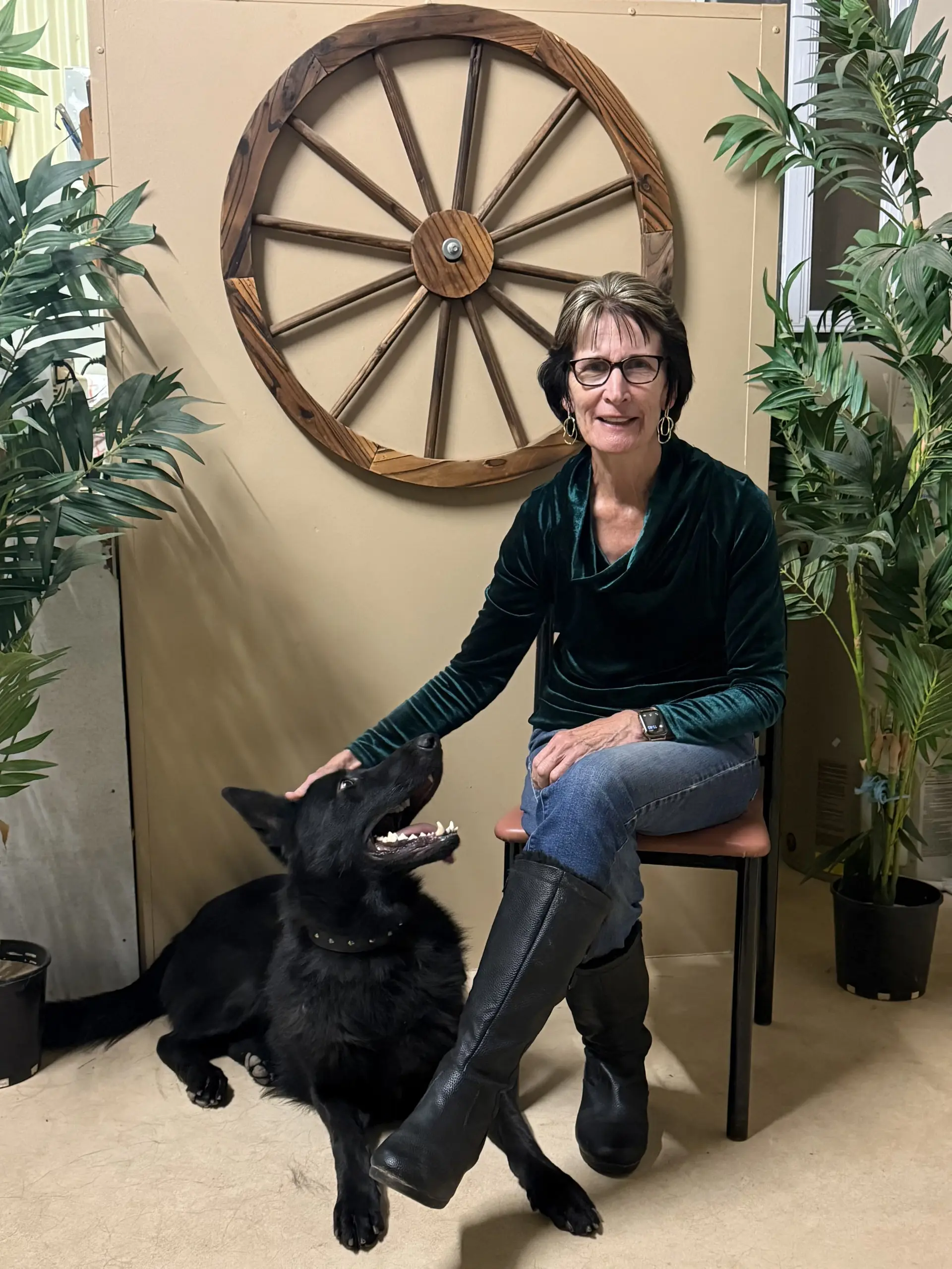
Pauline Cowey
Accredited Dog Behaviourist, Communicator, Owner Educator and Trainer based at Crystal Brook, South Australia. Decades of hands-on work resolving aggression, reactivity, anxiety and obedience cases across regional SA — through ethical, leadership-based methods.
Read Pauline’s full story →