Snake Avoidance for Regional SA Dogs — The Honest Guide

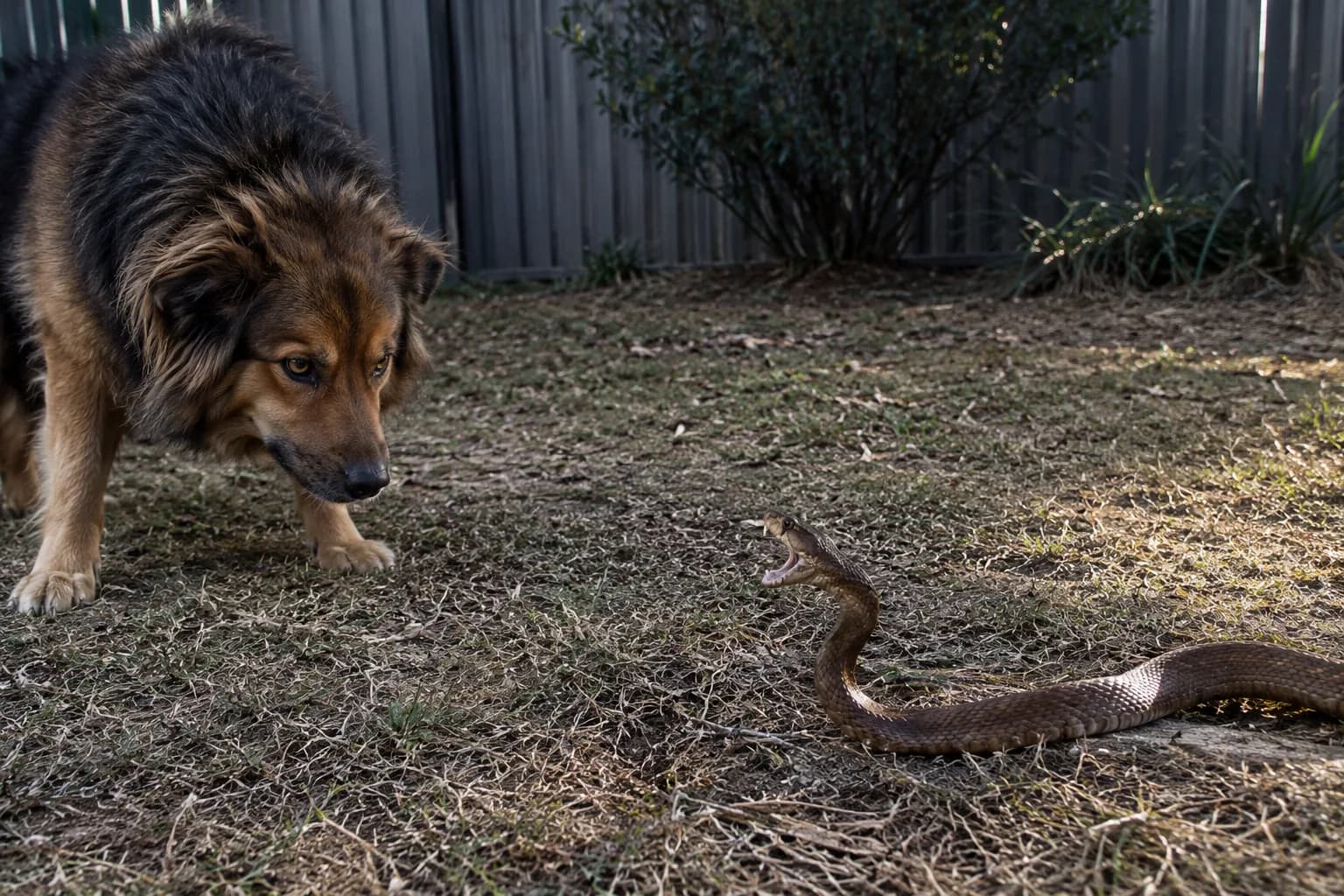
Brown snake season runs September to April across regional South Australia, and the eastern brown is the second-most-venomous land snake on earth. Most dog bites happen in the owner's own yard. Snake-avoidance training is real — and the e-collar version of it is controversial for good reason. The fastest, biggest risk reductions come from property management, exercise habits and a rehearsed bite-response plan. If your dog is bitten: vet immediately, antivenom is time-critical, do not wait to "see how they go."
Every summer I lose count of the calls. The dog that lunged at something in the long grass. The kelpie that came home wobbly. The Lab that collapsed in the laundry forty minutes after being let out. Some live. Some don't. The ones that live almost always made it to a vet within an hour.
Snake risk is the regional SA dog-life issue most owners under-prepare for. The good news: a handful of property habits and one clear emergency plan reduce risk by an enormous margin. The harder news: training your dog to avoid snakes is more controversial — and less reliable — than the people selling it want you to think.
This is for owners across the Iron Triangle, Mid North, Clare Valley, Yorke Peninsula, Eyre Peninsula and the Upper Spencer Gulf — anywhere brown snakes outnumber people, which is essentially everywhere outside metropolitan Adelaide.
The season and the species
In South Australia, snake activity ramps up in September as ground temperatures climb, peaks through November to March, and tapers through April. Snakes are largely inactive May to August — but a warm winter day in the Mid North can still flush one out.
The species that matter for dogs:
- Eastern brown (Pseudonaja textilis) — the one that kills regional SA dogs more than any other. Fast, alert, defensive, and highly venomous. Common across farmland, fence-lines, sheds, wood piles and dam edges.
- Western brown / gwardar — present across the Eyre Peninsula and the western half of SA. Similar risk profile.
- Red-bellied black — less common in inland SA but present in damper areas. Significantly less dangerous to dogs than browns, but still requires vet treatment.
- Tiger snake — present in wetter habitats, the South-East and parts of the Eyre Peninsula. Highly venomous; bites are urgent.
- Death adder — uncommon in agricultural SA but possible in scrub country.
For most regional SA owners, brown snake risk is the planning baseline. Anything else is a bonus problem.
Brown snake behaviour basics
Misunderstanding brown snakes gets dogs killed. A few realities:
- Browns are not aggressive — they are defensive. They want to be left alone. They bite when cornered, stepped on, or pinned. A dog mouthing or pawing at a snake is, from the snake's perspective, an attack.
- Browns are fast. A startled brown can move several body-lengths in a second. The "I'll just step around it" assumption is how owners get bitten.
- Browns strike repeatedly. Unlike movie snakes, a defending brown can deliver multiple bites in quick succession. A dog that lunges and gets bitten once will often be bitten three or four times before it disengages.
- Brown venom acts fast. Neurotoxins, coagulopathy and muscle damage start within minutes. Symptoms in a bitten dog can appear in 15 minutes or take several hours — but waiting to "see what happens" is the single most common reason dogs die from brown bites.
- Smaller snakes are not safer. Juvenile browns are fully venomous and often more nervous, meaning quicker to bite.
- Browns prefer cover. Long grass, wood piles, corrugated iron stacks, dam edges, shed corners, irrigation lines, mulch heaps. Anywhere a snake can warm itself and stay hidden.
What dogs typically do wrong
Dogs don't recognise snakes as a category of danger. They recognise them as a category of interesting — something moving, something to investigate, something to chase or pin. The very behaviours that make a dog good at the rest of life — curiosity, prey drive, confidence — make them terrible at snake encounters.
The classic patterns I see:
- The investigator — Labrador-type, friendly, "what's this?" puts its face in. Bitten on the muzzle or neck.
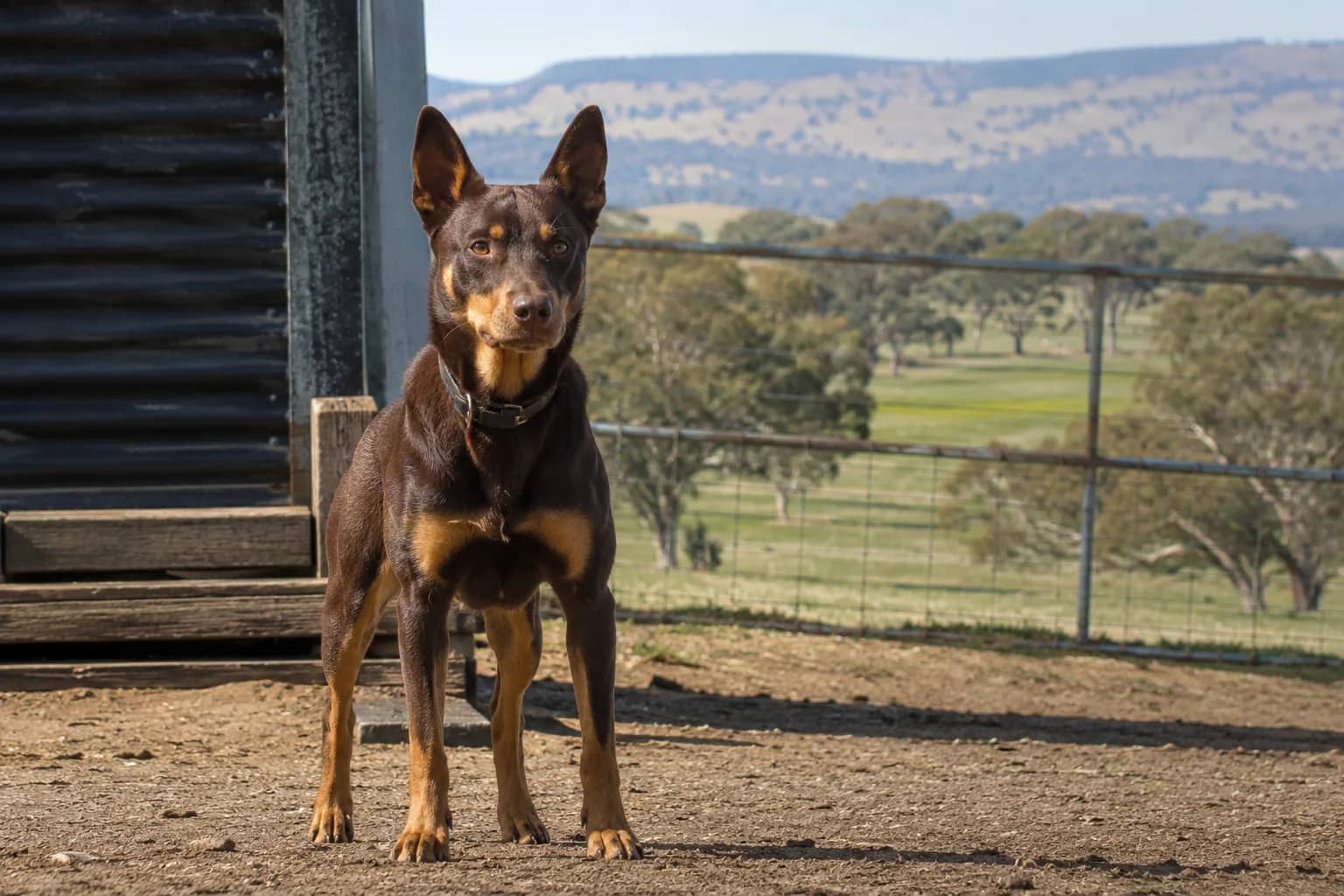
- The chaser — kelpie, heeler, herding breed. Sees movement, gives chase, gets struck on the legs as the snake turns.
- The pinner — terrier types. Tries to grab and shake. Multiple bites to the face and mouth.
- The accidental — older dog walking through long grass, doesn't see the snake, steps on it. Bitten on the foot or leg.
None of these dogs are doing anything wrong. They're doing what dogs do. The fix is not to expect a dog to override its instincts — it's to make sure the encounter doesn't happen in the first place, and to have a plan when it does.
The snake-avoidance training conversation — honestly
This is where I part company with a chunk of the regional Australian training industry. You will see operators travel through country towns offering "snake-avoidance training" using e-collars. The dog is presented with a defanged or contained snake, allowed to investigate, then receives a shock at the moment of interest. The aim is to create a hard avoidance association — snake equals pain — that overrides curiosity.
The honest assessment:
It can produce avoidance in some dogs. It can also fail in several ways that get dogs killed.
The problems I have with it:
- Generalisation is unreliable. A dog conditioned on one snake species at one location may not generalise to a different-looking snake in a different setting. Many "trained" dogs still investigate the next snake they meet — particularly a juvenile, a black snake, or a snake in a different posture.
- Fear conditioning has side effects. Some dogs become globally fearful of long grass, of moving objects in undergrowth, of specific locations where the training occurred. A subset develop new anxiety problems.
- It can suppress without resolving. Some dogs learn to hide their interest in the snake (so the trainer thinks it worked) while still investigating snakes when the handler isn't watching.
- It is one event in one moment. A bored, hot, prey-driven dog at week 38 of summer may override the conditioning entirely. The dog doesn't think — instinct fires.
- The ethical question. I do not use aversive tools on dogs. The same principles that make e-collars wrong for aggression work apply here too.
That said — I'm not going to tell a property owner with a known snake problem and a high-prey-drive dog that there's nothing to consider. If you're going to pursue aversive snake-avoidance training, do it with eyes open:
- Treat it as one layer of risk reduction, not a solution
- Choose an operator who uses a properly contained, non-defanged snake (defanging is cruel and produces unrealistic snake behaviour)
- Do not assume the dog is "snake-safe" afterwards — keep the property management going regardless
- Watch for new fear responses for the following weeks
The non-aversive alternatives I prefer:
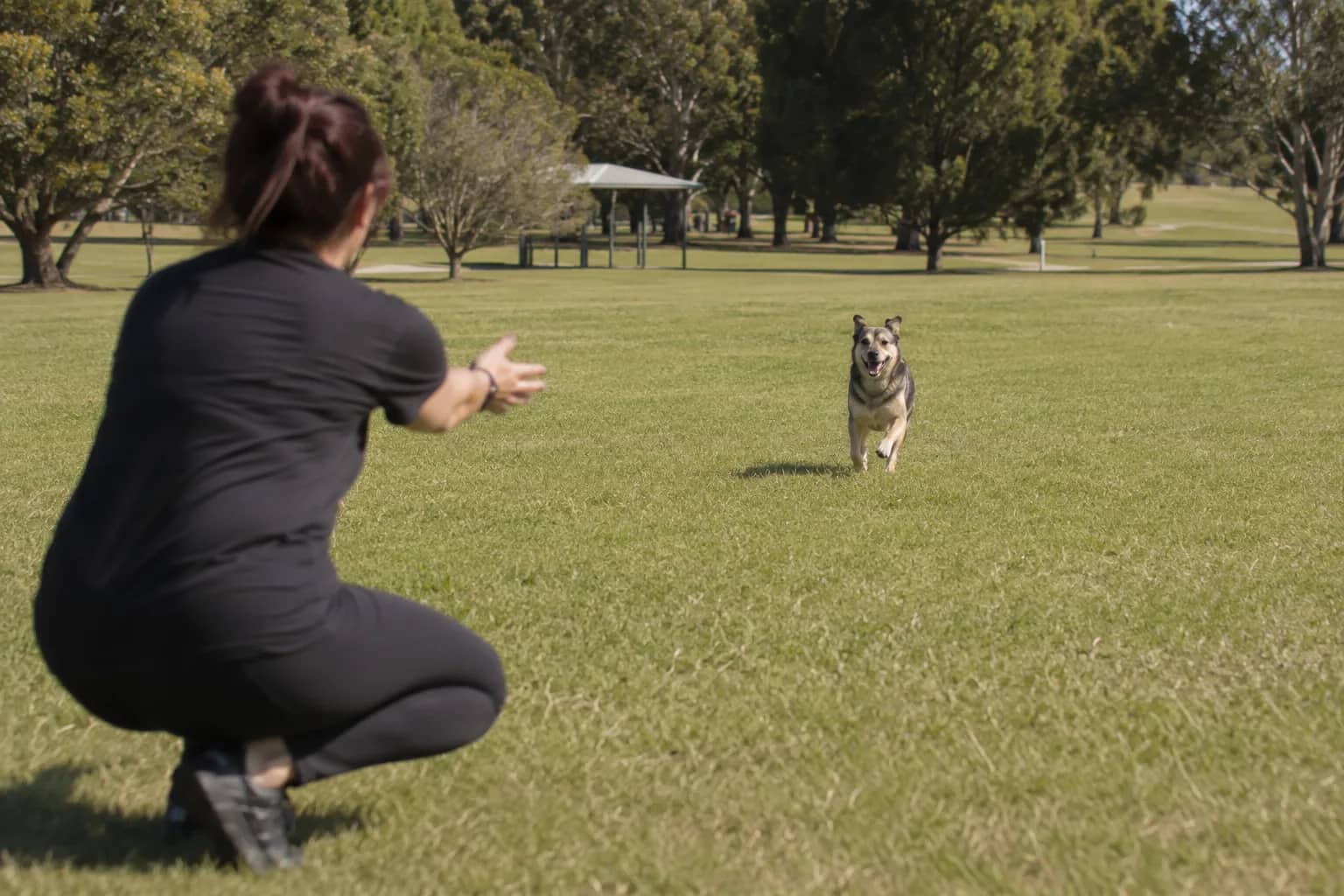
- Recall and "leave it" trained to a near-reflex level. A dog with genuine off-lead recall can be pulled off something interesting before it commits. This is the single most useful behaviour training you can do for snake season.
- Leash discipline through high-risk areas. No off-lead through long grass, fence-lines, dam edges, scrub patches. The cost is small. The benefit is large.
- Calm leadership. A dog that defers to you on what's worth investigating is a dog you can intervene with before it lunges.
For most of my clients, the better investment is the recall, the leadership, and the property work — not the e-collar weekend.
Property habits that genuinely reduce risk
The yard is where most dog bites happen. Owners often picture the bite happening on a bush walk; the data says it more often happens twenty metres from the back door.
Mow and clear
Keep grass short across the entire perimeter and inside the dog's main yard area. Snakes prefer cover; remove the cover. Mow more often through summer, even when it feels excessive. The mown strip is your buffer.
Remove harbourage
The hit list:
- Wood piles stacked against the house or fence
- Sheets of corrugated iron lying on the ground
- Building materials, old hay bales, junk piles
- Long mulch under trees and against walls
- Compost heaps not enclosed
- Pet bedding, toys and bowls left in long grass
If you can't remove these, move them to a section of the property the dog doesn't access.
Manage water sources
Brown snakes seek water in summer. A poorly maintained dog bowl, a leaking tap, a dam edge, a half-empty kiddie pool all attract them. Keep the dog's water station clean, in the open, away from cover, and refresh it daily so the area doesn't smell like an animal hangout.
Block the gaps
Snakes enter sheds, garages, laundries and kennels through small gaps. Door seals matter. Vent screens matter. If your dog sleeps in the laundry, walk around the outside of that room with summer eyes and find the holes.
Don't feed the chain
Rats and mice are brown snake food. Bird feeders that scatter seed, open chook scraps, exposed dog food, uncovered compost — all build a rodent population, which builds a snake population. A clean property is a less attractive property.
Walk it weekly
A weekly perimeter walk through summer — five minutes, mowing edges, checking for fresh holes, noting any sheds skin or tracks — catches problems early. Do it without the dog. If you find evidence, you're informed before the dog is.
Exercise habits that reduce risk
Where and when you walk matters more than most owners think.
- Avoid dawn and dusk through summer. Snake activity peaks at those times. Mid-morning and late afternoon are safer windows.
- On-lead through long grass and along fence-lines. Always. No exceptions in November to March.
- Stay on cleared paths. The marginal benefit of letting the dog crash through undergrowth is not worth it for six months of the year.
- Watch ahead, not just down. Browns hold their head off the ground when alert. You can see them — if you're looking for them.
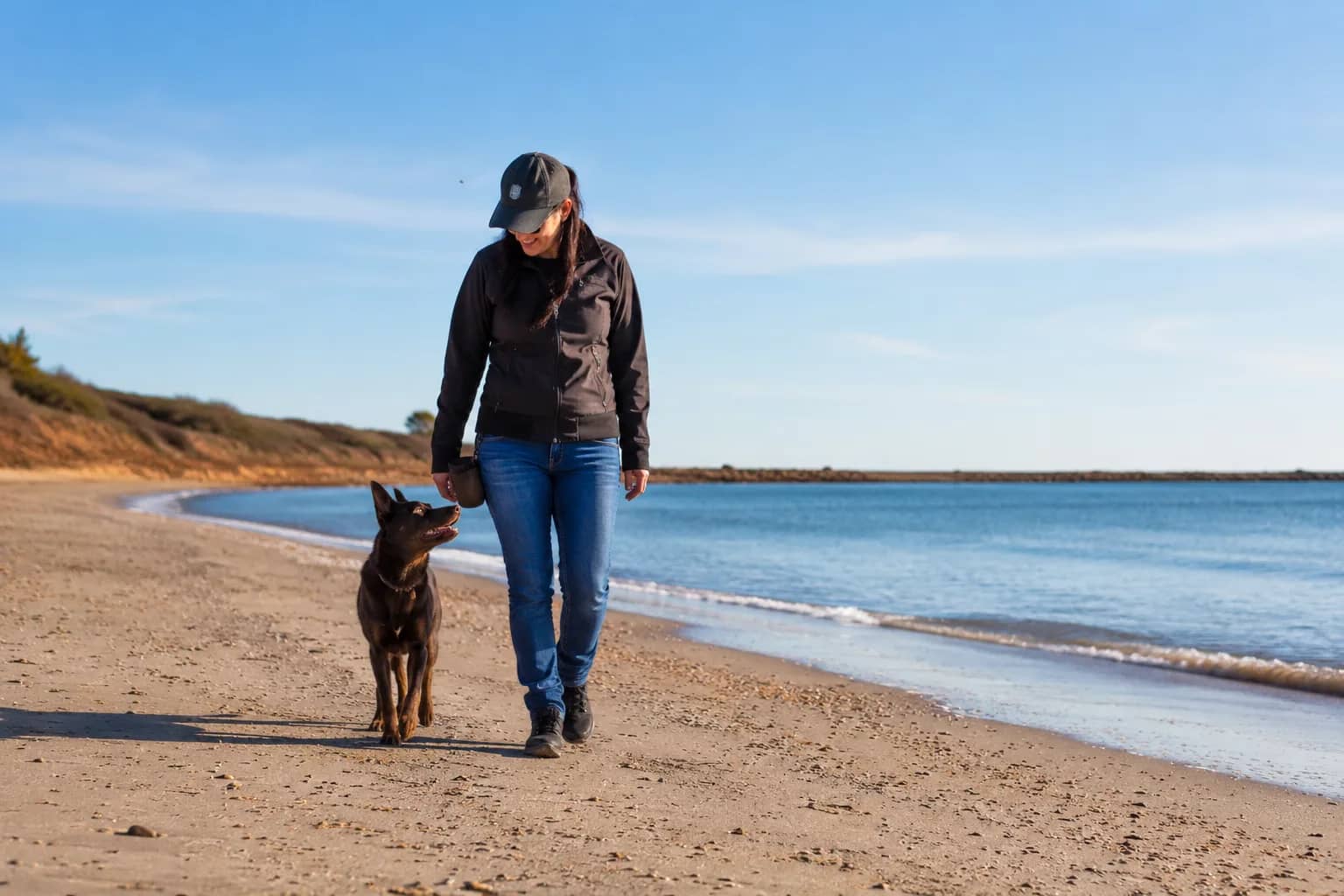
- Reconsider beach behaviour. Beach off-lead time is one of the joys of regional SA dog life. Just remember the dunes and the vegetated edges of the car park are prime snake habitat — keep the dog on lead until you're on open sand.
- Carry a phone with vet numbers saved. Not "I'll Google it." Saved, named, ready. Vet, emergency vet, 24-hour line if your nearest regional vet doesn't run after-hours.
What to do if your dog IS bitten
This is the single most important section of this article. Print it, screenshot it, put it on the fridge.
Vet, immediately
The first thing you do is get the dog to a vet. Not "see how they go for a bit." Not "wait until tomorrow." Now. Time is the variable that determines survival. Dogs with untreated brown snake envenomation often die within hours.
If you suspect a bite — even if you didn't see it, even if you can't be 100% sure — go. The cost of a vet visit for "probably not a snake" is a few hundred dollars. The cost of "I waited" is sometimes the dog.
Keep the dog still and calm
Movement pumps venom through the system faster. Carry the dog if you can. If the dog has to walk, walk slowly. Do not run them to the car. Do not let them play through the panic. Calm, slow, supported.
Do not apply a tourniquet. Do not cut and suck. Do not wash the bite site if you can avoid it (residual venom on the skin helps the vet identify the species). Do not give food, water, alcohol, paracetamol, ibuprofen or any other "home remedy." None of these help. Several actively harm.
Pressure-immobilisation if it's a clear leg bite
If you have a wide bandage and a long drive to the vet, a pressure-immobilisation bandage on the bitten limb can slow venom spread. Wrap firmly from the toes upwards, splinting the limb if you can. This is human first-aid for snakebite adapted to dogs — useful in remote scenarios, not a substitute for getting to a vet.
Symptoms that often appear
- Sudden weakness, wobbling, collapse
- Excessive salivation, drooling
- Vomiting
- Dilated pupils
- Tremoring or muscle twitching
- Bloody urine
- Pale gums
- Breathing difficulty
Symptoms can take 15 minutes or several hours to appear. Their absence does not mean your dog is fine. Several dogs die each year because owners saw no immediate symptoms and decided to wait.
Antivenom — how it works
The vet will draw blood, run rapid coagulation tests, and almost certainly administer antivenom if envenomation is confirmed or strongly suspected. Brown snake antivenom is expensive — often $1,500–$3,000 per vial in regional clinics, sometimes more than one vial required — and it is the only thing that reverses the venom.
This is a known cost. If you live regional and own a dog through summer, you should plan for the possibility. Pet insurance worth its premium covers snakebite. Saved emergency funds work too. The conversation to have is not "can we afford it" at the vet counter — it's "what's our plan if this happens" in October.
After antivenom
Dogs that survive the first 24 hours after antivenom generally recover well, though follow-up care (IV fluids, monitoring for delayed coagulopathy, sometimes blood transfusion) often continues for 48–72 hours. Expect a multi-day hospital stay for moderate to severe envenomations.
The dog's risk of being bitten again is not lower because they were bitten once. Some dogs become permanently snake-shy after a near-death event. Others — particularly working breeds — go right back to investigating. Plan as if the second bite is possible.
The mindset shift
Brown snake risk in regional SA is not a freak event. It is a predictable, seasonal hazard with a predictable response plan. Treating it the same way you'd treat fire risk — property prep, behaviour habits, a rehearsed emergency plan, a phone number on the fridge — gets dogs through summer alive.
The owners I see lose dogs to snakes almost always have one of three things in common: dog was off-lead in long grass, dog had no recall, or owner waited "to see what happened" after a suspected bite. All three are addressable now.
Where to start
If your dog has unreliable recall, a tendency to investigate movement, or zero training around long grass — those are the things to fix before November. The Free Behaviour Test is the quickest way to identify which behaviour layer to address first, and I'm happy to talk through snake-season planning specifically.
For recall and leadership work that actually holds up around prey-drive triggers, I work across regional SA in-home, with obedience training and online coaching for owners further from the Mid North base. The dog that comes back when you call — every time, even mid-stride toward something in the grass — is the dog that gets through summer. That's the work.
Not sure where to start with your dog?
Take the Free Dog Behaviour Test.
Two minutes. You’ll find out exactly what’s driving your dog’s behaviour — and what to do next.
Frequently asked questions
Written by
Pauline Cowey
Accredited Dog Behaviourist, Communicator, Owner Educator and Trainer based at Crystal Brook, South Australia. Decades of hands-on work resolving aggression, reactivity, anxiety and obedience cases across regional SA — through ethical, leadership-based methods.
Read Pauline’s full story →