Do Shock Collars Work? (The Truth Explained)

Shock collars can suppress a behaviour in the moment, but they don't resolve the emotional state driving it. In most of the cases I see across regional SA, the behaviour returns the moment the collar comes off — or worse, the dog goes quiet for months and then "explodes" out of nowhere because the underlying anxiety was never addressed. Here's what's actually going on inside a dog wearing one, and what produces lasting change instead.
If you've been searching for a fix to your dog's barking, pulling, reactivity or aggression, you've almost certainly come across someone — usually online — recommending a shock collar. They go by different names depending on who's selling them: e-collar, stimulation collar, remote training collar, static collar. They all do the same thing, which is deliver an electrical sensation to the dog's neck when the owner presses a button or when the device detects barking.
The promise is fast results. And in a narrow, specific sense, that promise is honest — shock collars can interrupt a behaviour quickly. The harder question, the one most marketing carefully avoids, is whether interruption is the same thing as training. After 15 years of behaviour work across the Iron Triangle, Eyre Peninsula, Yorke Peninsula and beyond, my answer is no — and the reason matters.
Why shock collars are so commonly recommended
There's a reasonable explanation for why so many owners end up looking at them. By the time someone messages me about an aggressive dog or a chronically reactive dog, they've usually been struggling for months or years. They've tried treats, they've tried group classes, they've tried ignoring it, they've tried yelling. Nothing has worked.
In that state of mind, "press a button and the behaviour stops" sounds like the answer.
Some trainers reinforce this by marketing shock collars as:
- A quick fix for stubborn dogs
- The only thing that works on serious aggression
- A "humane" or "low-level" tool when used correctly
- A last resort before rehoming or euthanasia
Each of those framings contains just enough truth to be persuasive. But every one of them sidesteps the more useful question: why is the dog doing this in the first place, and what does the dog actually need from its owner to stop?
What a shock collar is, mechanically
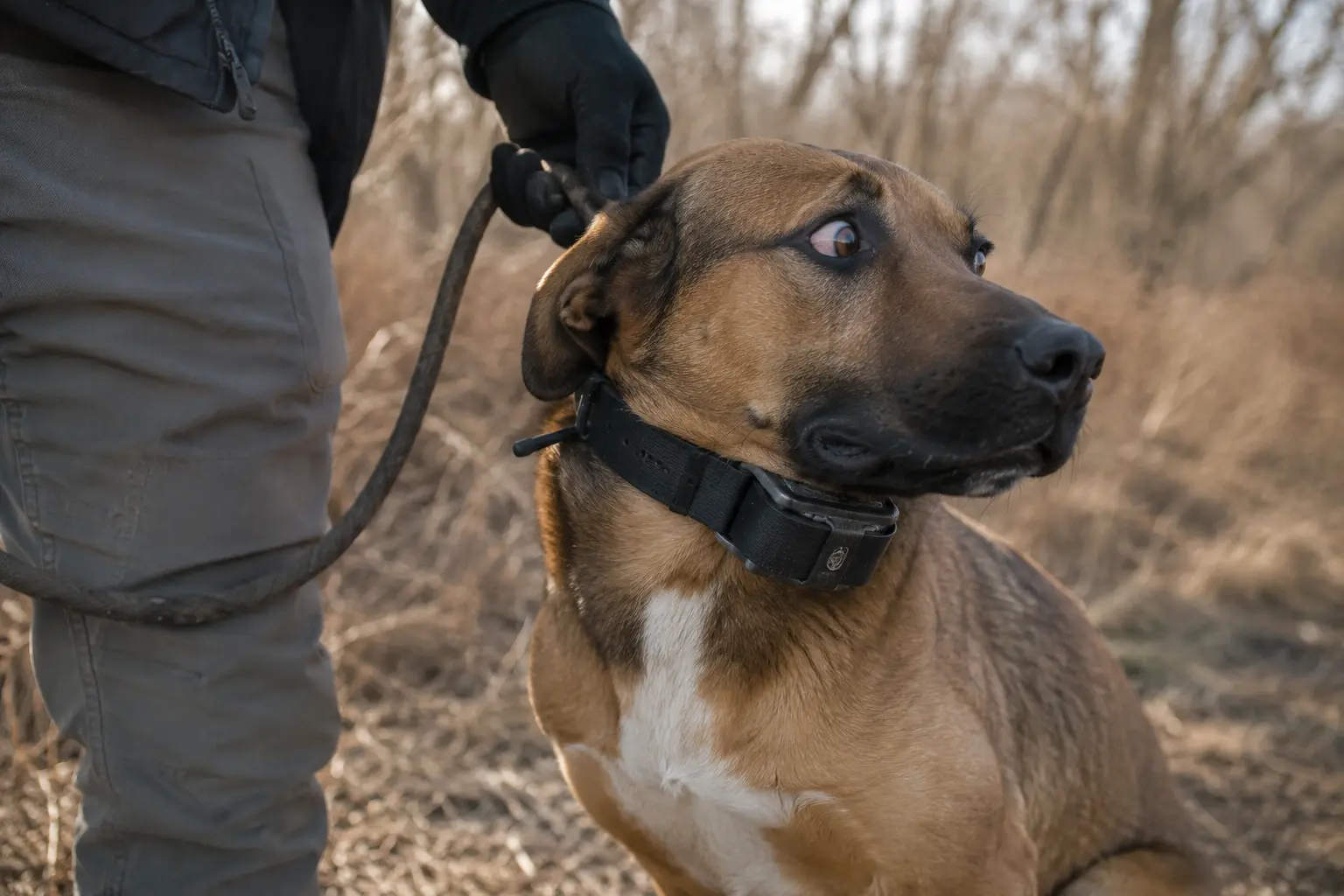
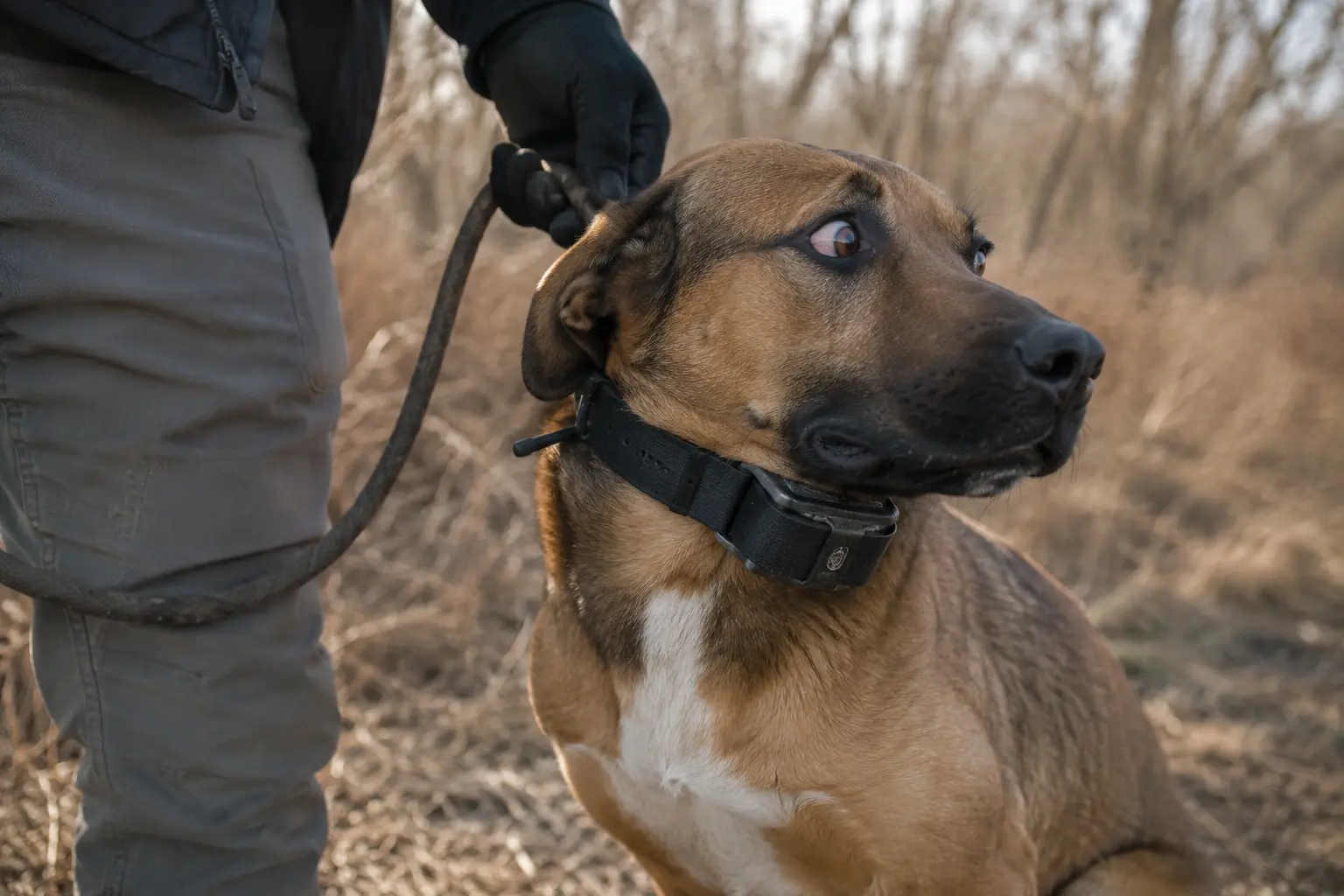
A shock collar consists of two metal contact points sitting against the dog's neck and a battery-powered unit that delivers a current between them. The intensity is adjustable — usually labelled "stim level" or "1–100" — and modern devices market the lower levels as a "tap" or "tickle" rather than a shock. At higher levels, the sensation is unmistakable.
There are three common modes:
- Remote, where the owner presses a button on a handheld.
- Bark-activated, where a microphone or throat sensor triggers automatically.
- Boundary, where a buried wire creates an invisible fence and the collar fires when the dog crosses it.
All three operate on the same psychological principle: the dog associates the discomfort with the behaviour, and over time stops the behaviour to avoid the discomfort.
That principle works. The problem is what it leaves behind.
Suppression is not training
This is the misconception I spend the most time unpicking with owners.
When a dog stops barking, lunging or chasing because it has been shocked for doing so, it has not learned to be calm. It has learned that displaying the behaviour is dangerous. Two very different things.
A trained dog can encounter the trigger, feel the impulse, and choose a different response because it has been taught to. A suppressed dog still feels the same impulse — the same fear, frustration or overstimulation that caused the behaviour originally — but has been conditioned to bottle it up.
The outward look is similar. The internal state is not.
You can see the difference if you watch carefully. Trained dogs settle, breathe out, sniff the ground, look to their owner. Suppressed dogs go still in a particular way — what behaviourists call "freezing" — with hard eyes, a closed mouth, weight forward. They are not relaxed. They are managing.
The ticking time bomb effect
This is the part owners need to understand, because it's the part that costs people their dog.
When you suppress a behaviour without resolving the emotion behind it, the emotion does not disappear. It builds. The dog is still afraid, still frustrated, still over-aroused — it just no longer has the outlet of barking, lunging or growling to discharge that state.
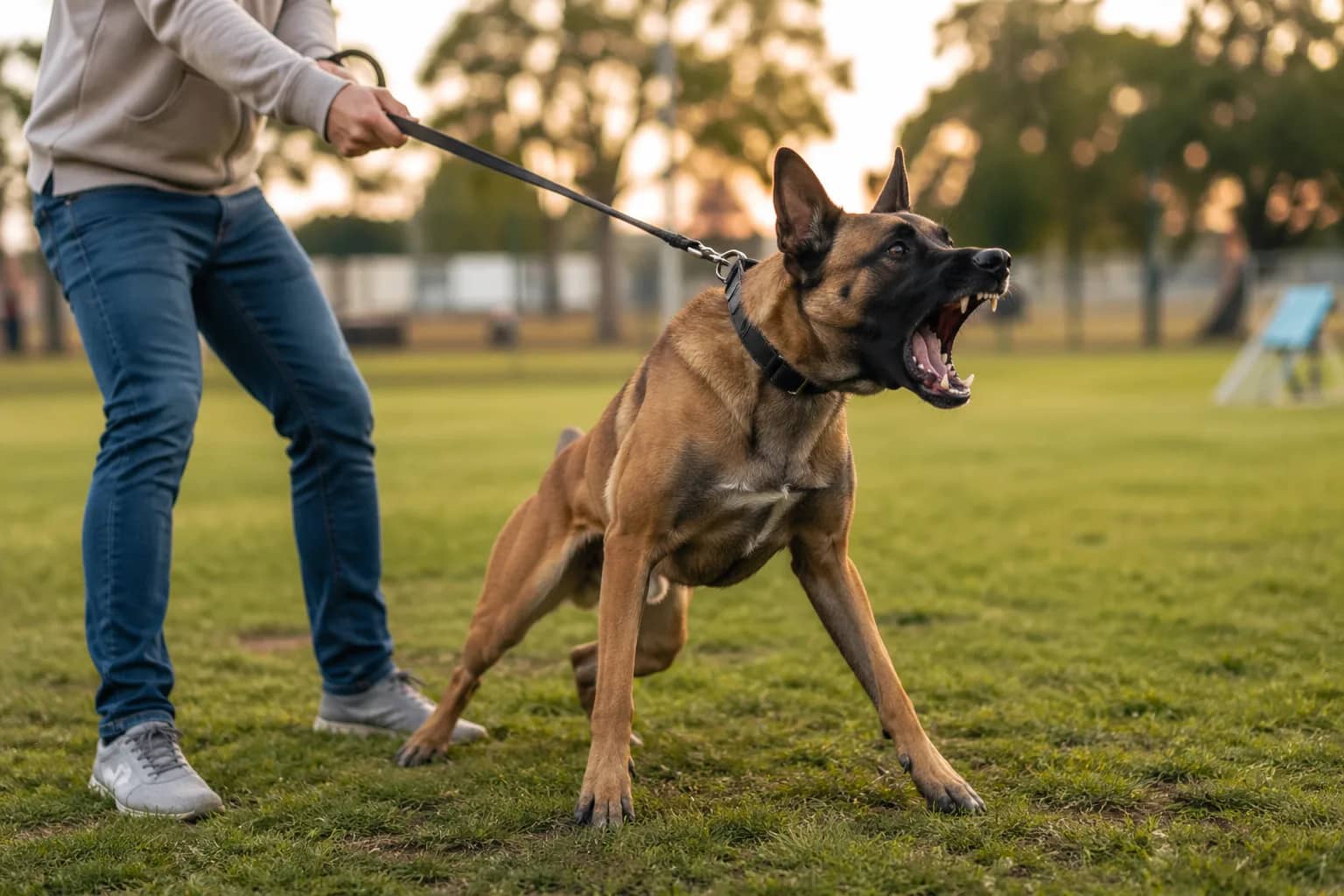
Eventually, in many dogs, the pressure has to go somewhere. And what comes out is rarely the same controlled bark or growl that the collar was suppressing. It's a bite, a sudden snap at a child, a fight at the dog park, a chase that doesn't recall.
Owners describe it the same way every time: "He went from totally fine to attacking the other dog with no warning."
That is almost never true. The warning was there for months — small, low-grade, easy to miss. The shock collar took the warnings away. The bite came when the dog could no longer hold it in.
This is why I will not use shock collars on the kinds of cases people most want to use them on. Reactivity and aggression are the worst possible candidates for a tool that suppresses signalling.
Why the fix never sticks
Even setting aside the safety question, shock collars have a practical problem: they only work while the dog believes the collar is on and active.
Owners who use them report variations of the same pattern:
- The dog is calm with the collar on, escalates the second it comes off.
- The dog learns the difference between the collar and a regular flat collar within days.
- The owner has to wear the remote at all times, which means the dog is "trained" only in the owner's presence.
- The behaviour returns six to twelve months later, often worse than before, because the underlying state has been untreated and compounding.
What you've bought is not behaviour change. It's a remote control with a battery life.
What dogs actually need
Most behaviour I see across regional SA — barking, pulling, reactivity, low-grade aggression, recall failures — has the same handful of root causes:
- Fear, often from genetics, an early negative experience, or lack of socialisation.
- Frustration, from being asked to ignore stimuli the dog doesn't have the skills to ignore.
- Over-arousal, particularly common in working breeds like kelpies, heelers and German Shepherds in suburban or low-stimulation environments.
- Confusion, from owners whose rules and expectations shift day to day.
- No leadership figure, which leaves the dog feeling responsible for managing the household and the world outside it.
None of those are fixed by a sensation on the dog's neck. They're fixed by changing what the dog believes about its environment, its owner, and what's expected of it. That's a leadership and structure problem, and the work is done above the collar, not below it.
What I do instead
The approach I take on every case — whether it's a five-month-old border collie that won't settle or a four-year-old shepherd cross with a bite history — has the same shape.
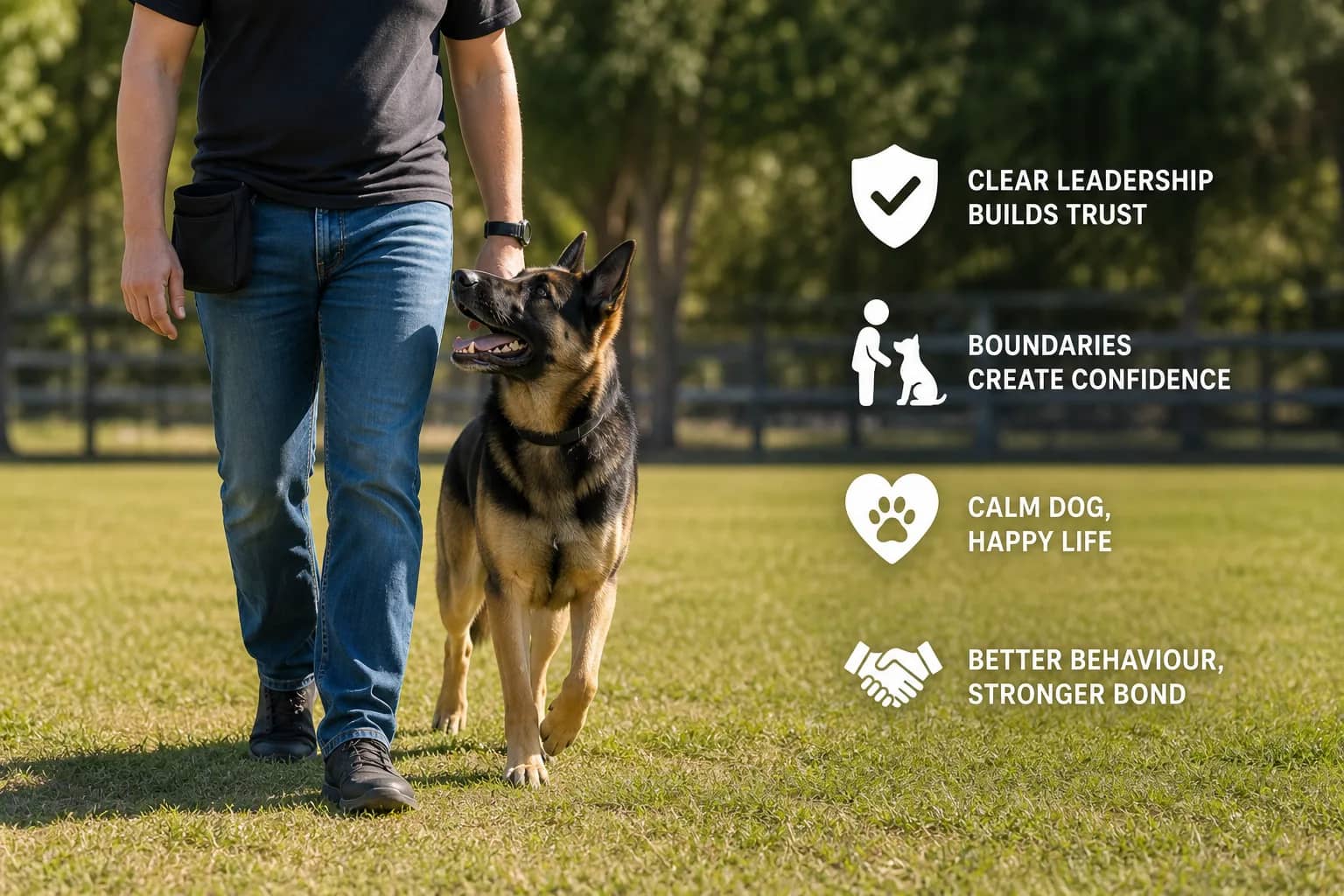
Establish calm leadership first. Most reactive and aggressive dogs are not "dominant" — they're anxious dogs who believe no one else is in charge. When the owner becomes a clear, predictable presence the dog can defer to, the underlying anxiety drops. So does the behaviour.
Build structure around the triggers. That means knowing what sets the dog off, controlling the environment so the dog doesn't rehearse the reaction, and only exposing the dog to the trigger when it's in a state where it can learn instead of react.
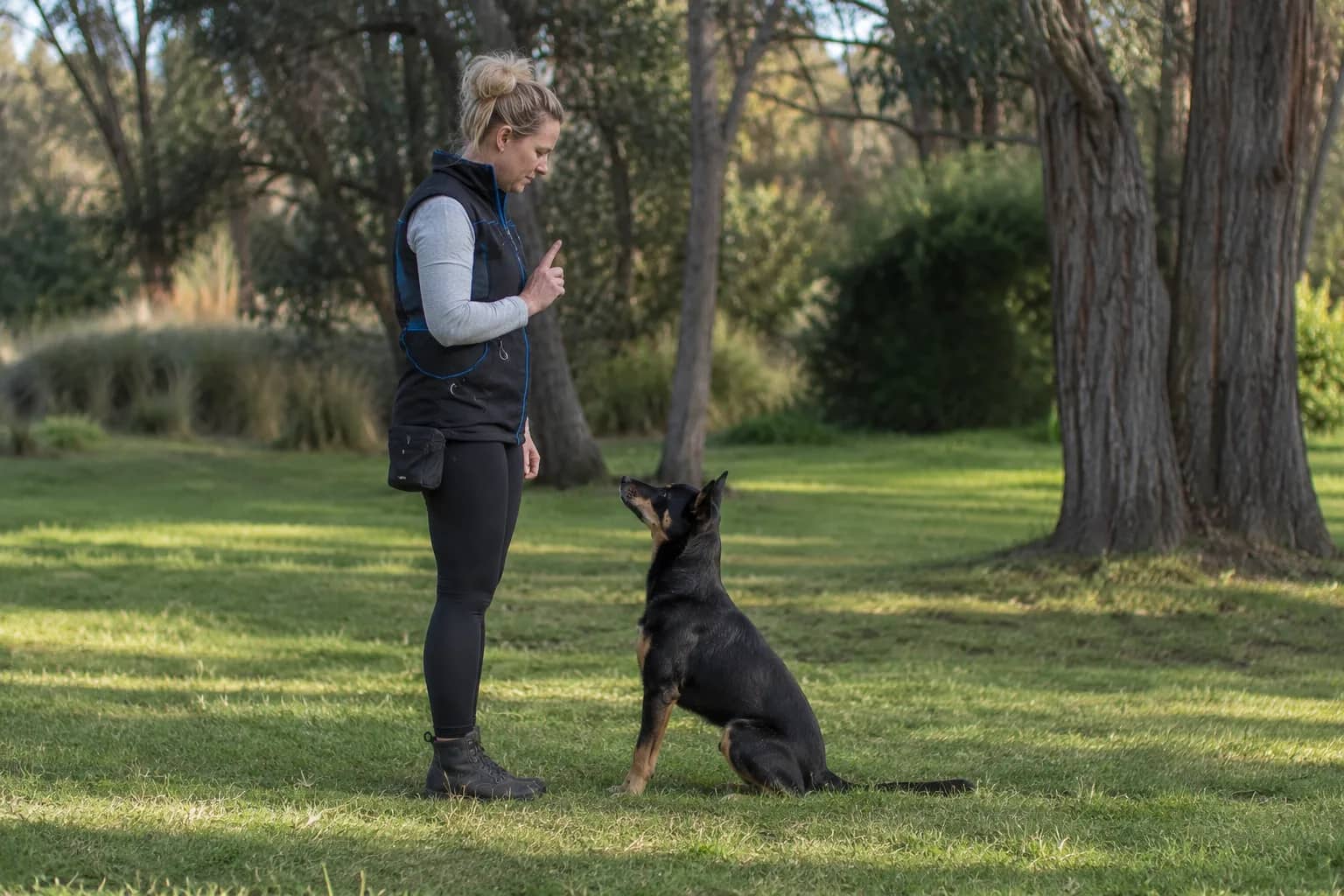
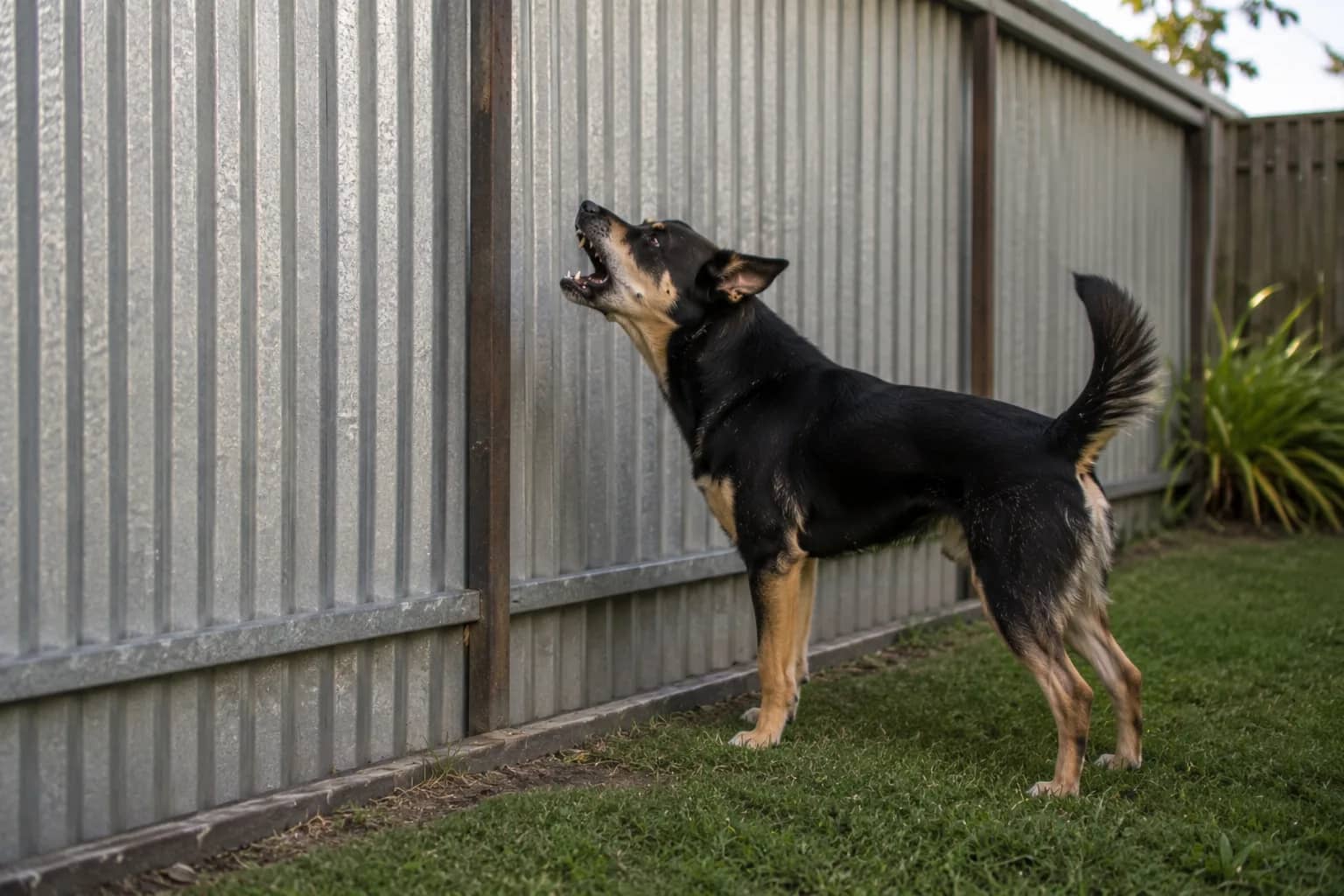
Replace the behaviour, not just suppress it. A reactive dog at the fence isn't trying to misbehave — it's trying to do something with what it's feeling. The job is to give it a different something. A "place" behaviour. A look-at-me. A redirection back to the owner. The behaviour the dog is supposed to do has to be clearer than the behaviour it currently does.
Change the owner before changing the dog. This is the part most owners resist, and the part that determines whether the work lasts. The dog is responding to you. If your energy, expectations and consistency don't shift, the dog can't.
None of that requires a shock collar. None of it requires food bribes either — I'm not a "force-free, treats-only" trainer, and you can read why — but the spectrum between "no consequences ever" and "shock the dog into compliance" is wide, and almost everything useful lives in the middle of it.
Signs the tools being used are hurting more than helping
If you've been using a shock collar — or if you're working with a trainer who recommends one — these are the patterns to watch for:
- The dog avoids eye contact more than it used to.
- The dog has stopped offering "warning" behaviours (growling, lip-curling, raised hackles). Many owners think this is improvement. It usually isn't.
- The dog is quieter overall but seems flatter, less playful, slower to engage.
- The dog reacts at the trigger when the collar is off but not when it's on.
- The dog is fine on lead but increasingly reactive off lead, or vice versa.
- There has been a sudden, unprovoked escalation — a bite, a fight, a chase.
- You can see the dog flinch or tense when you reach for the remote.
Any of those is a sign that suppression has built up faster than the underlying state has changed. The longer you continue, the harder it is to come back from.
What about "low-level" or "vibration only" collars?
Same principle, smaller dose. A vibration that startles a fearful dog still teaches that dog "the environment hurts me when I express what I'm feeling." The mechanism is the same; the volume is different.
There are dogs for whom vibration is genuinely neutral, and in those cases the collar isn't doing much of anything — which is fine, but also raises the question of why you're paying for it. For the dogs the device actually affects, the affect is the problem.
Are shock collars legal in South Australia?
Currently, yes. Electronic collars are legal in SA, although their use is increasingly restricted or banned in other Australian states and most of Europe. Legality is not the same as efficacy or safety, though — plenty of things are legal that an ethical behaviourist wouldn't use. The fact that I have access to the tool and choose not to use it is the relevant signal, not the law.
What lasting behaviour change actually looks like
When the work is done properly, you don't end up with a quieter dog. You end up with a dog that has different information about the world and its place in it.
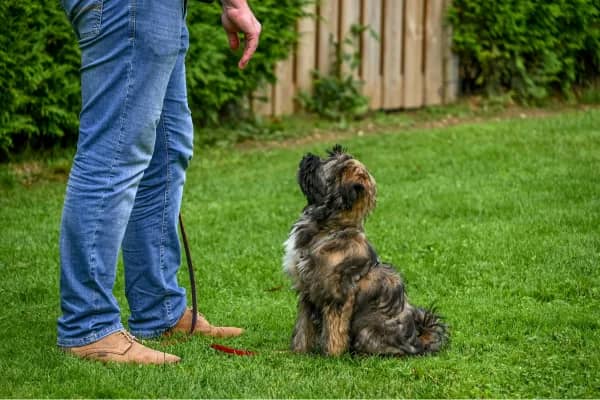
A reactive dog that has been worked through properly will still see the trigger, still notice it, still feel something. The difference is that it will look at you, breathe out, and move on. The reaction hasn't been suppressed — it's been resolved. There's nothing the dog is trying not to do.
That's what real behaviour change looks like. You can take the lead off, walk past the trigger, and watch the dog do nothing. Not because it's afraid of what will happen if it does something — but because it no longer needs to.
That's the work I'd rather do, every time.
Ready to fix the cause, not the symptom?
If you're considering a shock collar — or if you've already tried one and the behaviour has returned — there's a better path. I work in-home across regional SA and online with owners anywhere in Australia, and most owners feel a shift in their dog inside the first consultation.
- See all training packages
- Take the Free Behaviour Test to find out where the problem actually sits
- Get in touch — tell me what's been happening and I'll tell you what I'd do about it
Your dog isn't broken. The tools you've been handed are.
Not sure where to start with your dog?
Take the Free Dog Behaviour Test.
Two minutes. You’ll find out exactly what’s driving your dog’s behaviour — and what to do next.
Frequently asked questions
Written by
Pauline Cowey
Accredited Dog Behaviourist, Communicator, Owner Educator and Trainer based at Crystal Brook, South Australia. Decades of hands-on work resolving aggression, reactivity, anxiety and obedience cases across regional SA — through ethical, leadership-based methods.
Read Pauline’s full story →