Why Aggressive Dog Training Methods Fail (And the Ethical Method That Works Instead)

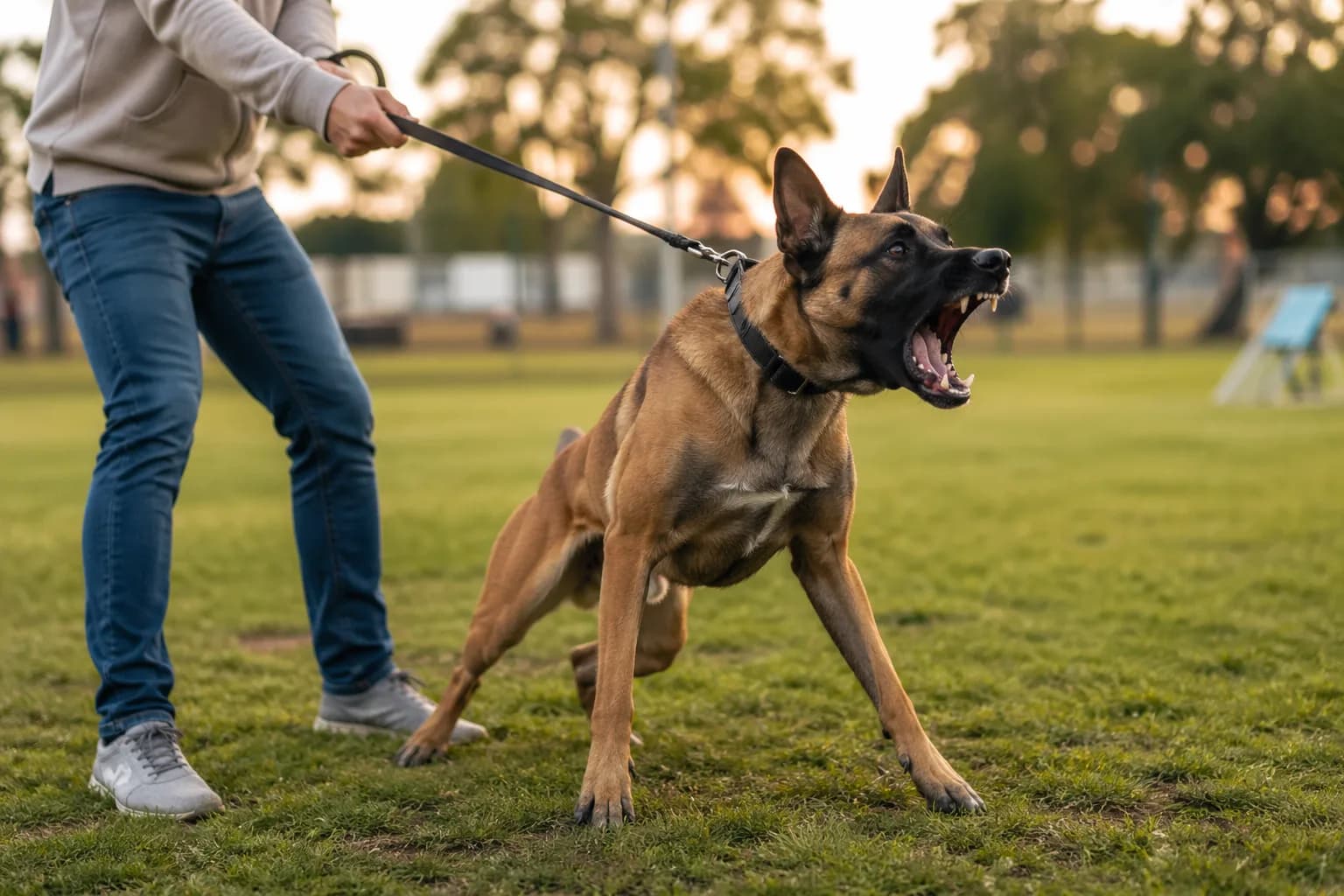
Punishment-based "aggressive dog training" doesn't fix aggression. It suppresses the warning signs while leaving the underlying state intact — which is why "trained" aggressive dogs often go on to bite without warning. The method that actually works is the opposite: calm leadership, environmental management, and structured rehabilitation under an accredited behaviourist.
If you're reading this because your dog has bitten, lunged, or come close — and you're worried about what comes next — you're in the right place. This is the most important article on this site.
I work with aggressive dogs every week. Across Port Pirie, Port Augusta, Whyalla, the Mid North and beyond. The vast majority can be safely rehabilitated. But the methods that are most often sold for this work are the methods that consistently make it worse.
Here's why — and what actually works instead.
The mistake most aggressive dog training makes
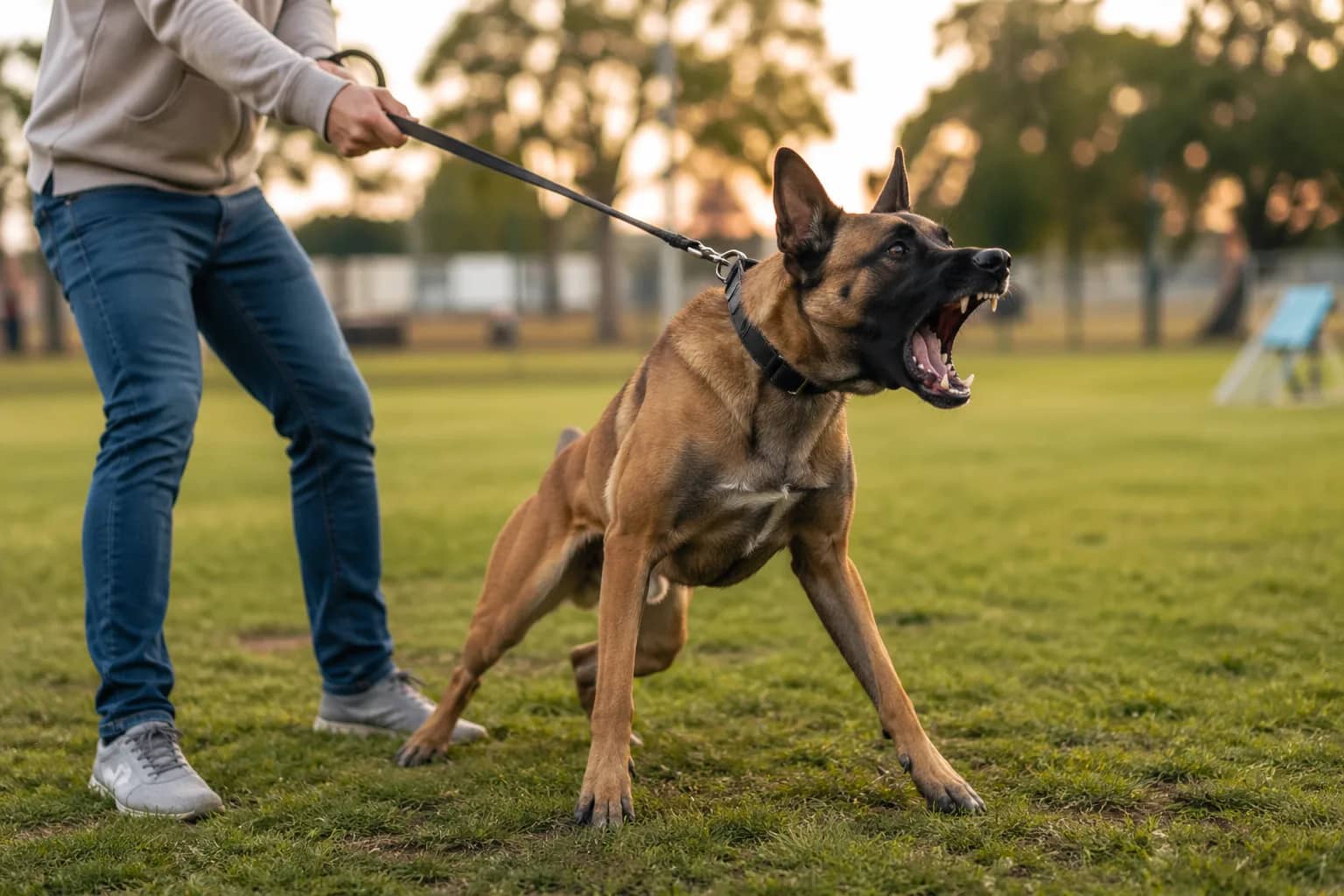
The first instinct of most "balanced" trainers is to suppress the behaviour. The dog growls — punish the growl. The dog lunges — correct the lunge. The dog bares teeth — make that uncomfortable enough that the dog stops.
For a few weeks, this often appears to work. The dog stops growling. The owner thinks: "We're getting somewhere."
What's actually happening is much darker.
Growling, lunging and baring teeth are warnings. They are your dog saying "I am uncomfortable. Back up. Don't push me." When you punish those warnings, you don't change the discomfort — you change the dog's willingness to tell you about it.
The next time the dog is pushed to its threshold, it has learned that warning doesn't work. So it skips the warning and goes straight to the bite. This is documented across the veterinary behaviour literature, and it is one of the most consistent findings in modern animal behaviour science.
This is why "balanced" dog training is dangerous for aggression cases. It removes the early warning system without addressing the cause.
What aggression actually is
Aggression is almost never the dog's first choice. It is the last item in the dog's behavioural toolbox — what comes out when everything else has failed.
Underneath aggression, there is almost always one of:
- Fear — the dog is scared and the aggression is a defensive bid for distance
- Frustration — the dog wants something and can't get to it (typical on-lead)
- Resource guarding — protecting food, toys, space, or a human
- Pain or medical — undiagnosed pain dramatically increases reactivity
- Predatory drive misdirected — typical in working breeds
- Genuine over-arousal — the dog can no longer regulate its own state
Each one needs a different approach. None of them respond well to punishment, because punishment makes the underlying state worse — not better.
If you'd like a quick read on which is driving your dog's behaviour, take the Free Behaviour Test. Two minutes — and it's a useful starting point.
Why this matters in regional SA
If you live in Port Pirie, Whyalla, or anywhere across the Iron Triangle, your options for aggressive dog help are limited. That scarcity has driven local owners to either:
- Use "balanced" trainers because they're the only local option
- Drive to Adelaide for trainers who don't understand regional dog life
- Use online courses without expert oversight
- Give up entirely — and live in fear of their own dog
You don't have to take any of those paths. Heart of the Pack is based at Crystal Brook and works in-home across the entire Upper Spencer Gulf and surrounding regions, with online coaching for owners further afield. The method described below works for cases as severe as bite history with hospitalisation.
The method that actually works
There is no quick fix for aggression. But there is a reliable method — and it's the opposite of suppression.
Step 1: Safety planning (immediate)
Before any training happens, the dog needs to be safe. That means:
- Environmental management to prevent the dog being pushed past threshold (no off-lead exposure to triggers, controlled visitor protocols, secure yards)
- Equipment readiness (a properly conditioned basket muzzle — see below)
- A clear plan for who handles the dog, when, and how
This is not "training" yet. This is creating the conditions where training becomes possible.
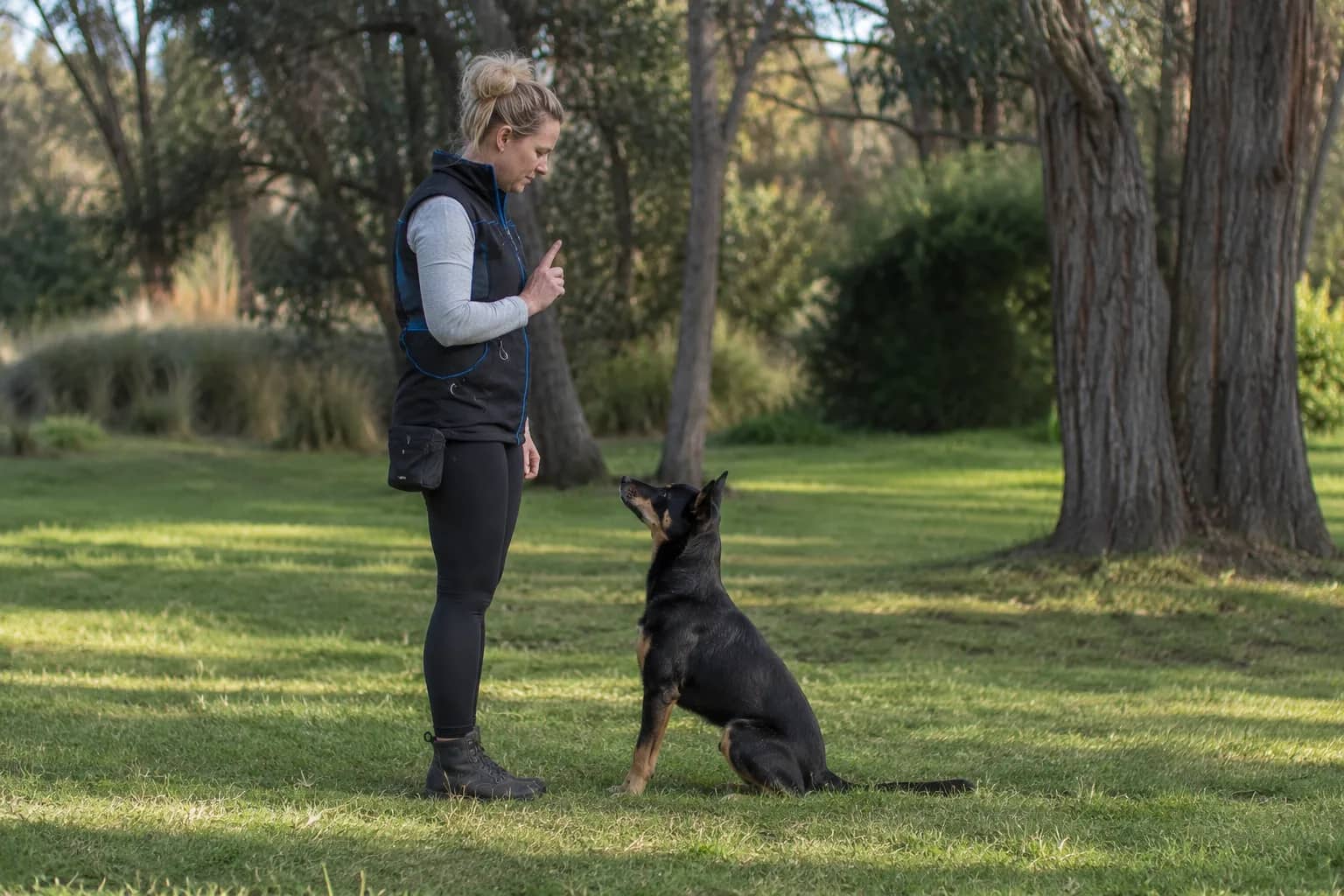
Step 2: Calm leadership reset (week 1–2)
The household needs to provide the calm, clear leadership the dog is lacking. This usually means restructuring:
- Where the dog sleeps
- How meals are delivered
- Who walks the dog and how
- Whether the dog is allowed on furniture
- How greetings (people and other dogs) are handled
- Daily routine and structure
Most aggressive cases improve materially inside the first two weeks of leadership reset alone — before any specific aggression work happens. This is because the underlying state lowers when the dog stops having to make decisions it isn't equipped to make.
Step 3: Threshold work (week 2 onward)
Once the household is calmer, we begin controlled exposure to triggers — at distances where the dog can stay below threshold. The goal is not to "expose" the dog to its triggers. It is to teach the dog that triggers no longer require a response.
This work is slow. It's deliberate. It's patient. It is the opposite of "flooding" — pushing the dog into its trigger and forcing it to cope.
Threshold work done well produces a dog that genuinely doesn't react to triggers anymore. Not a suppressed dog. A regulated dog.
Step 4: Generalisation (month 2+)
Behaviour change established in one environment has to transfer to others. We move from the property to the street to the busier street to the Port Augusta foreshore (or wherever your local high-trigger environment is). Each transition is deliberate. Each is paced.
This is where most owners' work happens. The behaviourist sets the framework; the owner executes it consistently, every day, for months. That is the part there is no shortcut for.
Muzzles — a kindness, not a cruelty
Many owners resist conditioning their dog to a muzzle because they think it sends the wrong message. They have it backwards.
A properly conditioned basket muzzle:
- Gives the dog freedom of movement it wouldn't otherwise be allowed
- Makes you and everyone around safer
- Lowers the cost of mistakes during rehabilitation
- Reduces your own stress (which the dog reads)
A dog should be conditioned to its muzzle slowly, with positive associations, before it ever needs to wear it in a real situation. By the time we're using it, the dog is comfortable in it.
If your dog has bitten or come close, ask your behaviourist about muzzle conditioning. It is one of the most useful tools in serious cases.
Why I don't medicate
For some aggressive dogs, baseline arousal is so high that the conventional advice is to lower it chemically before training begins. I have not found that necessary.
What I have found, across fifteen years and several hundred aggression cases across regional SA, is that when leadership and structure shift, the dog's baseline drops on its own. The nervous system regulates because the world has stopped feeling unmanageable — not because a drug has lowered the dial.
I don't support medicating a dog. The state needs to be resolved, not masked. A medicated dog that performs well on a trial visit is not a rehabilitated dog; it is the same dog with the lid screwed down. When the medication is tapered, the underlying state is still there.
If your vet has genuine medical concerns I will of course work with that — sedation for a procedure, pain management for an injury, treatment for a thyroid or endocrine issue that is driving behaviour. Those are medical questions, not behaviour ones. For the behaviour itself, the work is done with you, with the dog, and without pharmaceuticals.
What you absolutely should not do
If your dog has shown aggression:
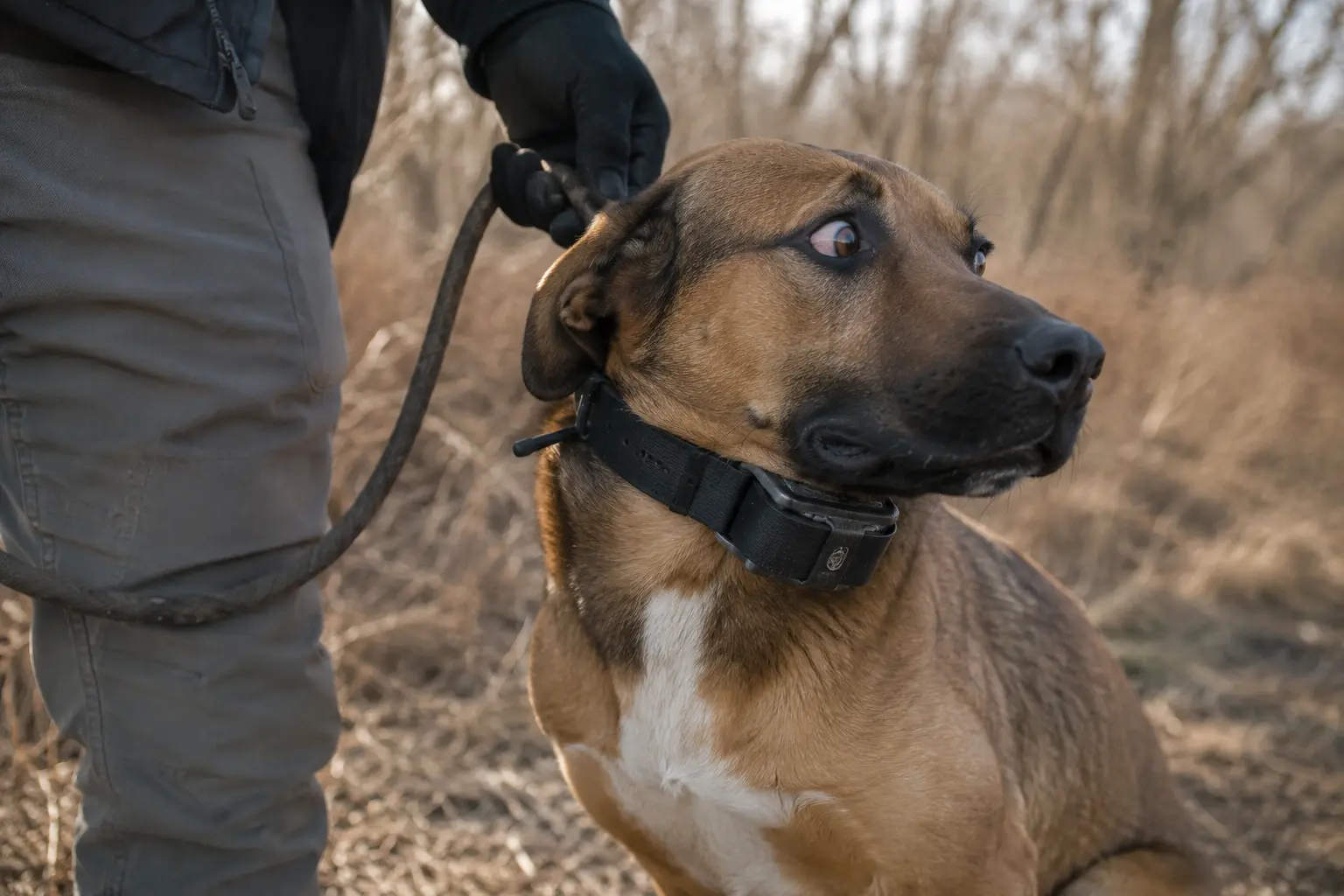
- Don't use a shock collar, prong collar, or any pain-based tool. They make aggression worse and they have caused serious injuries to dogs across regional SA.
- Don't try to "show the dog who's boss" with physical corrections. Alpha rolling an aggressive dog is one of the most common causes of bites to owners.
- Don't punish growling. Growling is information. You want your dog to keep telling you when it's uncomfortable.
- Don't force the dog into the trigger ("flooding"). It is psychologically traumatic and creates more aggression, not less.
- Don't ignore it and hope it improves. Aggression rarely self-resolves. Earlier intervention is dramatically more effective.
When to call a behaviourist (not just a trainer)
You need a behaviourist (not a regular trainer) when:
- Your dog has bitten or broken skin on a human or another animal
- Your dog is showing escalating warning signs (more growling, more lunging, lower threshold)
- Resource guarding is intensifying
- The dog can't be safely handled by all household members
- There's a child in the household and any aggression concern
- The dog is on lead reactivity that's escalating toward aggression
Heart of the Pack is one of the few accredited behaviourist services based in regional South Australia. Pauline lives and works at Crystal Brook and travels in-home across the Iron Triangle, Mid North, Yorke Peninsula and Clare Valley. For the Eyre Peninsula and further, online coaching produces the same results.
What to do right now
If your dog has bitten or come close — even once — the most important thing is to stop the cycle of incidents while we figure out what's going on.
- Take the Free Dog Behaviour Test — two minutes, and you'll have a clearer read on the type of aggression you're dealing with.
- Implement immediate management — leashes, gates, separation from triggers — to prevent another incident.
- Call directly on 0429 321 231 — aggression cases get prioritised. You don't need to wait two weeks.
Aggression is not the end of the road. It's a signal that the household needs help — and almost every household can recover, with the right method and consistent work. The vast majority of dogs I see in serious aggression cases return to safe, calm, ordinary family life. Yours can too.
Not sure where to start with your dog?
Take the Free Dog Behaviour Test.
Two minutes. You’ll find out exactly what’s driving your dog’s behaviour — and what to do next.
Frequently asked questions
Written by
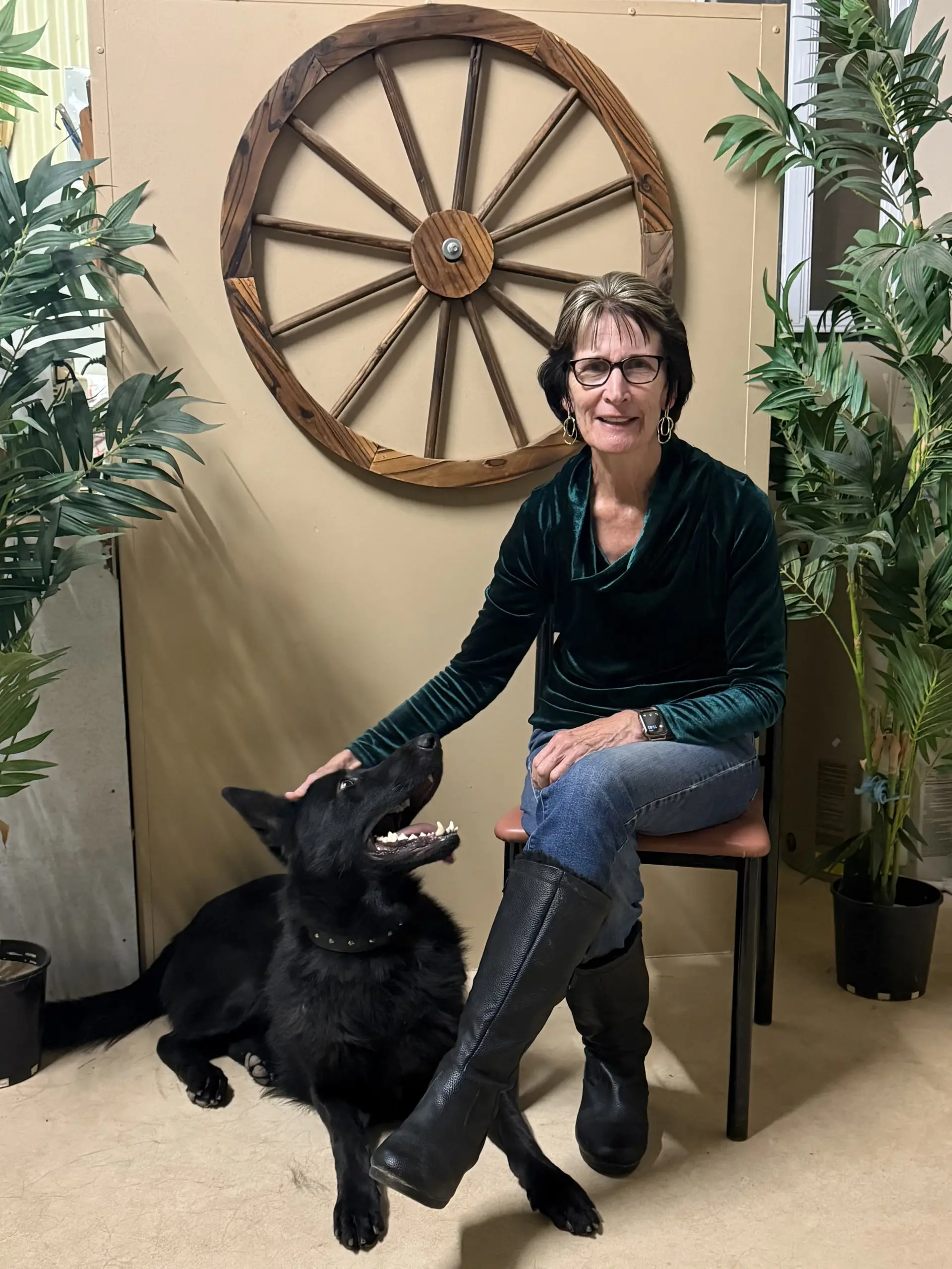
Pauline Cowey
Accredited Dog Behaviourist, Communicator, Owner Educator and Trainer based at Crystal Brook, South Australia. Decades of hands-on work resolving aggression, reactivity, anxiety and obedience cases across regional SA — through ethical, leadership-based methods.
Read Pauline’s full story →