7 Warning Signs Your Dog Trainer Is Using the Wrong Methods

Most owners only realise their dog trainer is using the wrong methods after months of stalled progress, suppressed warning signs, or worse — the dog now bites instead of growling. Here are seven warning signs to watch for, plus how to find an ethical, results-focused trainer or behaviourist in regional South Australia.
If you live anywhere from Port Pirie to Whyalla to the Clare Valley, your trainer options are limited — and the wrong choice is genuinely worse than no help at all. So before we get to the warning signs: there is no shame in having used a trainer whose methods didn't sit right. Nearly every owner I work with has. The point is to recognise what went wrong, undo it cleanly, and rebuild.
This is a guide to recognising those red flags early — and choosing the right help next time.
Why this matters in regional SA specifically
When you live in the Upper Spencer Gulf, the Mid North, the Yorke Peninsula or anywhere outside Adelaide, your search for a dog trainer usually has fewer options. That scarcity makes regional owners more likely to:
- Stay with a trainer whose methods clearly aren't working
- Accept "balanced" methods (treats plus corrections) because that's all that's locally available
- Drive hours to a metro trainer who doesn't understand regional dog life (working breeds, livestock, off-lead reality)
- Give up entirely and live with a deteriorating problem
You don't have to. There are good options, including online behaviour coaching, that work as well as in-person for most cases. But you do need to recognise the warning signs first.
Warning sign 1 — The trainer recommends a shock collar, prong collar, or e-collar
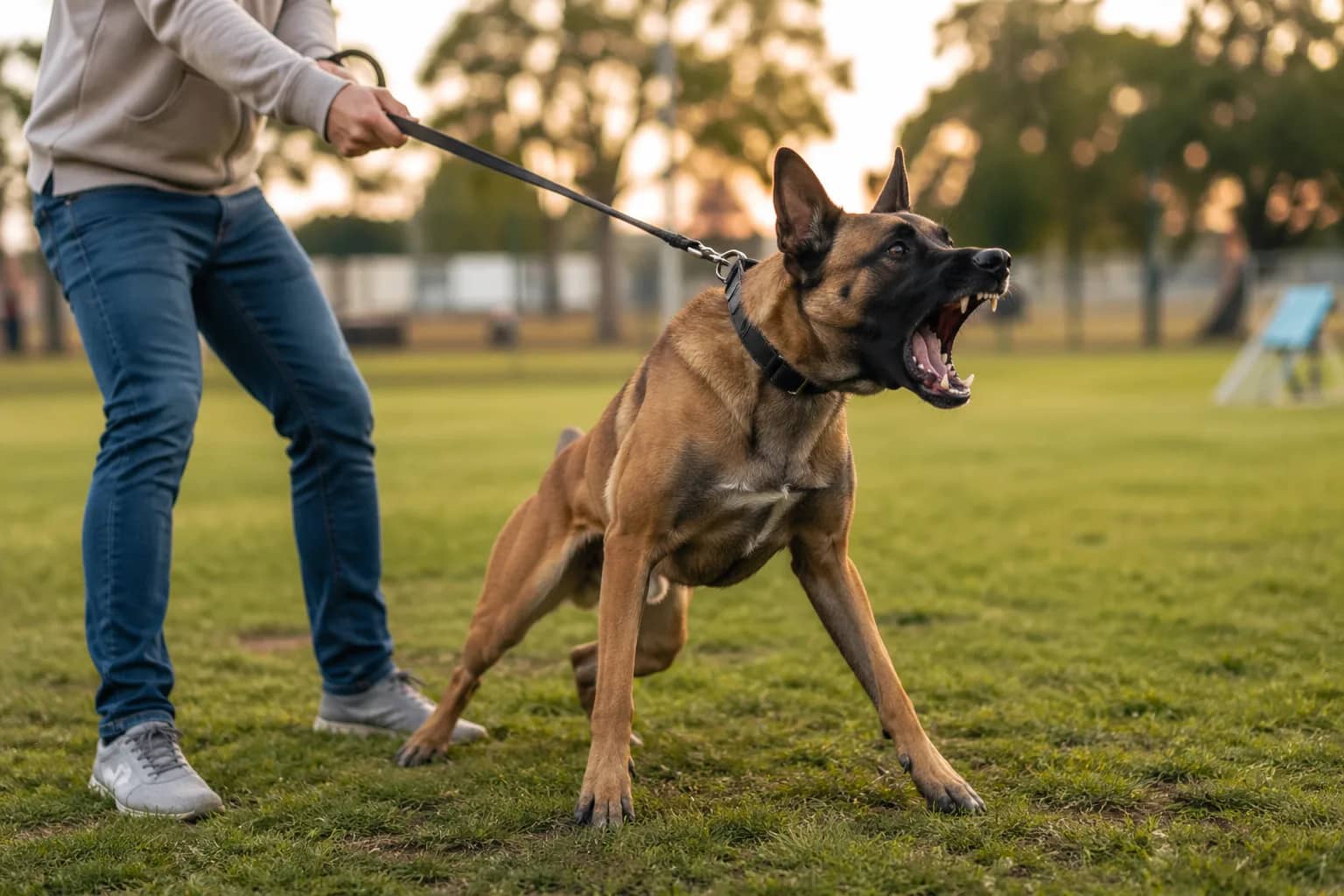
This is the loudest red flag. Any trainer who recommends an e-collar, prong collar, or "static" collar for behaviour issues — especially aggression or reactivity — is using a tool that suppresses warning signs without addressing the underlying state.
Here's what happens with an aggressive or reactive dog on an e-collar:
- The dog feels anxious or aroused. It growls or freezes — a warning sign.
- The collar punishes the growl.
- The dog learns: warnings get punished. The anxiety doesn't go anywhere.
- Next time, the dog skips the growl. It goes straight to the bite.
This is documented behaviour. It is one of the most consistent ways to make an aggression case worse. We see it across regional SA constantly.
If a trainer talks about "balanced" methods, "leash pressure tools", or "stim collars" — keep looking. There are better methods that don't carry this risk.
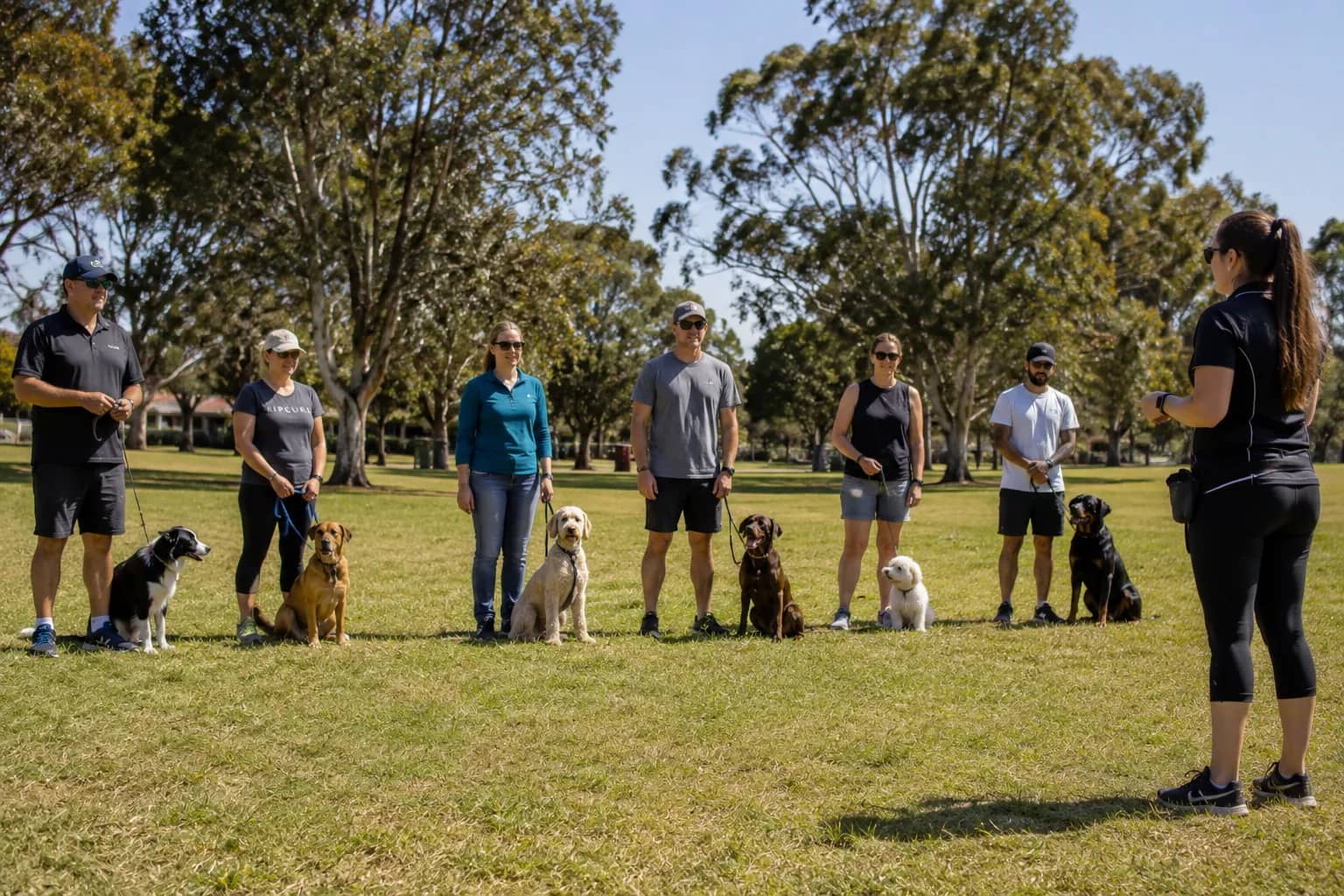
Warning sign 2 — Six-week group classes for a behaviour case
Group classes have a role for confident puppies in socialisation periods, and occasionally for foundational obedience. They have almost no role for:
- Aggression
- Reactivity
- Separation anxiety
- Resource guarding
- Fear-based behaviour
- Multi-dog household dynamics
The reason is environmental. Your dog's aggression doesn't live in a community hall in Port Augusta — it lives in your kitchen, your driveway, your front gate. A trainer who can't see your environment can't address what's actually going on.
If a trainer tries to put your reactive dog in a group class without seeing your home first, that's a warning sign.
Warning sign 3 — A guaranteed result by a fixed date
"I'll have your dog reliably trained in six weeks." "Aggression cured in three sessions." "Money-back guarantee."
No ethical behaviourist guarantees outcomes by date, because outcomes depend on:
- The dog's history, age and underlying state
- The owner's consistency
- The household's compliance
- Whether there's a medical or neurological component
What an ethical professional can promise is process — clear plan, transparent expectations, ongoing support. Not a date-stamped outcome.
Pauline's work operates on this principle: the change in your dog often starts within the first session, but the full picture is months. Anyone promising less is overselling.
Warning sign 4 — Heavy reliance on food
Treats have a place. They are not a method.
Watch out for trainers who:
- Recommend "high-value treats" as the answer to every problem
- Build behaviour entirely on food contingency
- Tell you to "always have treats on you"
- Can't show you the dog performing without food in hand
Treats build a transactional dog — one that listens because of what's in your hand, not because of who you are. The moment the food is unavailable (you're out on a walk, the treat pouch is empty, the other dog is more interesting), the behaviour collapses.
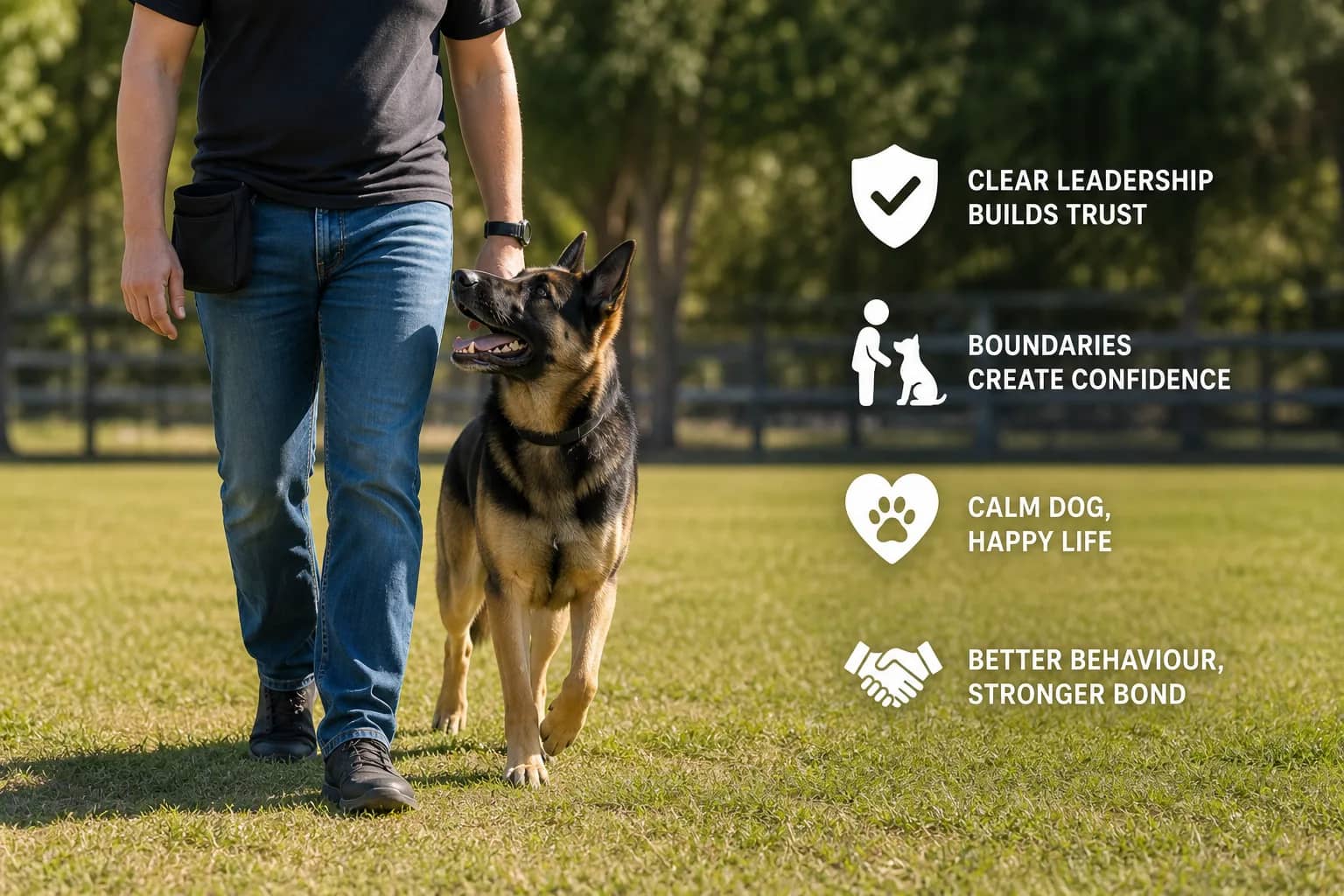
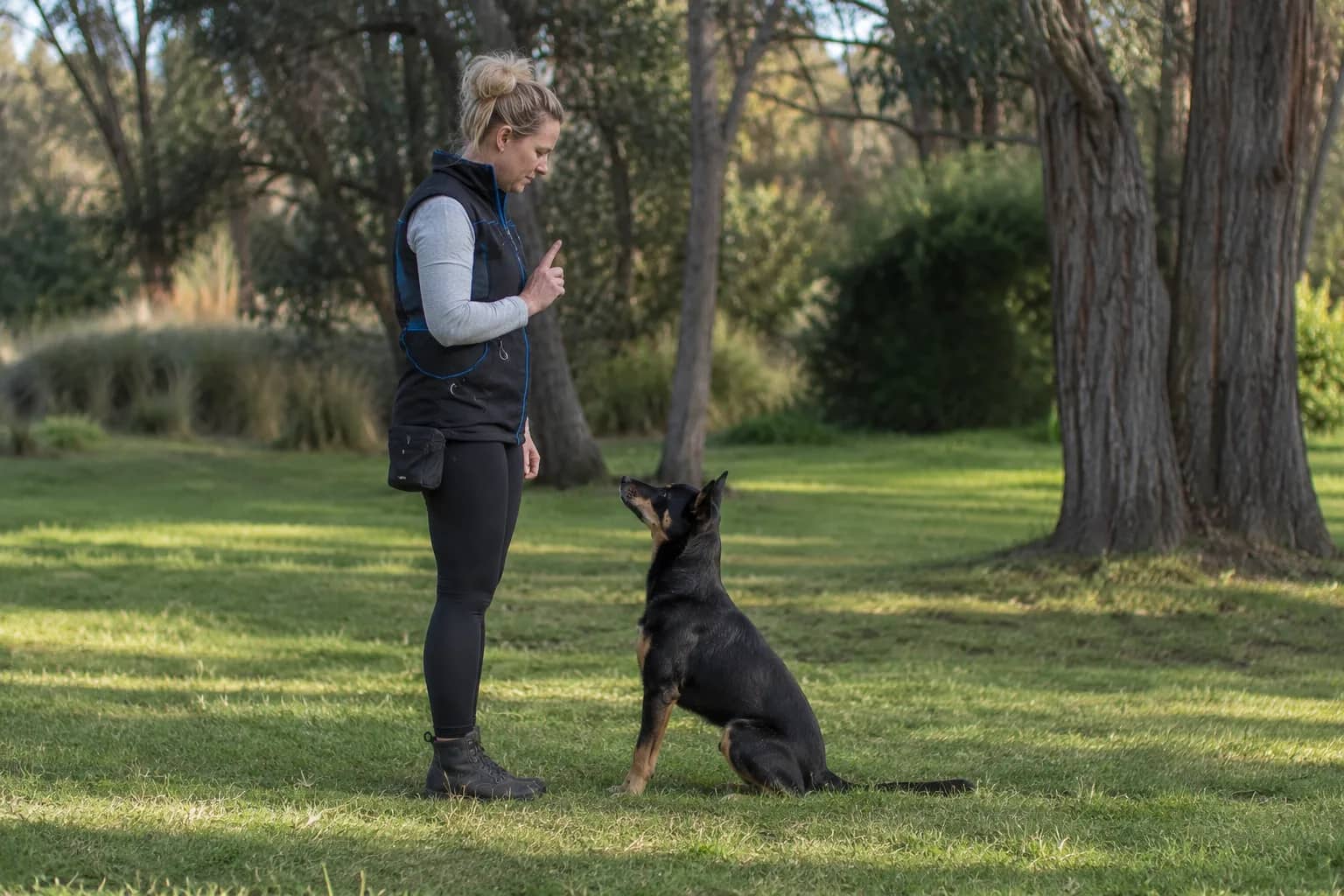
The alternative is leadership-based work. The dog responds because it trusts you to lead the situation — and that response is durable. Pauline's method is built on this distinction.
Warning sign 5 — They blame the breed
"German Shepherds are just like that." "Kelpies need a job — there's nothing more you can do." "She's a bull breed — that's the bite drive."
Breed informs the application. It does not excuse the outcome. Every breed responds to clear, calm leadership. Working breeds need it earlier and clearer because their genetics are louder — but the principles are universal.
If a trainer tells you "this is just how your dog will be," they are either deflecting blame or genuinely don't have the tools to help. Either way, it's not a useful answer.
This matters especially in regional SA where working breeds dominate the dog population — kelpies, blue heelers, German Shepherds and Belgian Shepherds all respond beautifully to leadership-based work.
Warning sign 6 — They don't ask about the household
A behaviourist who doesn't ask about:
- Who lives in the household
- Whether there are children
- Whether there are other dogs
- Your daily routine
- Where the dog sleeps
- Who walks the dog
- What you've already tried
…is not going to give you a useful plan. Behaviour cases are household cases. The dog's problem usually has at least one root cause in human inconsistency, and you cannot fix that without knowing who the humans are and what they do.
The first conversation with any good behaviourist should feel like a doctor's appointment — many questions, careful listening, no premature pronouncements.
Warning sign 7 — Suppressed warning signs are sold as "progress"
This is the most dangerous of the seven, because owners often welcome it as a win.
If your trainer's method makes your dog:
- Stop growling (without addressing why it was growling)
- Stop showing teeth (without changing the underlying state)
- Become "flat" or "shut down" (often misread as "calm")
- Stop reacting on lead but become tense, frozen, or avoidant
…that's not progress. That's suppression. Your dog has been taught not to communicate. The state underneath stays — and you've lost the early warning system that was telling you something was wrong.
Good behaviour work creates dogs who genuinely feel calmer. They are loose, breathing, soft in their bodies. They have not gone silent — they have nothing to warn about.
What to look for instead
When you're choosing a dog trainer or behaviourist in regional South Australia, look for:
- Accreditation — formal qualifications from a recognised body. Pauline holds four: Dog Communicator, Behaviourist, Owner Educator and Trainer.
- A method that doesn't use pain — no shock collars, no prong collars, no alpha rolls, no force.
- In-home work for behaviour cases — the dog's behaviour lives in your environment, so the work should too.
- Owner coaching — the dog can only progress as far as the humans in the household. Any trainer who works the dog without coaching the humans is missing the point.
- Realistic timelines — a clear plan, honest about how long real change takes.
- References from owners with similar cases to yours.
- A free first step — like the Free Behaviour Test — so you can confirm fit before committing.
A note on "balanced" trainers
You'll see the term "balanced training" used a lot, particularly online. It sounds reasonable — a balance of reward and correction. In practice it means using food alongside aversive tools (e-collars, prong collars, leash pops).
For aggression and reactivity, "balanced" methods consistently make things worse. The corrections raise arousal in dogs whose problem is arousal, and they suppress the warning signs that keep everyone safe.
For everyday obedience, "balanced" methods often appear to work — until they don't. Owners discover the dog only behaves while wearing the collar, or only when the trainer is in the room. The behaviour was never trained; it was conditioned via avoidance.
Pauline's approach is built deliberately without aversive tools because the cases that come her way — aggression, reactivity, anxiety — are the cases that "balanced" methods consistently mishandle.
Where Heart of the Pack fits
Heart of the Pack is one of the few accredited dog behaviourist services based in regional South Australia rather than visiting from Adelaide. Pauline lives and works at Crystal Brook, 25 minutes south of Port Pirie. She travels in-home across the Upper Spencer Gulf, Iron Triangle, Mid North, Clare Valley and Yorke Peninsula. For the Eyre Peninsula and beyond, she works online — and the outcomes are the same.
She does not use force, food bribes, shock collars, prong collars, alpha rolls, or any tool that suppresses warning signs. She does coach the human, in your real environment, alongside your real dog — because that is the work that actually changes things.
If you're not sure what's going on with your dog or whether you've been getting the right help, the Free Dog Behaviour Test is a 2-minute starting point — and it doesn't cost anything.
Not sure where to start with your dog?
Take the Free Dog Behaviour Test.
Two minutes. You’ll find out exactly what’s driving your dog’s behaviour — and what to do next.
Frequently asked questions
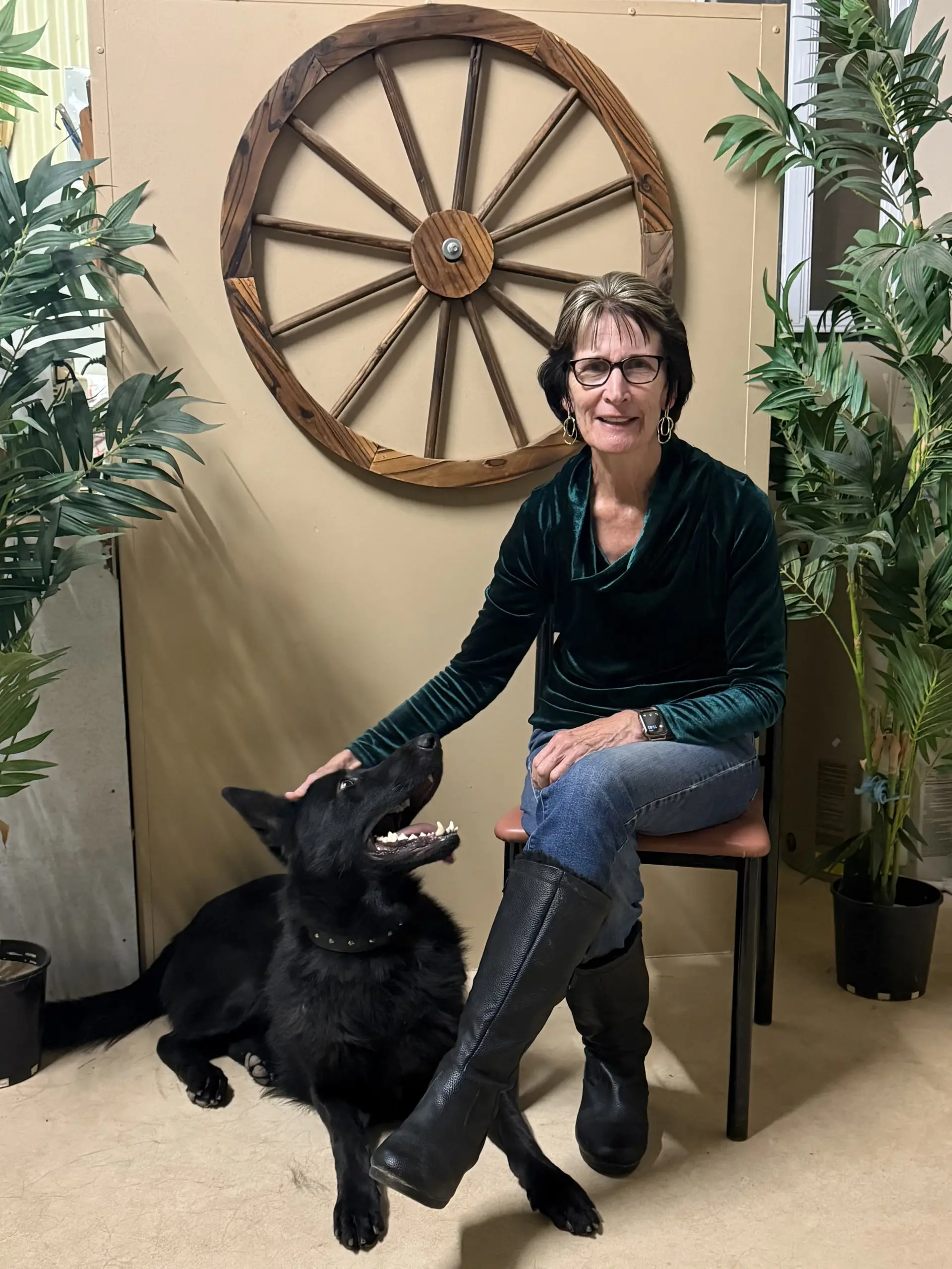
Written by
Pauline Cowey
Accredited Dog Behaviourist, Communicator, Owner Educator and Trainer based at Crystal Brook, South Australia. Decades of hands-on work resolving aggression, reactivity, anxiety and obedience cases across regional SA — through ethical, leadership-based methods.
Read Pauline’s full story →