Leadership-Based vs Balanced vs Force-Free Dog Training — What Each Actually Means

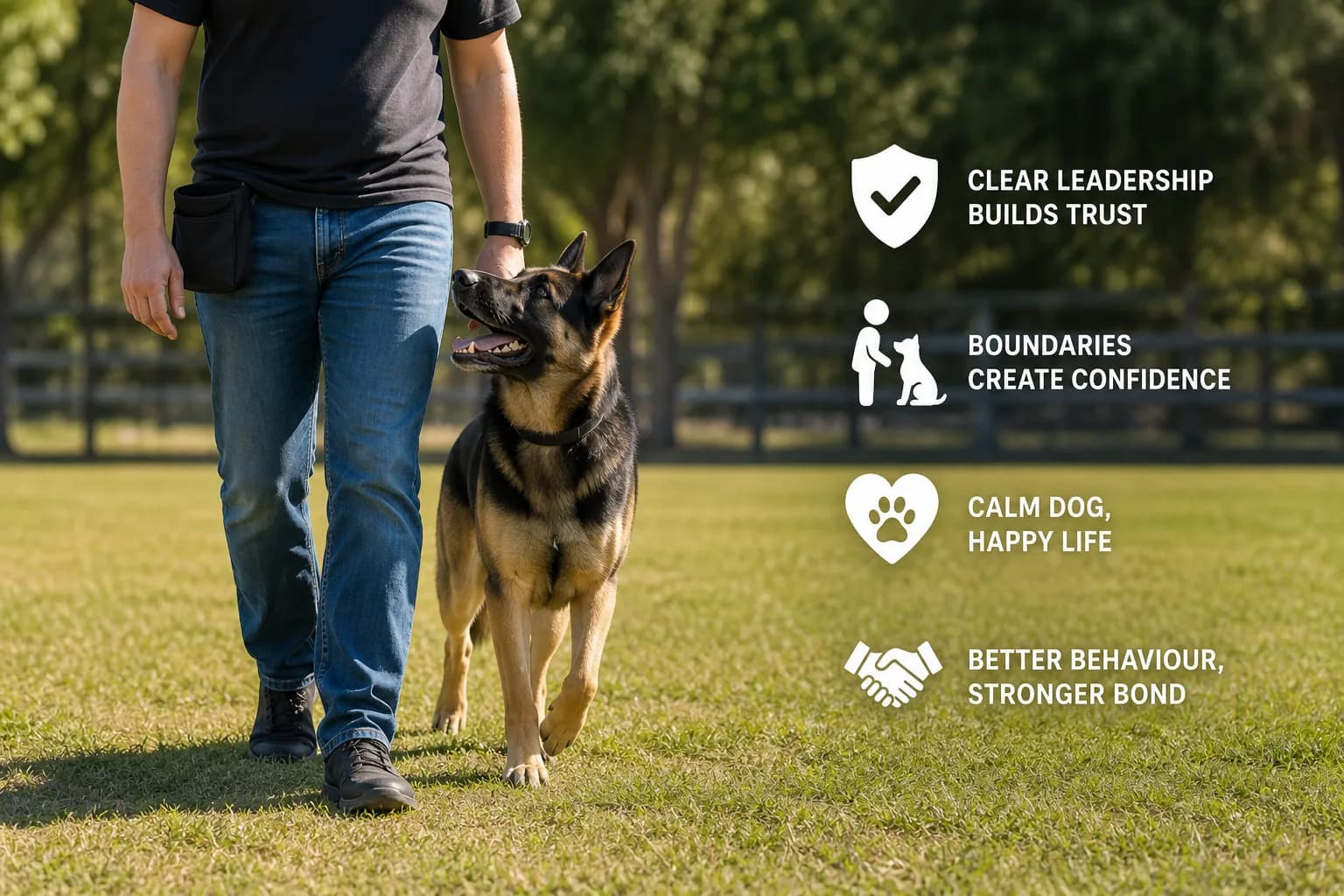
"Balanced", "force-free" and "leadership-based" describe three different philosophies, three different toolkits, and three different theories of what a dog actually is. None of them are evil. All of them have failure modes. This is an honest walk through what each one actually means, who it works for, where it breaks down — and why my own work across regional South Australia sits firmly in the leadership-based camp without pretending the other two have nothing to offer.
If the marketing language has gone past you — "force-free", "balanced", "positive only", "leadership-based", "science-based" — you're not the problem. The industry is genuinely confusing, partly because trainers from different camps describe each other in unrecognisable terms.
This is the piece I wish owners had before they rang me. A fair read of all three camps, written by someone who lands in one of them but has nothing to gain from misrepresenting the others.
The three camps, in plain language
Modern dog training divides into three philosophies:
- Balanced training — uses rewards (food, praise, play) alongside aversive corrections (e-collars, prongs, leash pops). Premise: dogs learn fastest with both a "yes" and a "no".
- Force-free / positive only / R+ — uses rewards exclusively. Aversive tools are off the table on ethical grounds. Premise: behaviour can be shaped entirely through reinforcement and management.
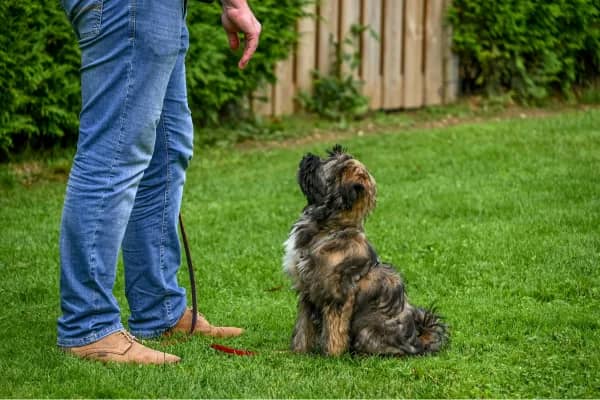
- Leadership-based / relationship-based — uses calm, clear, structural leadership to lower the dog's baseline state, then layers training on top. Food and play feature; aversive tools don't. Premise: most behaviour issues are downstream of an unsettled dog reading an unclear human.
Now the honest detail.
What "balanced training" actually means
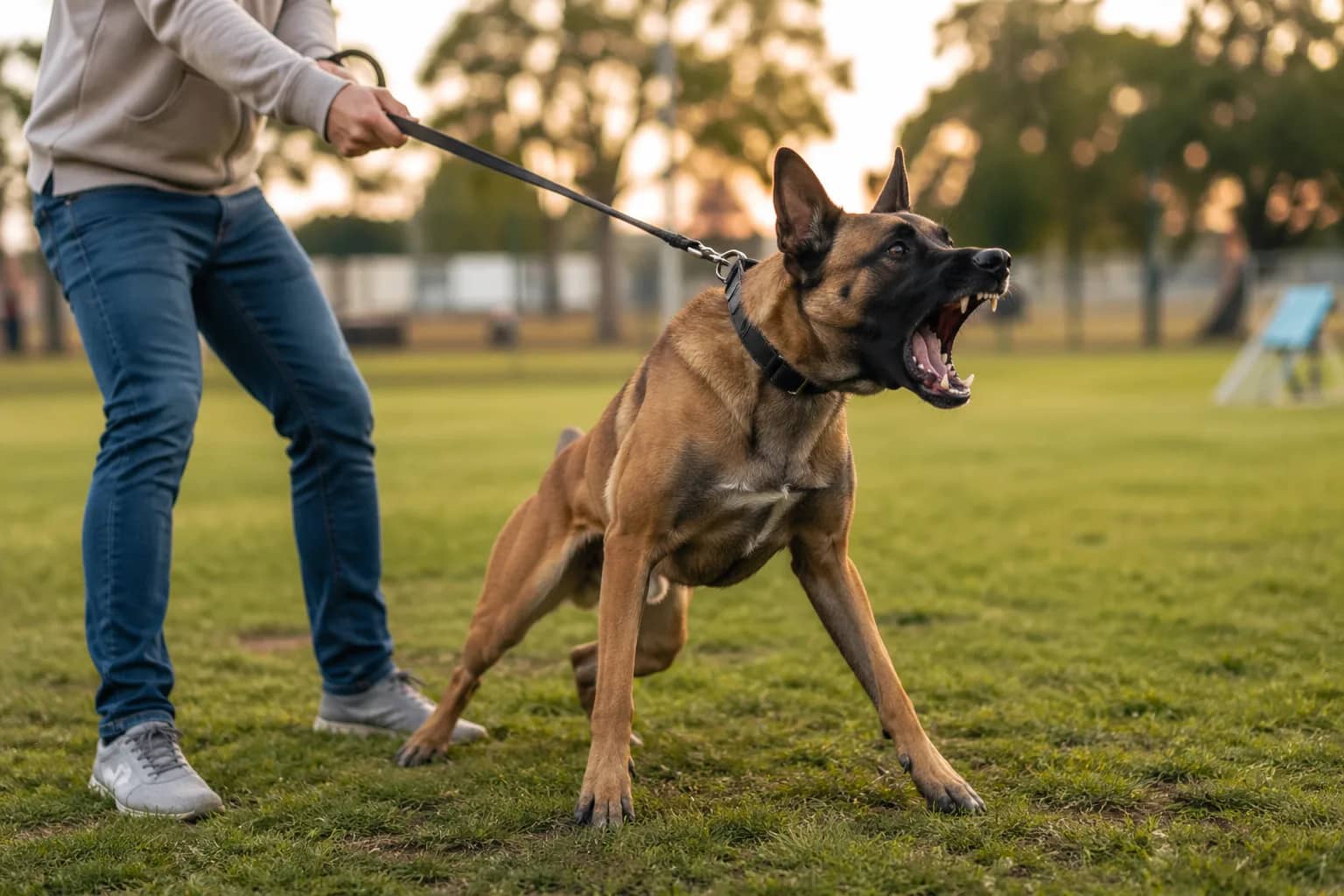
"Balanced" is the term most modern correction-based trainers use to describe themselves. It sounds reasonable — a balance of yes and no. In practice it almost always involves at least some of: e-collars (also "stim", "remote" or "static"), prong/pinch collars, slip leads with corrective pops, verbal corrections, and leash pressure used to apply discomfort rather than just communication. Alongside food rewards, marker training and play.
The genuine case for the balanced approach: dogs do use aversive feedback with each other — a mother corrects a puppy, a pack member corrects a transgressor — and a skilled balanced trainer argues they're replicating that natural feedback in a controlled way.
The honest case for balanced training
I want to give it a fair hearing because dismissing it outright is lazy.
- It can be fast on certain obedience tasks. A skilled balanced trainer can produce a heel, a place command, or a reliable recall in weeks. For pet dogs without behaviour issues, this works.
- It mimics some natural dog-to-dog feedback. A correction from another dog is brief, contextual and then over. A skilled balanced trainer attempts the same.
- It can give an under-confident owner immediate control. When the dog is on a prong, the owner feels the dog responding. That can be emotionally important, and emotion drives consistency.
- The best balanced trainers are not cruel. I've met balanced trainers I respect — they read body language well and don't lean on the tools harder than they need to.
The honest case against balanced training
- It suppresses warning signs. A dog corrected for growling learns that growling earns pain — so next time it's pushed past threshold, it skips the warning and bites. I cover this in detail in why aggressive dog training fails. Across the veterinary behaviour literature this is one of the most consistent findings of the last twenty years.
- It raises arousal in already-aroused dogs. For aggressive, reactive or anxious dogs, adding discomfort to an already over-aroused nervous system reliably makes things worse.
- The behaviour is often equipment-dependent. Many balanced dogs perform beautifully with the collar on and collapse without it. That's avoidance conditioning, not training.
- High skill ceiling, low skill floor. A truly skilled balanced trainer can be effective. A mediocre one with the same tools causes real harm — and the tools are widely sold without skill required.
- Owners can't replicate the trainer's timing. Even when the trainer's hands are good, the household's are often not — and inconsistent corrections damage trust faster than no corrections at all.
Why I do not use balanced methods
The cases that come to me — aggression, reactivity, anxiety, rescue dogs with histories — are exactly the cases where the corrective piece of "balanced" makes things worse. I would rather not have the tools available at all than risk a household reaching for them under stress. That's a deliberate choice, not a moral pose.
What "force-free" actually means
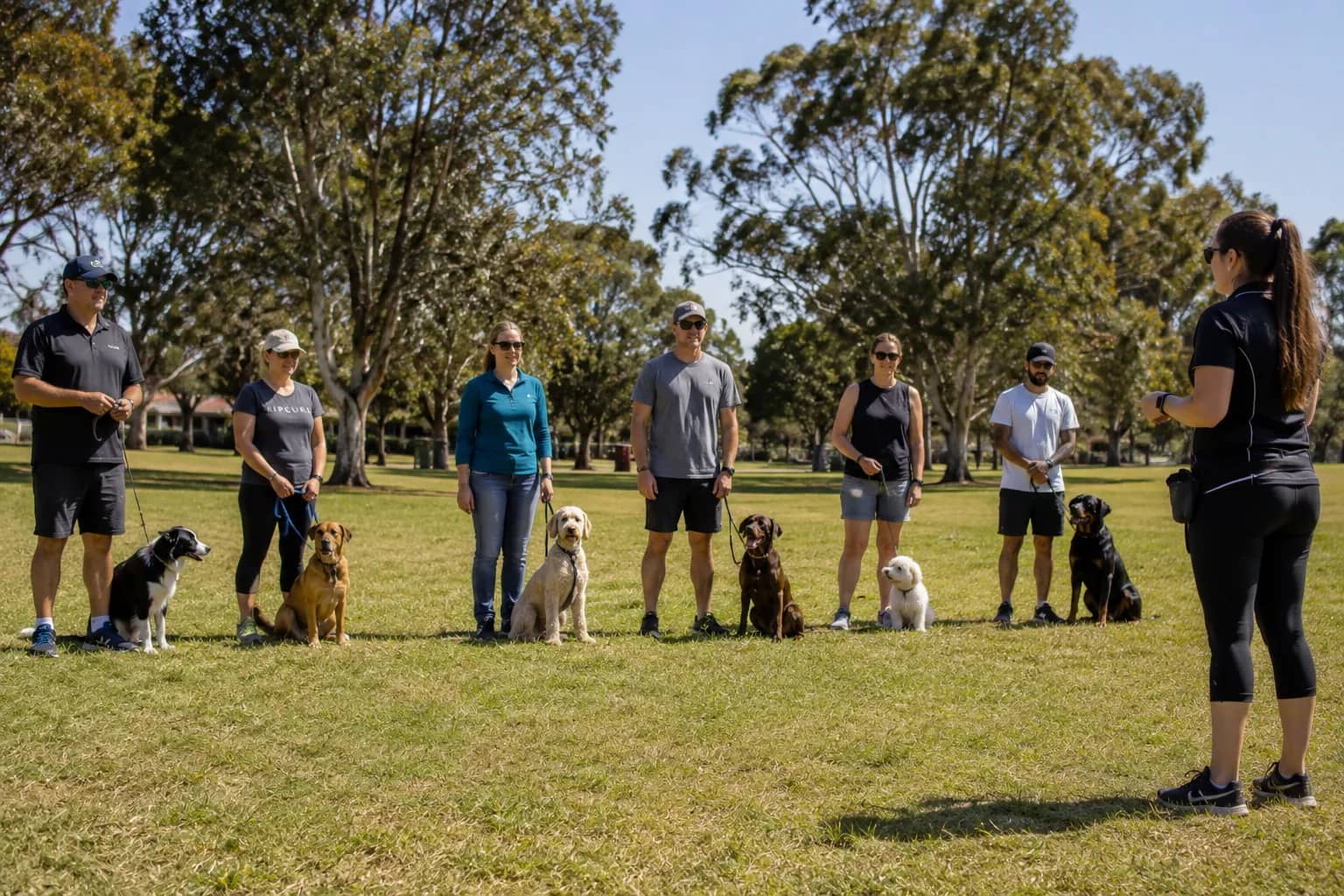
Force-free, "positive only", or R+ (positive reinforcement) describes trainers who use rewards exclusively and rule out aversive tools on principle. In strict practice that means clicker and marker training, treats often in high volume, toy and play reinforcers, environmental management to prevent unwanted behaviour, "antecedent arrangement" — and no leash corrections, no e-collars, no prongs, no verbal "no". In the purest form, no leash pressure at all.
The premise: operant conditioning shows we can shape any behaviour through reinforcement alone, and aversive feedback risks fallout (fear, suppression, damaged relationship) that isn't worth the speed gain.
The honest case for force-free
- The underlying science is strong. Reinforcement drives behaviour. Reinforcement-built behaviours are durable and the dog is a willing participant.
- It's the safest method for inexperienced owners to attempt unsupervised. A force-free novice can't easily damage their dog. A balanced novice can.
- For puppies in the critical socialisation window, it's brilliant. Pure reinforcement is the right way to build positive associations with the world.
- It's the right approach for fearful, trauma-history dogs in early stages. Adding pressure to a frightened dog is the wrong move.
- The ethical commitment is admirable. Force-free trainers have moved the industry forward on welfare.
The honest case against force-free
- It can fail at adolescence. A force-free puppy at 12 weeks looks magical. The same dog at 14 months — hormones, independence, the world suddenly more reinforcing than your treats — is where the method hits a wall for many households.
- It can fail with serious behaviour cases. I've seen aggressive dogs handled with treat-and-clicker for years with no resolution, while the household lived in fear. Reinforcing calm doesn't always lower the underlying state when leadership is absent.
- It can create food dependency. Built badly, R+ produces a dog that asks "what's in it for me" before every cue. The relationship becomes transactional.
- Some trainers wear "force-free" as identity and refuse to refer out. A dog with serious aggression deserves an honest conversation about whether a different toolkit might serve it better.
- "Management" can become permanent. Strict practice often relies on gates, separations, avoidance — and for many dogs that becomes a smaller and smaller world to live in.
There's also a strict-versus-pragmatic divide inside force-free. Pragmatic R+ trainers will use leash pressure as communication and will set boundaries. Strict force-free will not. The strict version, applied to working breeds and serious behaviour cases, has the highest failure rate I see.
What "leadership-based" actually means
This is where my own work sits, and I'll be specific so you can decide if it's what you want.
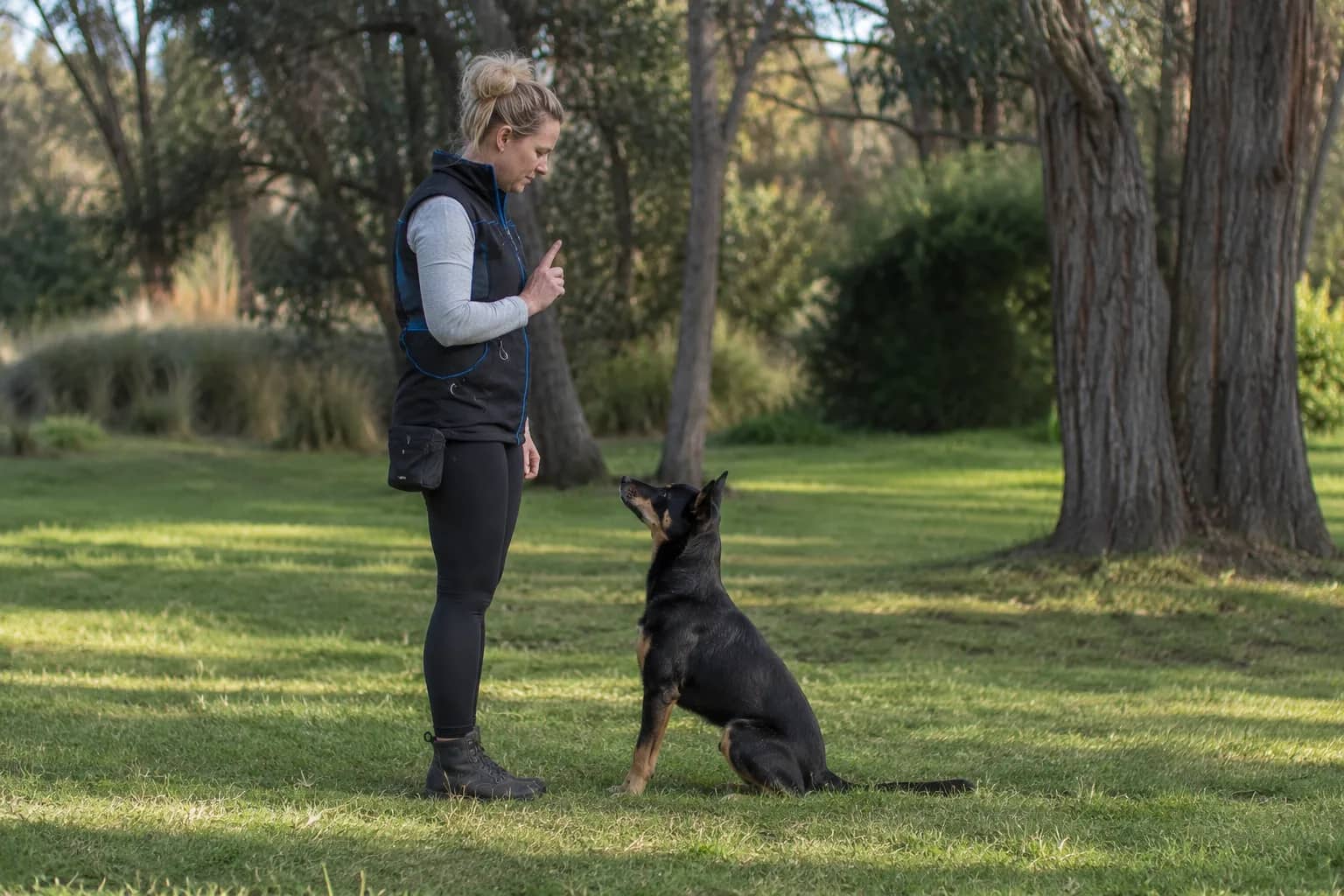
Leadership-based training is the view that most pet behaviour problems are downstream of an unsettled dog reading an unclear human, and that the primary lever — before food, before tools, before formal training — is the calm, consistent, structural leadership the human provides.
In practice it means:
- Restructuring household routine first. Where the dog sleeps, how meals are delivered, how doors are handled, how greetings work. The household becomes the training, not just the place training happens.
- Calm energy as the foundational skill. The owner learns to hold a clear, unhurried, non-escalating state because the dog is reading it constantly. See why calm leadership beats tricks.
- Leash pressure as communication, not correction. A clear, gentle signal that says "this way" — not a pop that says "wrong".
- Food and play as reinforcers, not bribes. Used to mark and reward, not negotiate.
- No e-collars, no prongs, no alpha rolls, no flooding. Aversive tools are off the table — not from dogma, but because they raise arousal in the cases I see most.
- Owner coaching as the centre. The dog can only progress as far as the human in the household. So I coach the human first.
The honest case for leadership-based work
- It addresses the underlying state, not just the behaviour. When the household leads clearly, baseline arousal drops, and many problems recede before specific training begins.
- The dog is neither equipment-dependent nor food-dependent. It responds to who you are, not what's in your hand or around its neck.
- It scales to serious cases. Aggression, reactivity, rescue trauma, multi-dog households — these respond well because the foundation is state regulation, not behaviour suppression.
- It transfers across environments. Once the household runs on leadership, the dog generalises easily — bush, vineyard cellar door, beach, Port Pirie main street.
The honest disclaimers
- It requires the human to change, not just the dog. If you want someone to take your dog away for a fortnight and return it fixed, this isn't that. The fix lives in your hands.
- It looks slower than balanced corrections in week one. A balanced trainer can stop your dog pulling in twenty minutes. Leadership-based loose-lead work takes a week or two — and then it holds for life. See stop the pulling.
- It doesn't suit owners who want the dog to do the work alone. Some households genuinely don't have the bandwidth for daily structural consistency. I'd rather hear it on the first call than three months in.
- It's not the right early move for severely fearful dogs. Those dogs start with pure reinforcement; leadership comes once the nervous system has room to read it. The method is layered, not dogmatic.
How to spot each camp in the wild
You'll hear the language before you see the tools.
Likely balanced trainer
- Talks about "balanced methods", "leash pressure tools", "e-collar conditioning", "stim", "remote training"
- Recommends a prong, slip lead with pops, or e-collar in the first conversation
- Frames corrections as "communication" or "consequences"
- Promises a defined outcome by a defined date
- Talks "pack leader" in dominance terms (alpha rolls, "showing the dog who's boss")
- Equipment-first: the tool is part of the brand
Likely force-free / R+ trainer
- Self-describes as "force-free", "positive only", "R+", "fear-free", or "LIMA"
- Heavy emphasis on treats, clickers, marker words
- Talks about "antecedent arrangement" and "management"
- Refuses the word "no" or any verbal correction; may refuse leash pressure of any kind
- Often has formal certifications (KPA, CPDT, IAABC, PPAB)
- Most likely to be open about referring out cases beyond their toolkit (a good sign)
Likely leadership-based trainer
- Talks about state, calm, energy, routine, household structure
- Asks lots of questions about the household before mentioning the dog
- Uses leash pressure as communication, not correction
- Refuses e-collars and prongs but will set structural boundaries
- Centres the owner, not the dog, in the work
- Likely to start in your home, not in a hall
For warning signs of poor practice across all three camps, see seven warning signs your dog trainer is using the wrong methods.
A balanced verdict
The three camps are not equally good — or I wouldn't sit in one of them — but they are not equally bad either, and any honest behaviourist will admit it.
- Balanced training, done by a skilled handler on the right dog, can work. The risk is the tools being sold to households that can't use them well, on dogs (aggression, reactivity, anxiety) where the corrective piece reliably makes things worse.
- Force-free is the right starting position for puppies and the right ongoing approach for fearful, trauma-history dogs. The risk is rigidity — refusing to evolve as a dog ages or refusing to refer out.
- Leadership-based work suits the cases I see most. The risk is it asks the human to do real work — and not every household is ready for that.
The right choice depends on the dog (temperament, breed drive, age, history), the case (pet obedience versus serious behaviour), and the household (bandwidth, consistency, what you can sustain for a year, not just a fortnight).
A trainer who tells you their method is the only valid method, and that all other camps are abusive or naive, is doing dogma. Ignore them. Find someone who can describe the limits of their own approach.
Why my regional SA case load skews me leadership-based
Living and working at Crystal Brook, the cases that come through my door are not metro-Adelaide pet-Labrador cases. They are:
- Working breeds in town life. Kelpies, blue heelers, German Shepherds, Belgian Shepherds — high-drive dogs wired for stock work but living in Port Pirie backyards. See the working dog's town life.
- Rescues with histories. Dogs from situations no one fully understands, with reactivity patterns built before the current owners had any say. See rescue dog behaviour: the first 30 days.
- Aggression and reactivity at the serious end. Bite history, escalating warnings, council letters.
- Households with limited local options. Owners who've been through the wrong trainer once and need the next attempt to be the last.
For that case load, the balanced toolkit is genuinely dangerous and the strict force-free toolkit is genuinely insufficient. Leadership-based work — lower the state, clarify the human, then layer training — holds up across that whole range. It's also what the household can sustain after I leave. That's the test that matters.
Where Heart of the Pack fits
Heart of the Pack is an accredited behaviourist service based in regional South Australia. I travel in-home across the Upper Spencer Gulf, Iron Triangle, Mid North, Clare Valley and Yorke Peninsula, and work online with owners on the Eyre Peninsula and beyond.
The approach is leadership-based, without aversive tools, with the owner at the centre. If that resonates, the Free Dog Behaviour Test is a two-minute starting point — and if it doesn't, that's useful information too. Either way: choose a trainer whose limits they'll admit. That's the one indicator that beats every other.
If you'd rather skip the long-form essay and want a side-by-side comparison table, a five-step decision framework and a red-flags checklist, the structured version of this page lives at force-free vs balanced vs leadership-based dog training.
Not sure where to start with your dog?
Take the Free Dog Behaviour Test.
Two minutes. You’ll find out exactly what’s driving your dog’s behaviour — and what to do next.
Frequently asked questions
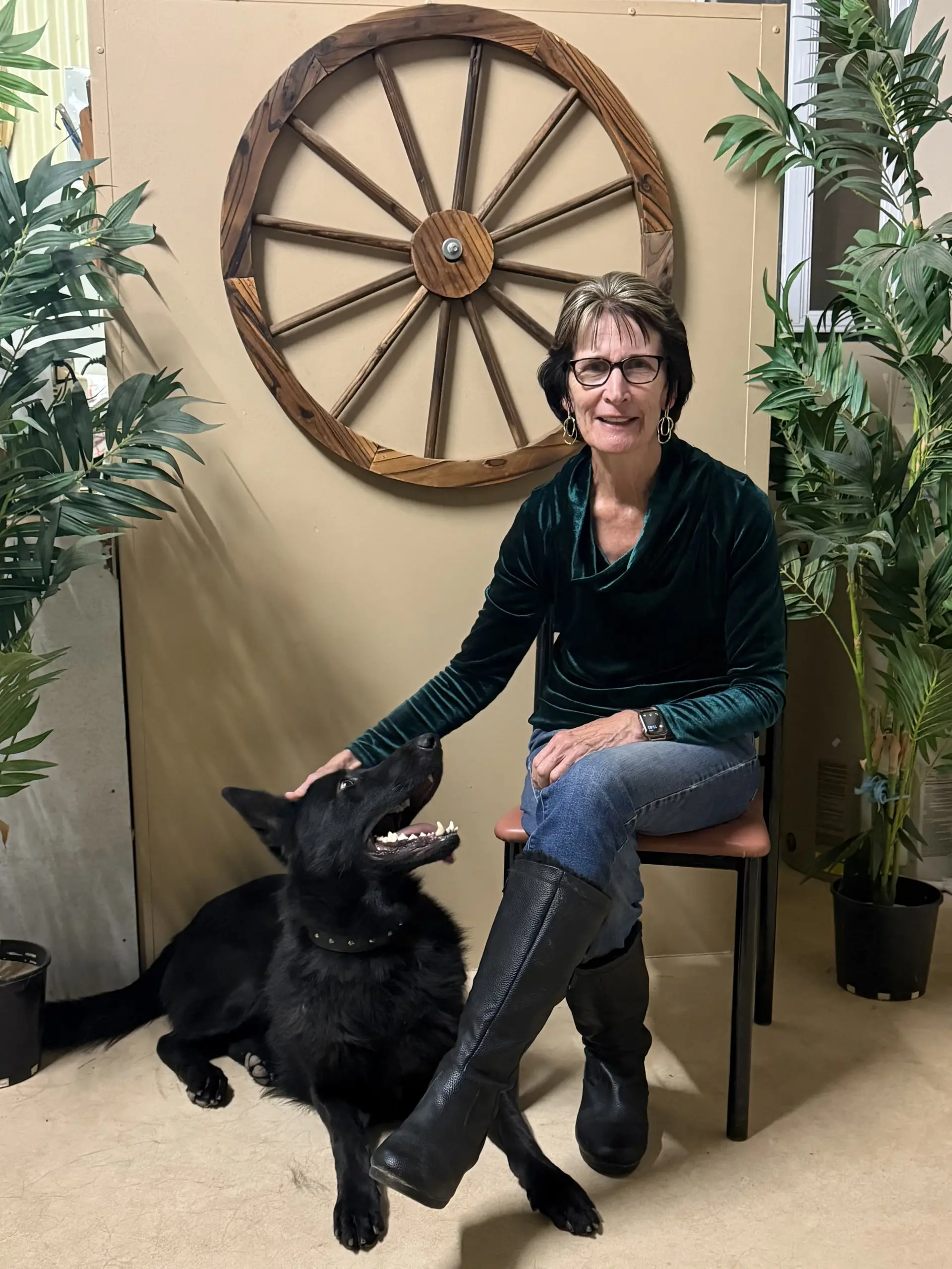
Written by
Pauline Cowey
Accredited Dog Behaviourist, Communicator, Owner Educator and Trainer based at Crystal Brook, South Australia. Decades of hands-on work resolving aggression, reactivity, anxiety and obedience cases across regional SA — through ethical, leadership-based methods.
Read Pauline’s full story →