Stop the Pulling: How to Get Your Dog to Walk Calmly on a Lead

Lead pulling is not a strength problem. It is a communication problem — and head halters, no-pull harnesses and "no-pull" leashes only manage the symptom. The leadership-based method below stops the pulling for good, in days, without gimmicks.
If your dog drags you down the footpath in Port Augusta or to the Port Pirie foreshore, this article is for you.
The cure is not equipment. The cure is communication.
Why your dog pulls
Dogs pull because pulling works. Specifically:
- Pulling forwards moves you forwards
- Pulling toward another dog gets you closer to that dog
- Pulling toward the off-lead area gets you to the off-lead area
- Pulling at the start of every walk has, for months or years, been the thing that gets the walk started
Your dog has been rehearsing this for the entire time you've owned it. Every walk that ends with the dog still pulling is a successful rehearsal. The behaviour gets stronger, not weaker.
Equipment fixes the consequence of pulling (your shoulder) without changing the cause (the dog has learned that pulling is what works).
Why head halters and no-pull harnesses don't fix the problem
Head halters work by giving you mechanical advantage over the dog's head. The dog can't pull because the leverage stops it. Useful tool for some cases — but the dog hasn't learned anything about how to walk. Take the halter off and the pulling resumes.
No-pull harnesses are the same principle from underneath. They make pulling less effective without teaching the dog to stop.
These tools have a place — particularly for elderly handlers or very strong dogs — but they are management, not training. The conversation that follows is about training.
Reactivity vs pulling — they look the same, they aren't
If your dog only pulls toward specific triggers — other dogs, bikes, runners, cats — what you have is not pulling. It's reactivity. The fix is different.
Reactive dogs need threshold work, not just lead manners. Pulling toward a trigger is a frustration response, and addressing the frustration requires distance management and emotional regulation — not just leash mechanics.
More on reactive dog training here.
What about "heel" position?
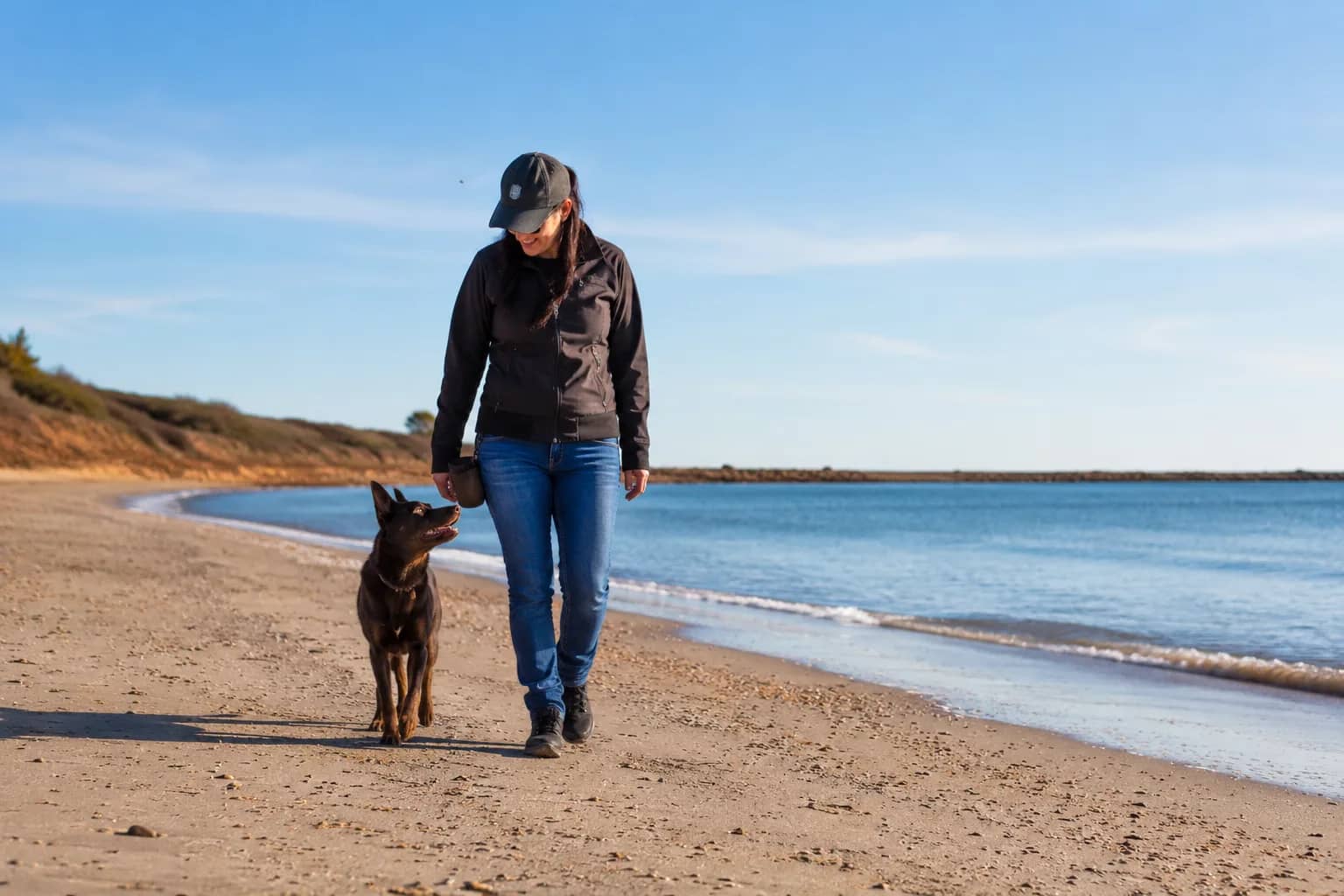
For most owners, the goal isn't a competition heel — it's a dog that walks calmly on a loose lead. You don't need the dog at your left side at all times. You need the dog not to drag you forward.
A loose lead is the standard. The dog can be in front of you, behind you, or alongside — as long as the lead is loose, the walk is succeeding.
Once loose-lead walking is reliable, a formal "heel" is easy to add. Most regional SA owners never need it.
Walking dogs in regional SA — practical notes
Regional SA dogs need more leadership work than metro dogs
Counterintuitive but true. Metro dogs encounter so many distractions that they're forced to develop coping skills early. Regional dogs often live with low-distraction walks that don't build any tolerance — so when distraction arrives (the visiting tradie's dog, the Port Augusta foreshore in summer), they explode.
Practice with controlled distractions before you need uncontrolled ones.
Working breeds need this earlier
Kelpies, blue heelers and herding breeds need calm lead manners from day one. Their drive is otherwise channeled into chasing-pulling, and by adolescence it's deeply ingrained.
Long-lining vs walking
A long line in a paddock is not a substitute for lead training. The dog still needs to learn what the lead means. Use them separately — short lead for training, long line for off-lead recall practice. More on recall here.
Front-clip harnesses
For most cases, a flat collar and lead is fine. Some dogs respond well to a front-clip harness during training — particularly very strong dogs or owners with shoulder issues. Avoid harnesses that distribute load through the chest only (back-clip) — they make the pulling easier, not harder, and undermine the training.
Where to start
If you've been fighting lead pulling for months, take the Free Behaviour Test first. It'll tell you whether what you have is straightforward pulling or reactive frustration — they look the same and need different fixes.
Or, for in-home work, contact Pauline — she travels across the Upper Spencer Gulf, Iron Triangle, Mid North, Clare Valley and Yorke Peninsula.
The walk you've always wanted is two weeks of consistency away. Not a lifetime of equipment.
Not sure where to start with your dog?
Take the Free Dog Behaviour Test.
Two minutes. You’ll find out exactly what’s driving your dog’s behaviour — and what to do next.
Frequently asked questions
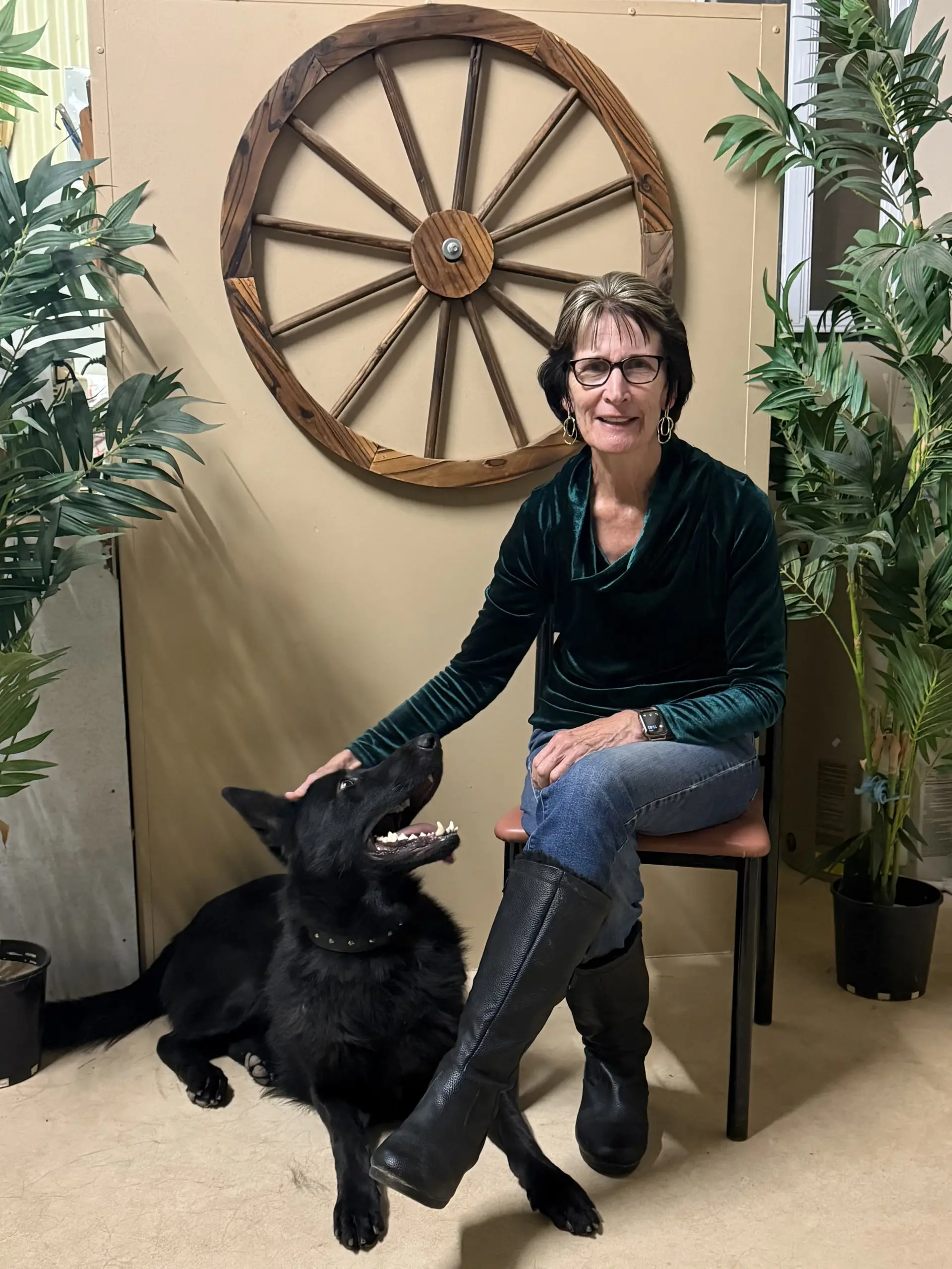
Written by
Pauline Cowey
Accredited Dog Behaviourist, Communicator, Owner Educator and Trainer based at Crystal Brook, South Australia. Decades of hands-on work resolving aggression, reactivity, anxiety and obedience cases across regional SA — through ethical, leadership-based methods.
Read Pauline’s full story →