Fixing Aggression in Dogs — What Actually Works, and What Makes It Worse

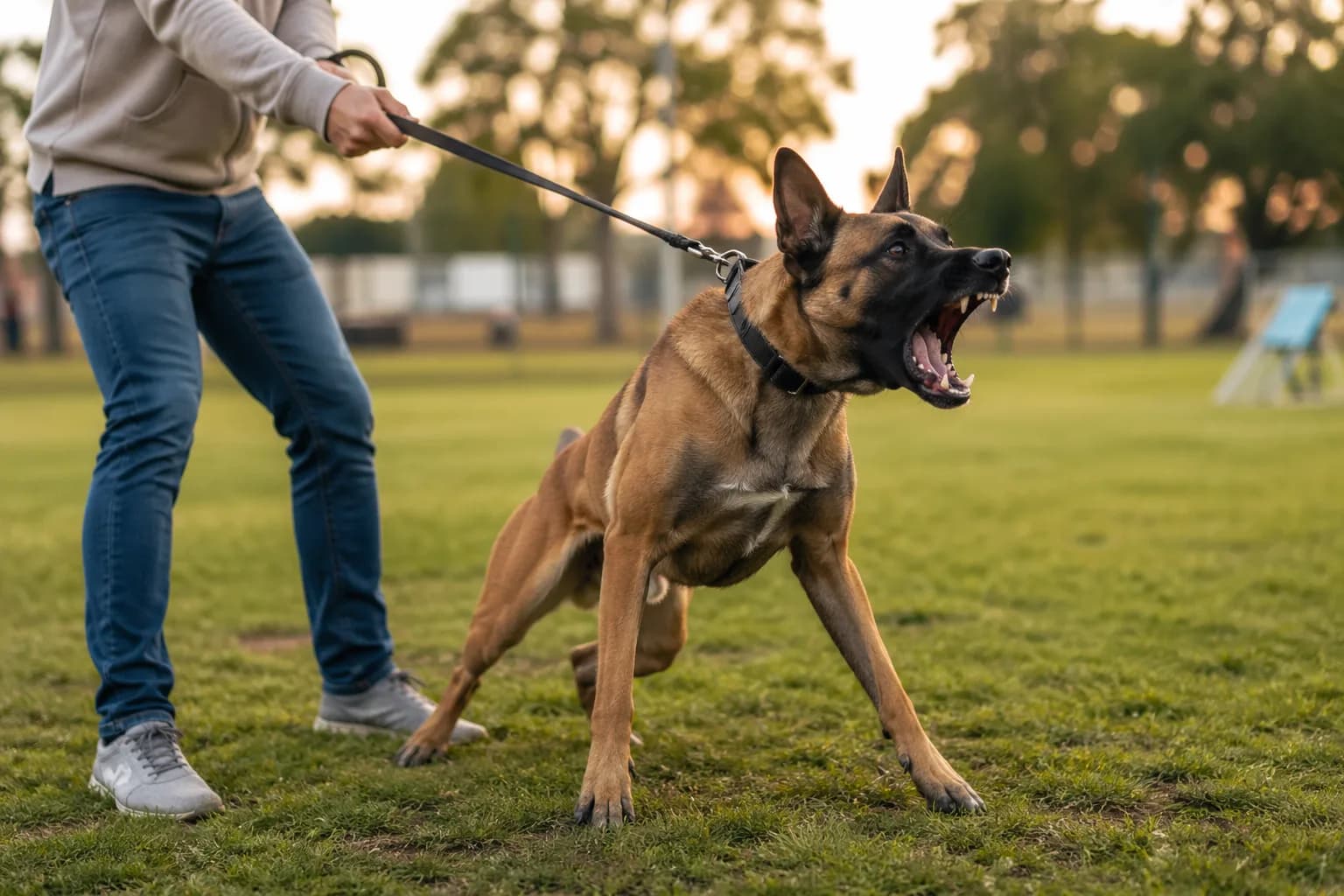
Search "dog aggression training near me" and the first page of results is dominated by exactly the kind of advice that most reliably makes aggression worse — corrections, "balanced" protocols, dominance frames and shock-collar promises. The techniques change; the pattern is the same. The dog stops warning, and the household believes the aggression is "gone" until the day it isn't.
This piece is the honest guide to dog aggression training. What aggression actually is, why the common approaches fail, what ethical rehabilitation looks like, and what to look for in a professional if your dog is showing genuine aggression.
Dog aggression training: what it actually is
Dog aggression training is behaviour rehabilitation, not obedience work. The dog is not lacking a skill — the dog is in an emotional state (fear, arousal, defensive protection, resource guarding, insecurity, pain) that is producing the aggression. Rehabilitation addresses the state; it does not correct the behaviour.
That distinction is not academic. It determines every downstream choice about method, professional, timeline and safety plan.
Aggression is not a training gap. Aggression is a specific pattern of emotional communication — a warning that the dog cannot cope with the current situation and is asking for it to change. Every rehabilitation choice a household makes has to be built around that reality.
The three most common aggression patterns
Real aggression cases across regional South Australia cluster into three broad patterns. Correct rehabilitation looks different for each, and misreading which pattern you are in is one of the most common reasons cases fail.
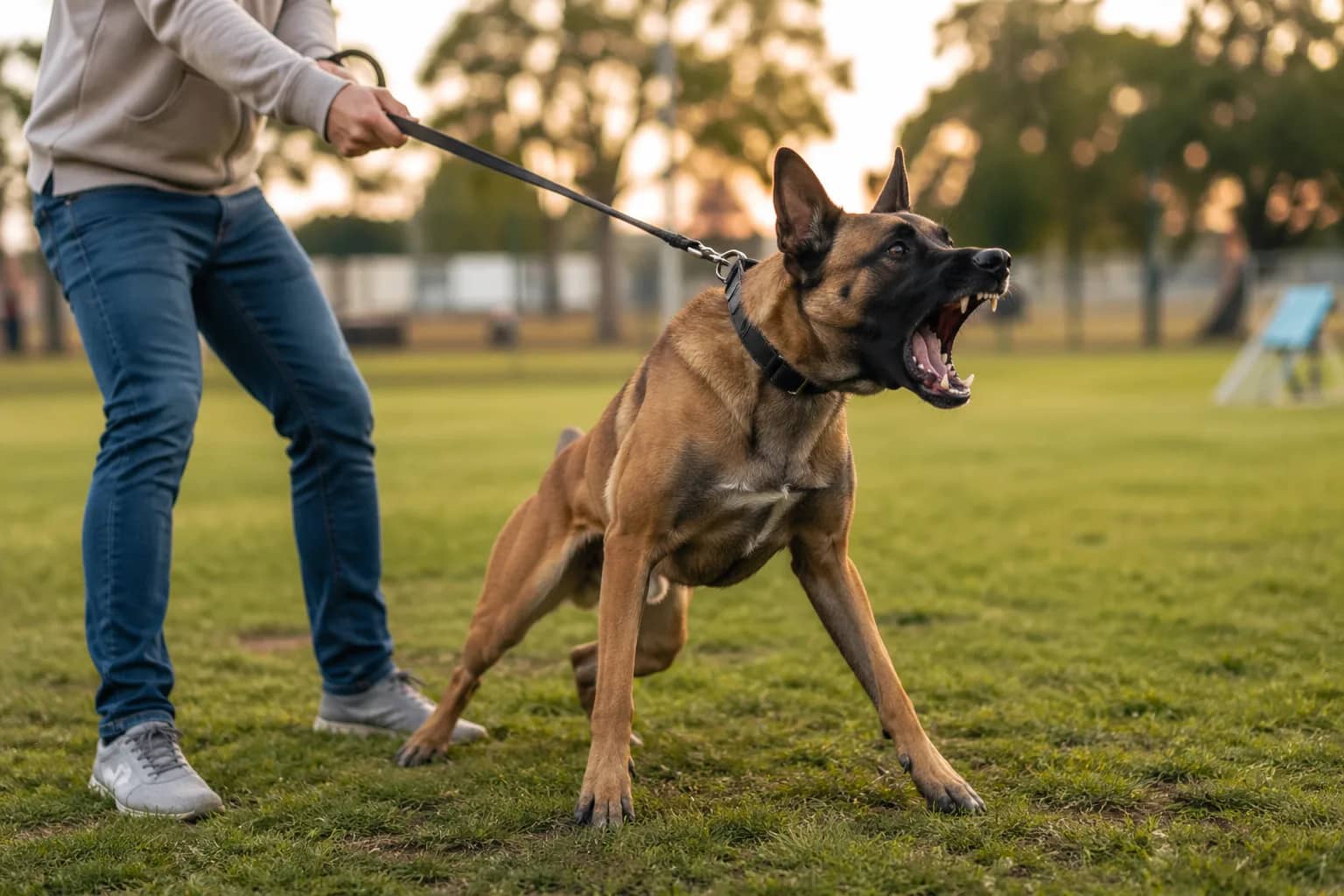
Fear-based aggression. The dog is trying to push a perceived threat away. Lunging, barking, snapping and biting are all defensive — the dog would prefer the threat gone rather than the confrontation. Fear-based dogs typically show avoidance signals first (tail down, weight back, gaze aversion) and escalate to aggression when the avoidance is ignored. Approximately 60% of the cases I take fit this pattern.
Frustrated arousal. The dog is not fearful; it is over-aroused and cannot regulate. Frustrated greeters, fence-runners, leash-reactive social dogs and dogs that "want to say hi and can't" all fit this pattern. The dog is trying to get to the trigger, not push it away. The interventions that work for fear-based aggression can escalate a frustrated case, which is why the diagnostic hour of the consultation matters.
Defensive or resource-based aggression. The dog is protecting a resource — food, a toy, a resting place, a person. Or defending a territory it believes is under threat. Or guarding a family member from a perceived intruder. These cases have specific triggers and specific management pieces; they are usually the most stable to work with when the household applies the plan.
A small subset of cases sit outside these three patterns — cases with a clear medical driver (pain, thyroid, cognitive decline), cases with a specific breed-driven predisposition (livestock guardian breeds, certain terriers), and cases that started as one pattern and rehearsed into a mixed one over months. All still respond to competent rehabilitation, just with case-specific adjustments.
Why punishment-based aggression training fails
The single biggest cause of "sudden bite, no warning" cases is punished-out warnings. A dog whose growl has been corrected out of it does not become less aggressive — it becomes less communicative. The internal state remains; the warning system is gone. That is exactly the pattern that produces the bite from a dog that "seemed fine ten seconds ago."
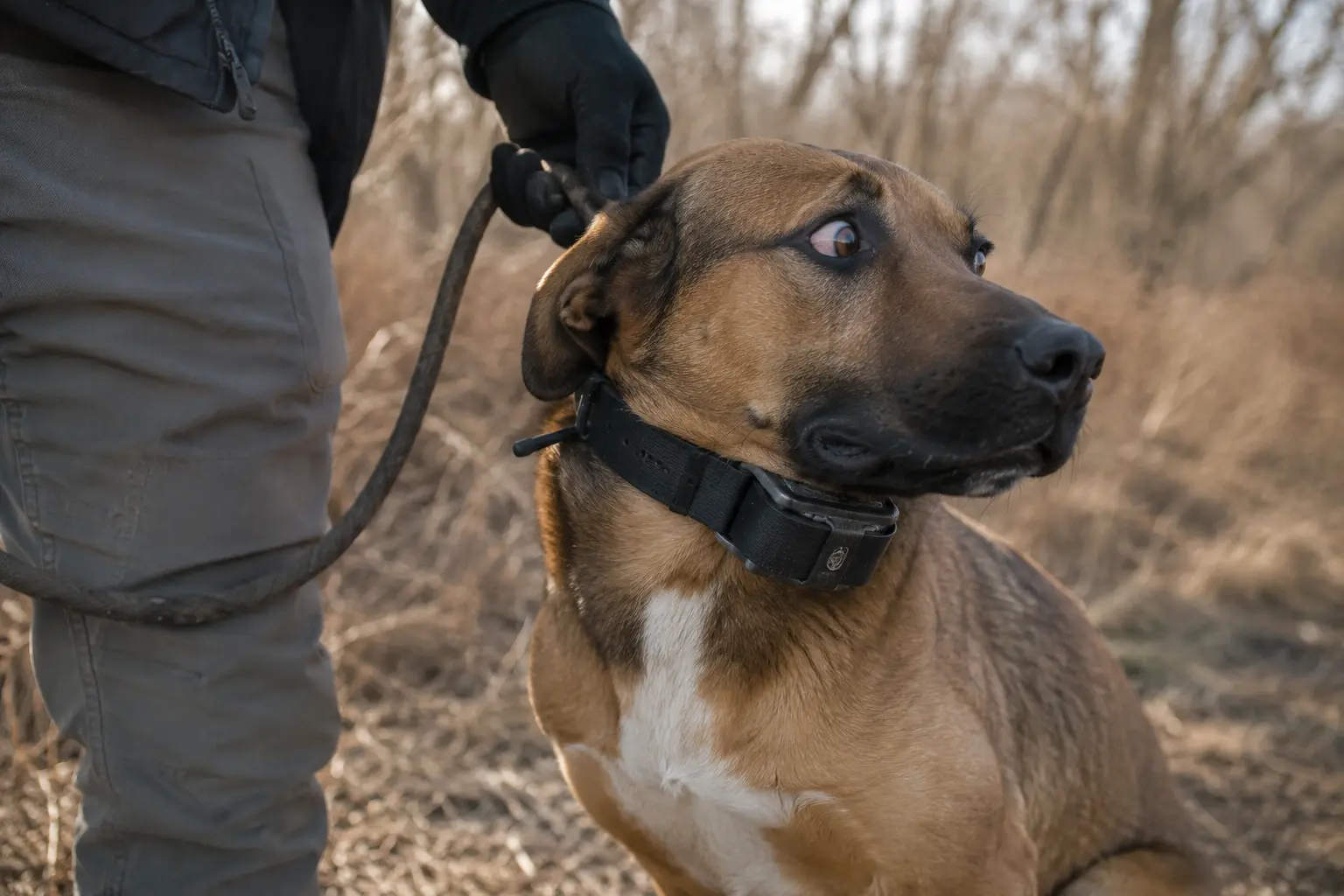
Every experienced behaviourist has this case in their file repeatedly. The household did what a well-marketed local trainer told them to do — corrected the growl, "showed the dog who was boss," used an e-collar to interrupt the reactivity. The dog stopped growling within weeks. Six months later, the dog bit someone with no visible warning. The trainer's answer is usually to sell a higher-level correction. The reality is that the correction is the reason the bite arrived without warning.
The full article on why aggressive dog training fails goes deeper on the mechanism. The short version: aggression is a state, not a behaviour, and states cannot be corrected out.
What ethical aggression rehabilitation looks like
Ethical dog aggression training rests on four practical foundations.
1. Diagnosis first, intervention second. A real aggression consultation spends the first hour reading the case — which of the three patterns you are in, what the specific triggers are, what the household is inadvertently reinforcing, whether there is a medical picture that needs a veterinary partner. Trainer-shaped programs skip this step. Behaviourist-shaped programs cannot.
2. Household leadership before dog training. Aggression cases resolve when the household stops accidentally telling the dog it is in charge of managing the trigger. That is a household-management piece, not a dog-training piece. It changes how visitors are greeted, how the dog is set up before walks, how arrivals and departures happen, how the household responds when the trigger appears. The dog reads that pattern in days. The behaviour shifts as a result of the pattern shift.
3. Threshold work under the trigger. Once leadership is in place at home, the trigger work begins — deliberate, planned exposure at distances the dog can cope with, extending the range as the dog regulates better each time. This is the piece that looks superficially like force-free reactivity work; underneath, the difference is that the emotional baseline has already changed before the exposure work started.
4. Household-level safety planning. Every real aggression case needs a written safety plan — what happens when the trigger appears unexpectedly, who handles the dog in what circumstances, what visitors need to know, when the dog is confined and where, what the escalation protocol looks like if things go sideways. This is not optional. Households that skip it have preventable incidents.
None of these four foundations involve corrections, e-collars, prong collars, or dominance framing. All four require an in-home consultation with a professional who can read the specific case.
Timeline for aggression rehabilitation
Most household aggression cases take three to six months of consistent household work to resolve. Some resolve inside a month; a small subset take longer. The variables:
- Severity — how entrenched the pattern is when work begins
- Rehearsal history — how long the dog has been practising the aggression
- Household consistency — whether everyone in the house is applying the plan the same way, every day
- Medical factors — pain and endocrine issues extend timelines when unaddressed
- Bite history — cases with a bite already on the record run longer for safety planning reasons
Households looking for a two-week fix are looking for suppression, not resolution. There is no responsible two-week rehabilitation for a genuine aggression case.
What to look for in an aggression specialist
A competent aggression specialist:
- Holds specific behaviour accreditation (not just Cert IV in companion animal services)
- Works in-home for the diagnostic consultation
- Refuses to work aggression cases blind — either a pre-consultation call or a written case summary is required before the visit
- Does not use shock collars, prong collars, or physical corrections
- Coordinates with your veterinarian on medical factors and any medication conversations
- Provides a written case plan and follow-up support beyond the first visit
- Will not guarantee an outcome by a specific date
A red flag list:
- Guarantees "aggression eliminated in six weeks"
- Uses "balanced" methods that include e-collars, prongs or corrections
- Recommends a training tool as the primary intervention
- Frames the case in dominance language ("your dog thinks it's the alpha")
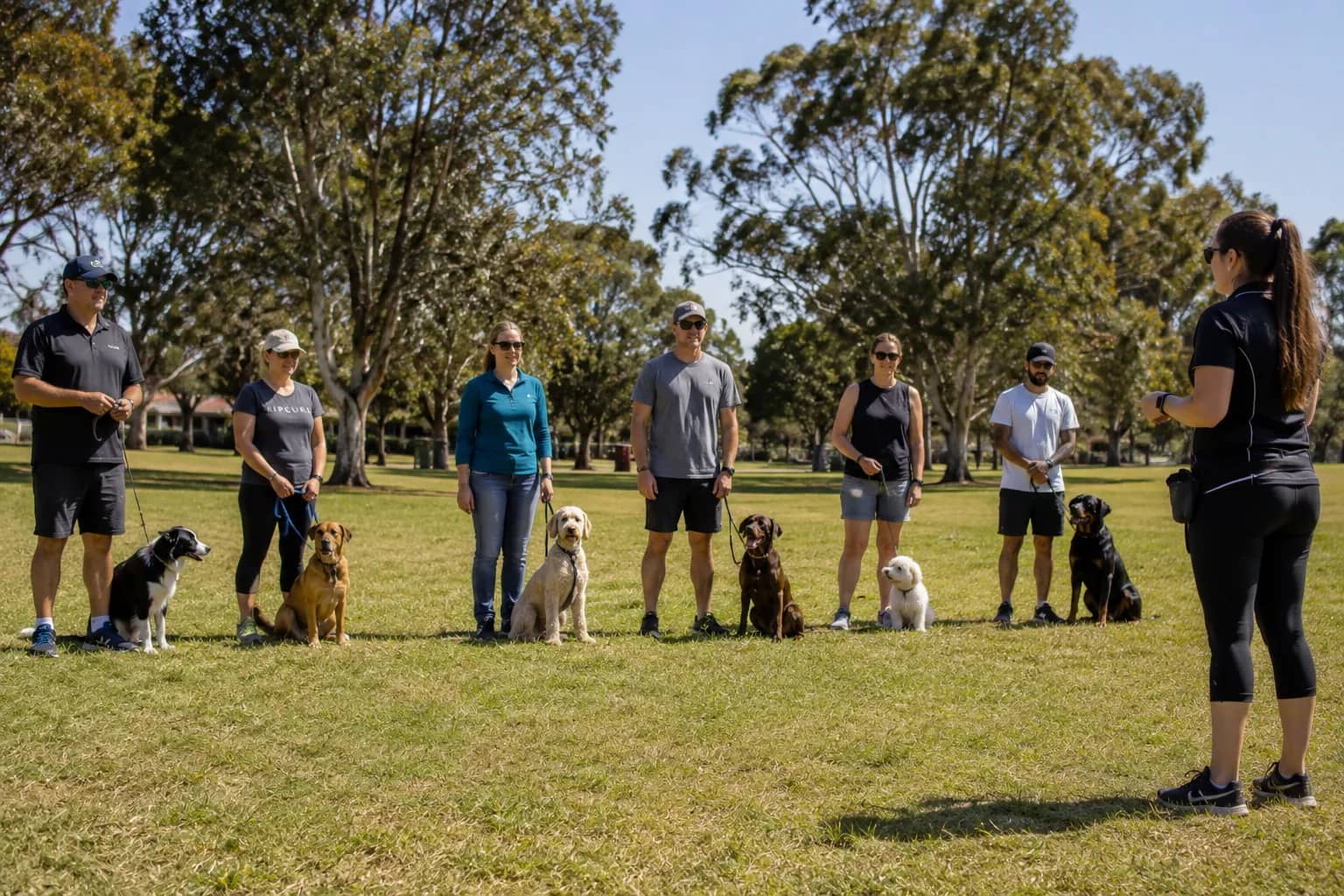
- Runs group aggression classes
- Refuses to explain the method in plain language
The full guide on how to choose a trainer or behaviourist covers the red flags in detail.
What NOT to do first
Common household responses that escalate aggression cases:
- Do not punish the growl. The growl is the warning; punishing it removes the warning without changing the state.
- Do not force the dog into the trigger. "Flooding" a fearful or aggressive dog by putting it directly into the trigger context is a discredited method that reliably makes cases worse.
- Do not add a second dog to "socialise" the aggressive one. This is the single most common suggestion from friends and family, and it almost never helps.
- Do not delay the veterinary check. Undiagnosed pain is a driver in a meaningful percentage of adult-onset aggression cases.
- Do not take advice from social media. Aggression is a specific specialist area; the online algorithms will not send you to the right professional.
Safety planning while you wait
If you have booked a consultation but the visit is a few weeks away, the interim priority is preventing rehearsal. That usually means:
- Removing the dog from the trigger contexts entirely for the intervening weeks
- Managing arrivals, departures and visitors so the trigger does not present
- Confining the dog before high-risk situations rather than trying to train through them
- Keeping the household visitors to a minimum until the plan is in place
- Not experimenting with new techniques between now and the visit
If the case involves a child or a household member the dog has already threatened, the safety plan needs to be tighter — physical separation, confined-when-visitors, no unsupervised access. The behaviourist can help you tighten it further at the consultation.
The three-service context on this site
For clarity — this site's aggressive dog training service covers case-specific aggression rehabilitation across regional South Australia. The reactive dog training service covers on-lead lunging and barking cases that have not yet crossed into a bite pattern. The in-home dog training service is the format underneath all of it — real behaviour work happens where the behaviour lives, not in a training hall.
If you are trying to work out which of the three fits your case, the Free Behaviour Test points you at the right one in two minutes.
If you already know you are dealing with genuine aggression, contact me directly — aggression cases get a phone conversation before the in-home date is booked so we can make sure the visit is set up to succeed and the household knows what to expect.
Not sure where to start with your dog?
Take the Free Dog Behaviour Test.
Two minutes. You’ll find out exactly what’s driving your dog’s behaviour — and what to do next.
Frequently asked questions
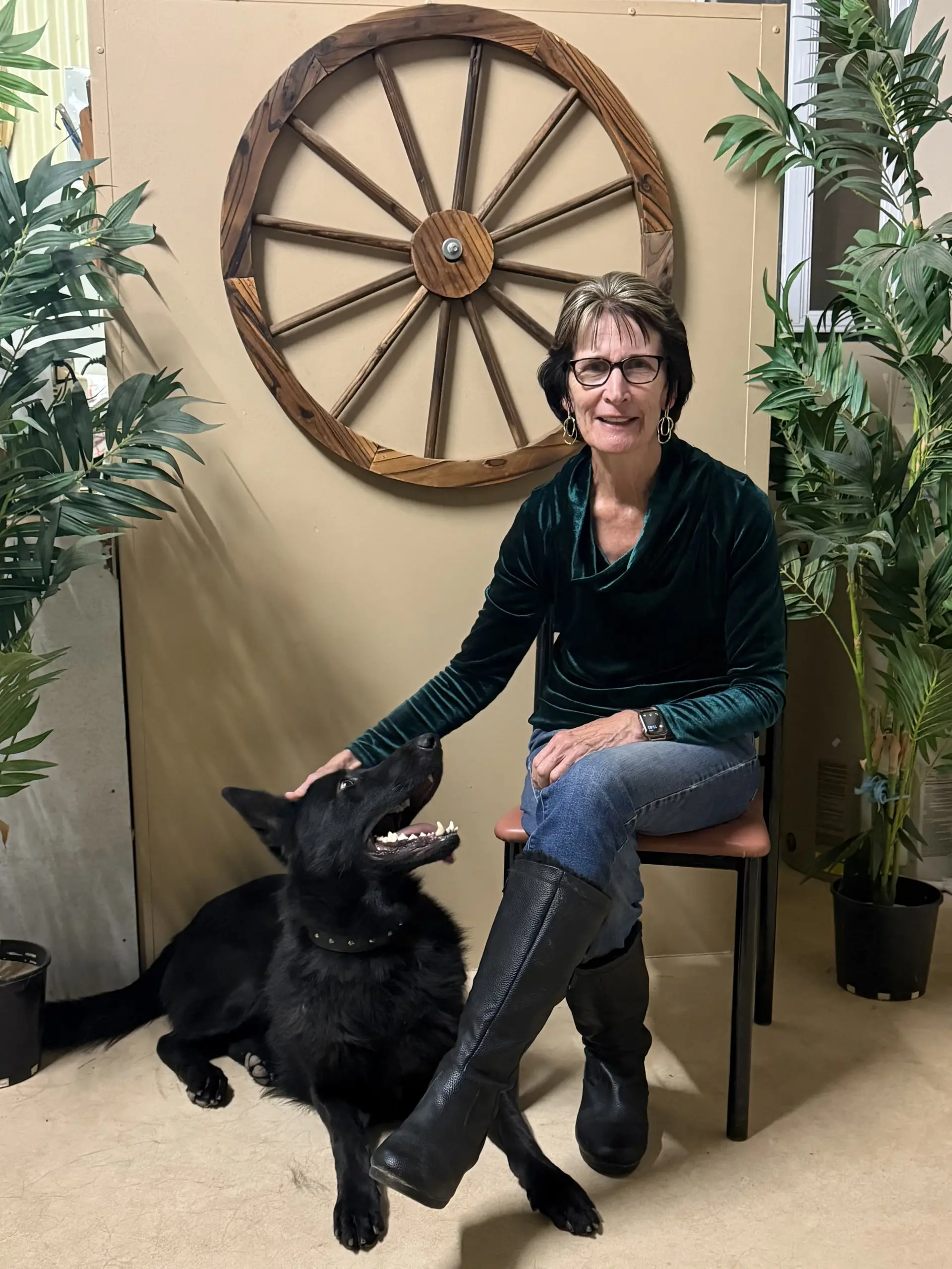
Written by
Pauline Cowey
Accredited Dog Behaviourist, Communicator, Owner Educator and Trainer based at Crystal Brook, South Australia. Decades of hands-on work resolving aggression, reactivity, anxiety and obedience cases across regional SA — through ethical, leadership-based methods.
Read Pauline’s full story →