Dog Behaviourist or Dog Trainer — Which One Do You Actually Need?


"Should I book a dog trainer or a dog behaviourist?" is the wrong question to open with. The right question is: what is actually going wrong with my dog?
The two professions overlap in vocabulary and diverge in almost everything else — scope, method, price, timing, format and the kind of household work each is built to do. Choosing the wrong one costs owners months of stalled progress, and in cases where the underlying issue is behavioural rather than obedience-based, sometimes years.
This piece is the honest comparison. What each role actually does, how each approaches the same problem differently, what to expect financially and time-wise, and how to tell which one your dog needs.
The short version
A dog trainer teaches your dog behaviours. A dog behaviourist reshapes the emotional state underneath those behaviours.
A trainer works with a dog that is emotionally healthy and simply doesn't yet know what to do. A behaviourist works with a dog whose emotional state is producing the behaviour in the first place — fear, arousal, insecurity, hyper-vigilance, aggression, anxiety.
That is the fundamental split. Everything else follows from it.
What a dog trainer does
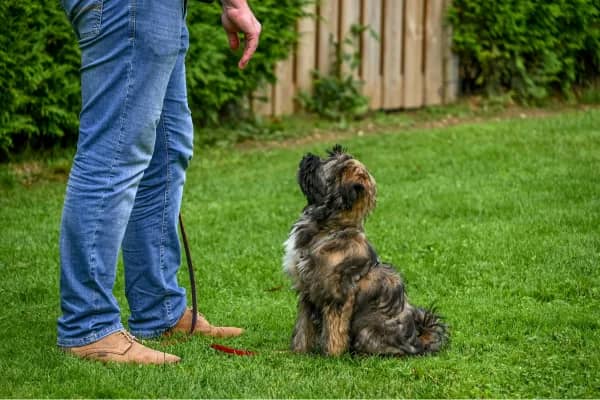
Dog trainers focus on teaching new behaviours and reinforcing existing ones. The classic training toolkit covers:
- Sit, drop, stay, come, heel and other obedience cues
- Loose-lead walking through a specific method
- Recall from distraction
- Impulse-control basics — wait at doors, leave it, drop it
- Trick training and enrichment work
- Foundation puppy work
- Preparation for group class or competition
Most trainers work in group settings — a puppy school, a weekly obedience club, a beginner class at the local park. Some work one-on-one but typically for a fixed number of short sessions (thirty to sixty minutes each). The dog is expected to be receptive, and the owner is expected to practise between sessions.
The training model works well for dogs that are behaviourally sound and simply lacking a specific skill. A young puppy learning its foundations. A dog whose recall never got proofed under distraction. A rescue with no obvious anxieties who just needs the basic manners installed. In those situations, a competent trainer is exactly the right professional.
What a dog behaviourist does
A dog behaviourist works on the emotional and psychological state underneath the behaviour, not the behaviour on its own. That is a fundamentally different scope of work.
The behaviour cases I take are things like:
- Aggression toward people, other dogs, or specific triggers
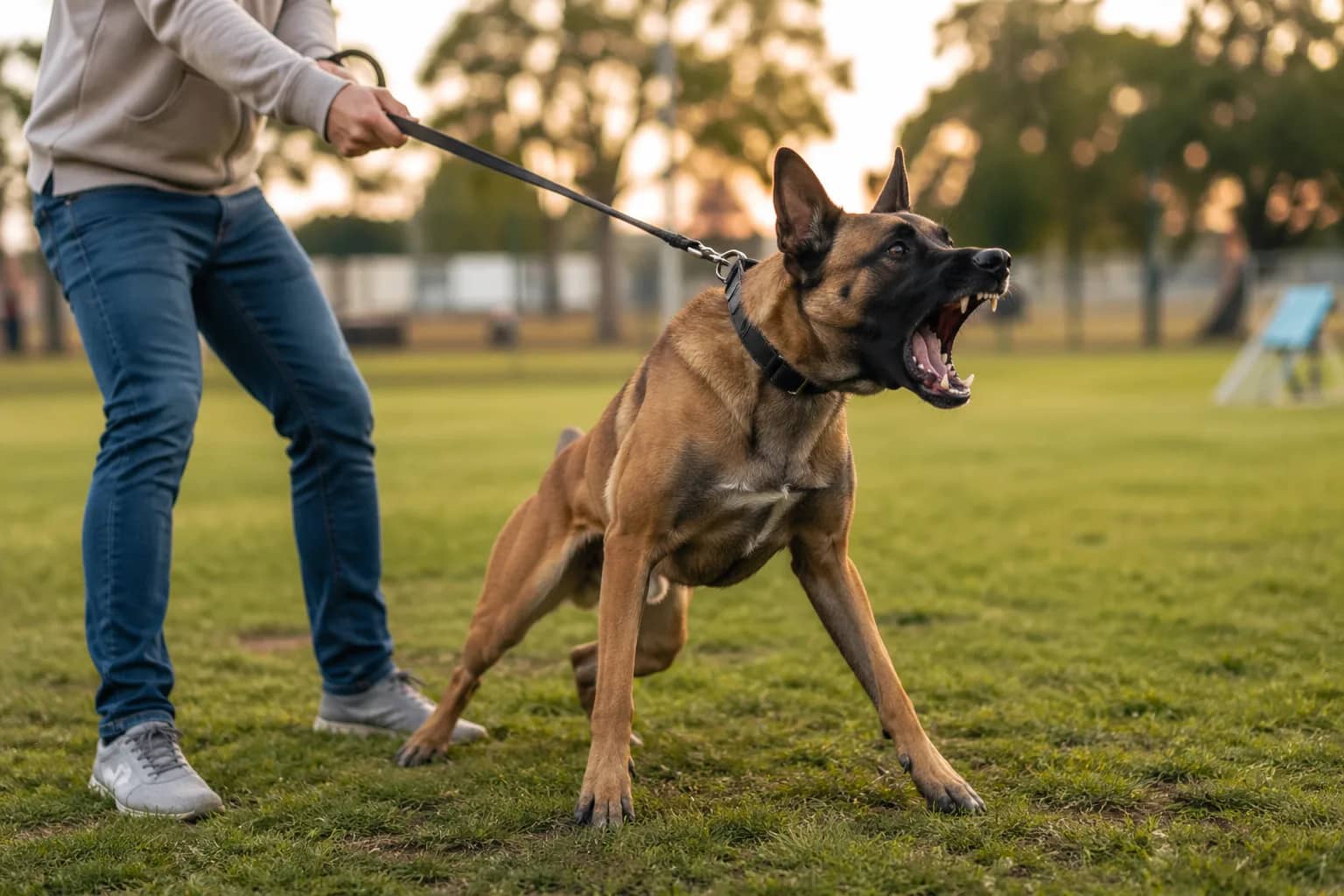
- Reactivity on lead — lunging, barking, screaming at the trigger
- Fear-based behaviour (fear of noises, of strangers, of specific environments)
- Resource guarding
- Severe anxiety, including separation anxiety
- Compulsive behaviours (spinning, tail-chasing, over-grooming)
- Aggression around food, resources or resting spaces
- Bite history — cases where the dog has already crossed the line
None of those are trained solutions. You cannot teach a fearful dog to be brave with obedience commands. You cannot reward-condition a resource-guarding dog into trusting people around its bowl by adding treats. The behaviour is a symptom; the state is the cause; and until the state changes, the behaviour will resurface — sometimes exactly, sometimes in a different form.
That is why real behaviour work happens in-home. You cannot reshape a dog's emotional state in a group class or in a training hall. The environment, the household, the owner's routines, the specific triggers — all of these are part of the intervention, and none of them are visible to a trainer running a public class.
The qualification gap
Australia has no legal barrier to calling yourself a dog trainer. Anyone can print a business card and open for enquiries tomorrow. Some trainers have completed short courses (Certificate IV in Companion Animal Services is the most common), some are self-taught, some are extremely competent, and some are not.
Behaviourist is a more specific claim. An accredited behaviourist has either completed advanced study in animal behaviour (and typically also in veterinary behaviour or animal psychology), or been formally assessed and accredited by a recognised professional body, or built years of case-specific experience in aggression, anxiety and complex behaviour work — usually all three.
An "accredited behaviourist" is not the same thing as a trainer who has renamed themselves. If someone is offering behaviour work, ask them: what accreditation do you hold, from what body, and can I verify it? A real behaviourist answers that question in one sentence.
That distinction matters because the cases a behaviourist takes carry real safety and welfare stakes. Getting an aggression case wrong is not just an inconvenience — it can end with a bite, a dog surrendered, or worse. Behaviour work is the specific area where credentials genuinely matter, and where the shortcuts have real consequences.
How each approaches the same problem differently
Same dog, same problem, same referral: a two-year-old kelpie lunging and barking at other dogs on lead.
A trainer will typically approach it as: teach the dog an incompatible behaviour (look-at-me, sit, engage-disengage), use high-value rewards, add distance from the trigger, keep sessions short, practise weekly. If the dog is emotionally sound and the reactivity is under-socialisation or under-training, this can work.
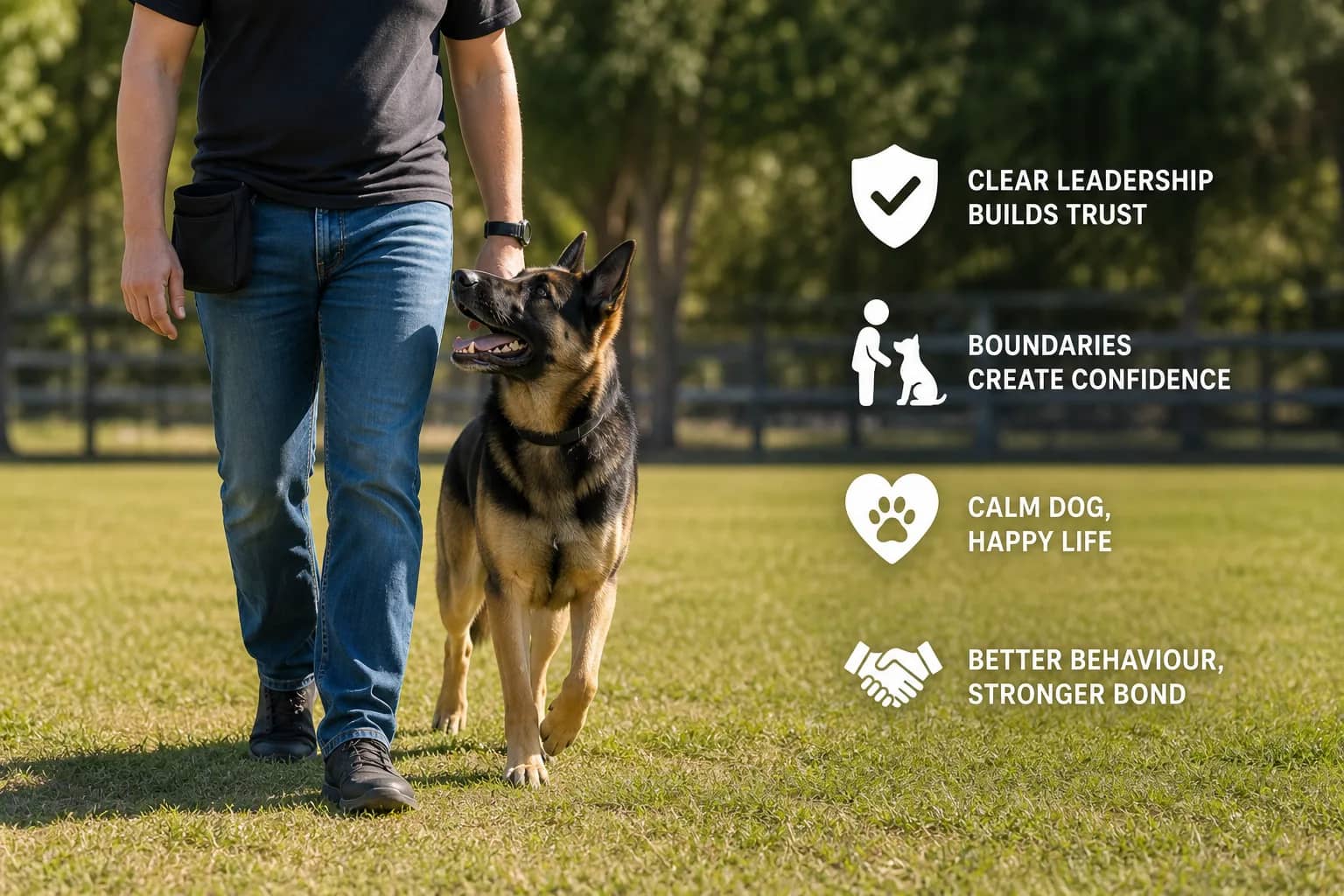
A behaviourist will typically approach it as: read the household first — what is producing the arousal state in this dog day to day? Then read the dog — is this fear-based reactivity, or frustrated arousal, or defensive protection, or something else? Then work on the emotional baseline (calmer household, clearer leadership, structured environment) alongside the trigger-specific work. In-home. Whole-family involvement.
Both approaches can produce results. The difference is that the training approach requires the dog to already have the emotional bandwidth to learn under pressure. If the dog is genuinely reactive — over threshold on lead the moment a trigger appears — no amount of look-at-me will land, because the dog cannot hear you. The state has to shift first. That is behaviour work, not training.
Cost, time and format
Trainers typically charge per session or per class. A group class might be $150 to $250 for six weeks; a one-on-one session $80 to $150 for thirty to sixty minutes. Sessions happen at the trainer's location, at a public park, or occasionally in-home for a small surcharge.
Behaviourists charge more — usually per consultation, and usually with the first consultation being three to four hours in-home. The rate reflects the scope: a real behaviour consultation is a diagnostic session (working out what is producing the behaviour), an intervention session (implementing the initial changes) and a coaching session (teaching the household how to sustain it) rolled into one long visit. It also reflects that a behaviourist takes far fewer cases per week than a trainer, because each case is harder, longer and higher stakes.
Follow-up work varies. Some behaviour cases wrap in a single in-home consultation plus email support. Others need two or three visits across a few months. Very few need weekly ongoing contact — which is another difference from the trainer model. If someone is quoting you a twelve-week behaviour program with a flat fee, ask why they need that much contact for something that in most cases resolves faster.
When each is right for your dog
Book a trainer if:
- Your puppy needs its foundation obedience and early socialisation
- Your adolescent dog knows the commands at home but hasn't proofed them under distraction
- You want to teach a specific skill (loose-lead walking, reliable recall, off-lead work)
- Your dog is emotionally healthy and just under-trained
- You enjoy the format and want a weekly practise structure
Book a behaviourist if:
- Your dog is showing aggression toward anyone or anything
- Your dog is reactive on lead in a way that has stopped feeling safe or manageable
- Your dog has anxiety — separation, noise, generalised, specific
- Your dog is resource guarding food, toys, resting spots or people
- Your dog has bitten (even once)
- Your dog is in the wrong emotional state to learn anything new
- You have already tried a trainer and the behaviour is unchanged
- You have a rescue with an unknown history and things are surfacing
The most useful question to ask yourself
Before you book anyone, sit with this one:
Is my dog capable of learning what I want it to learn right now, in its current state? Or is my dog too aroused, too frightened, too anxious or too triggered to actually take on what a trainer would ask it to do?
If the answer is "capable, just doesn't know the skill yet," you want a trainer.
If the answer is "not capable in this state," you want a behaviourist. And you will save yourself months of stalled training if you make that call at the beginning rather than after three failed programs.
Red flags in either profession
Regardless of which role you book, be careful of anyone who:
- Guarantees a fix in a set number of sessions
- Sells expensive tools as the solution — shock collars, prong collars, "training" collars marketed as behavioural work
- Cannot explain their method in plain language
- Cannot show you accreditation or verifiable experience
- Blames the dog rather than helping the household
- Uses fear, force or pain in any part of the work
- Talks about "dominance" or "alpha rolling"
- Won't work alongside your veterinarian when pain is a possible factor
A trainer or behaviourist worth their fee will welcome the questions and answer them without dodging. If you are seeing any of the patterns above, these are the specific warning signs to watch for and it is worth reading through them before booking.
The philosophy question
There is a separate conversation about training philosophy — force-free, balanced, leadership-based, and everything in between. I cover that in detail in a dedicated comparison piece because it matters as much as the trainer-vs-behaviourist distinction, particularly for aggression and reactivity cases. A behaviourist can be terrible; a trainer can be excellent; and the philosophy underneath the work is often what determines whether the case improves or gets worse.
The short version: for any dog with a behaviour case rather than a training case, look for someone whose method centres on calm, clear leadership and a proper reading of the dog's state — not someone whose method centres on high-value rewards alone (which typically fails at threshold) and not someone whose method centres on corrections (which typically escalates the state).
How to choose in one paragraph
Read what the professional says about their scope. If they talk about obedience, class-based work, tricks and specific skills, they are a trainer. If they talk about aggression, anxiety, reactivity and state — and they do it in-home — they are a behaviourist. Both are legitimate. Both are needed by different dogs at different times. The mistake is booking one and expecting the other's outcome.
If you're not sure which your dog needs, take the Free Behaviour Test — it takes two minutes and at the end you will have a clearer picture of which category your case sits in, and whether the next call should be to a trainer, a behaviourist, or your veterinarian first.
Not sure where to start with your dog?
Take the Free Dog Behaviour Test.
Two minutes. You’ll find out exactly what’s driving your dog’s behaviour — and what to do next.
Frequently asked questions
Written by
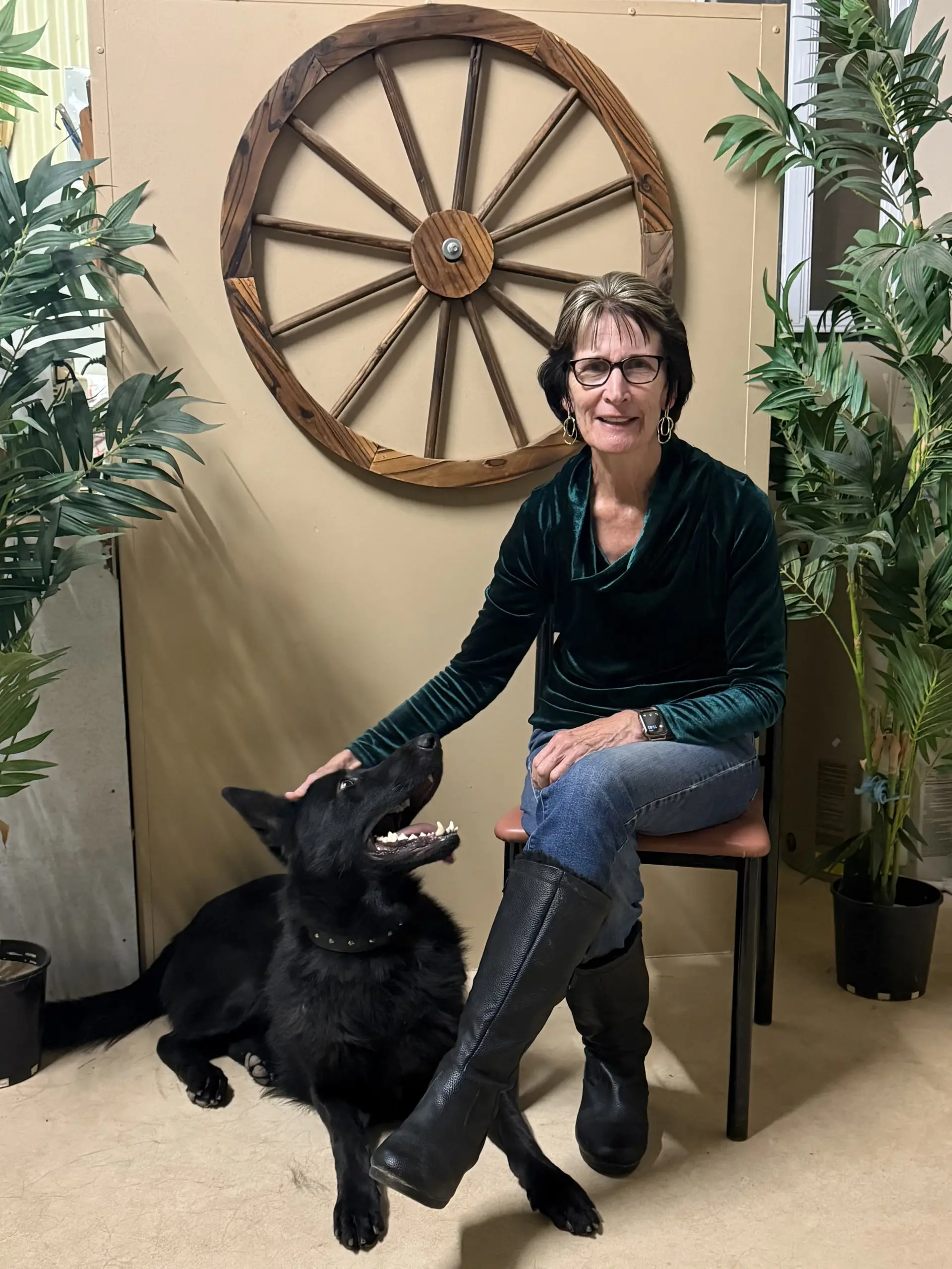
Pauline Cowey
Accredited Dog Behaviourist, Communicator, Owner Educator and Trainer based at Crystal Brook, South Australia. Decades of hands-on work resolving aggression, reactivity, anxiety and obedience cases across regional SA — through ethical, leadership-based methods.
Read Pauline’s full story →