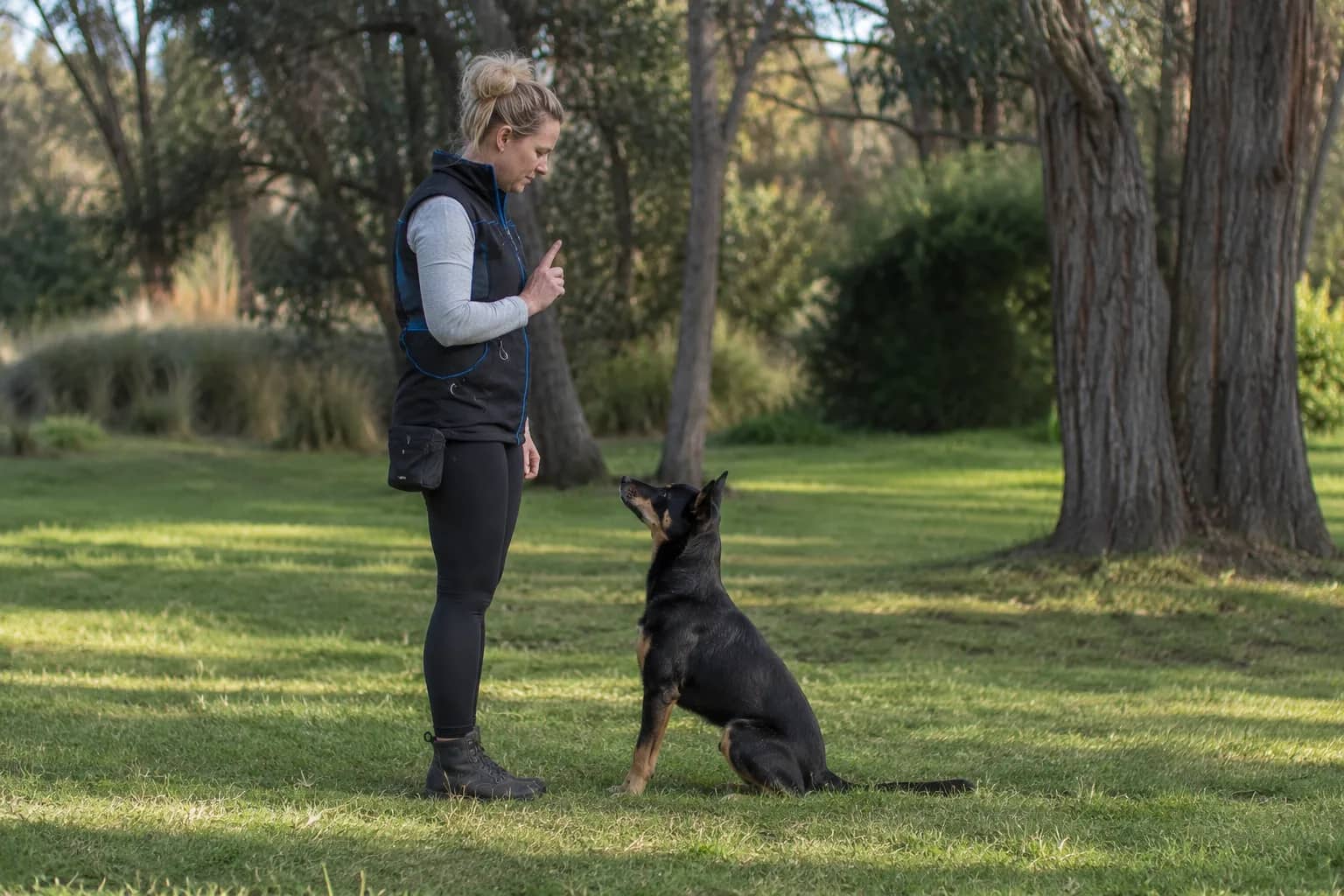
Introducing a New Puppy When You Already Have a Dog — The 30-Day Framework


Bringing home a second dog is a bigger household change than most owners expect. The first dog has run of the house, has one set of rules, and has a relationship with the humans that has been calibrated over months or years. The new puppy arrives with none of that. What happens in the first hours, the first week and the first month decides whether the two dogs end up as a genuine pair or as two dogs uncomfortably sharing a house.
This piece is the honest guide to introducing a new puppy to your existing dog — the setup before the puppy arrives, the first meeting, the first week, the first month, and the warning signs that mean the case needs professional eyes on it. It doesn't lay out the specific in-home methodology I use during a consultation, but it gives the framework needed to land a two-dog household well.
The single mistake most owners make
The mistake is speed. Households introduce the new puppy in ten minutes on arrival day, expect the dogs to "sort it out," and then look up two weeks later wondering why the resident dog is snapping over food, why the puppy is following the resident dog around, why the two dogs are more anxious than either was alone.
Multi-dog household work is not fast. The dogs adjust to each other over months, not hours. The introduction sets the tone for that adjustment. Rushing it locks in patterns that then take real work to unwind.
The reliable approach is slow, structured, calm. The following framework is what a successful introduction looks like across the four windows that matter.
Before the puppy arrives
Preparation done before the puppy crosses the threshold is worth more than any single intervention afterwards.
Separate zones. Set up two distinct rest zones — one for the resident dog (their existing bed and space), one for the puppy (a new bed in a different room or clearly separated area of a shared room). The puppy does not get the run of the resident dog's territory.
Physical separation options. Baby gates, closed doors, and lead-in-hand supervision are the household's toolkit for the first weeks. Set these up before the puppy arrives so nothing is improvised on the day.
Two of everything. Two water bowls, two food bowls, two bed spaces, two chew items. Resource guarding is the single most common cause of introduction problems — remove the resource competition entirely from day one.
Resident-dog baseline. Take the resident dog on a longer walk than usual on the morning the puppy arrives. Feed the resident dog before the puppy comes home. The goal is a settled, low-arousal resident dog for the introduction — not a keyed-up one.
Household alignment. The whole household agrees the rules before the puppy is home. Where the puppy will and won't be. Who feeds who. How affection is managed. Which person handles the first week's introductions. Households that align in advance are the ones that land these cases well.
The first meeting — neutral ground
The first meeting should NOT happen inside your house on the puppy's arrival day.
Meet on neutral territory. A quiet street, a park corner, a friend's yard — anywhere the resident dog does not have a territorial claim. Both dogs on lead, both handlers calm.
Parallel walk first. Walk in the same direction, several metres apart, on parallel paths. Both dogs get to see each other in motion without a direct confrontation. Close the distance gradually as both dogs stay relaxed.
No forced greeting. Dogs greet by walking past each other, sniffing side-to-side, then eventually rear-to-front. Head-on face greetings are unnatural and provoke defensive reactions. Let the greeting develop; don't stage it.
Read the body language. Loose bodies, easy tail-wagging (low or level, not stiff and high), soft eyes — good signs. Stiffening, whale eye, tail held high and rigid, sudden freezing — pause the introduction and add distance.
Come home together. Once the neutral-ground meeting has gone well, walk both dogs back to your house together. Enter the yard first, resident dog in tow; then bring the puppy in. The puppy is entering a shared space, not a claimed one.
The first week
Days one to seven are decompression for the puppy and adjustment for the resident dog. Both dogs need clear structure.
Separated feeding. Different rooms if possible, or same room with baby-gate separation. This is not optional — food is the trigger for most first-week issues.
Separated rest spaces. The puppy is not allowed on the resident dog's bed. The resident dog gets its normal bed, undisturbed by the puppy. Enforce this with the baby gates or supervision until the puppy learns.
Structured shared time. Both dogs together in the same room, both supervised, for short windows building longer. Interrupt any interaction that starts to escalate before it does. Both dogs get calm reinforcement for coexisting quietly.
Individual attention for the resident dog. The resident dog cannot become an afterthought. Time with the resident dog, without the puppy, protects the relationship the household has already built. Ten minutes of one-on-one every day matters.
No visitors. The household is already managing enough. Visitors for the first ten to fourteen days add unnecessary complexity.
Watch for the second-week test. Around day seven to ten, many resident dogs "test" the puppy — a growl at the food bowl, a warning at the doorway, a snap over a toy. This is normal communication. The correct household response is calm intervention (redirect, separate briefly) — not punishment of the resident dog, which almost always makes it worse.
The first month
Weeks two to four are consolidation. The household pattern the puppy and resident dog experience during this window becomes the pattern they hold long-term.
Continue separated feeding for the full month. Even if the dogs eat together fine on day 12, keep separated feeding through day 30. Resource-guarding cases are the most common introduction failure and they almost always appear in weeks two to four.
Gradually reduce physical separation. By week three, most household pairs can share space unsupervised for short windows. By week four, longer. Every dog pair moves at its own pace — the rule is the dogs, not the calendar.
Structured play, not free-for-all. Play sessions between the two dogs should be short (two to five minutes to start), monitored, and interrupted before they escalate. The resident dog needs to feel the household is refereeing, not that the puppy has been let loose on them.
Watch the puppy's baseline. A puppy that is chronically shadowing the resident dog, hiding from the resident dog, or unable to settle when the resident dog is in the room is a puppy whose baseline anxiety is not settling. That's a case for professional eyes.
Watch the resident dog's baseline. A resident dog that has become withdrawn, lost appetite, or started showing new behaviours (excessive licking, avoidance, sudden reactivity outside the home) is telling you the household adjustment is harder than it looks.
Signs the introduction is not going well
Book professional help if any of these appear in the first two months:
- Any resource guarding between the two dogs that escalates (going from a warning to a snap, or from occasional to frequent)
- The puppy showing genuine fear of the resident dog that isn't settling with the structured framework
- The resident dog showing displacement behaviours (over-grooming, appetite change, avoidance)
- Any injury from an interaction, even a minor one
- Household members reporting they feel unsafe around either dog
- Serious escalation during weeks two to four — this is often when unresolved patterns surface
Most two-dog household cases resolve when the framework above is held consistently. Cases that don't resolve almost always share the same root cause: the household moved too fast in the first three weeks and locked in a pattern that then took months to unwind. Early professional intervention costs weeks; late intervention costs months.
Why the resident dog is the more important dog to protect
Almost every household focus lands on the puppy — how it's settling, how it's coping, whether it's happy. The resident dog is the one that matters more for the introduction, because the resident dog is deciding whether the household is still theirs. A resident dog whose bond, routine and resources have been protected across the first month accepts the puppy as an ordinary part of the household. A resident dog whose life has been quietly displaced by the new arrival can develop lasting resentment, jealousy, or resource guarding that then takes months to unwind.
The single most useful daily habit for the first month: five minutes of one-on-one time with the resident dog, without the puppy, every day. Feeding, walking, brushing, sitting quietly on the couch — the activity doesn't matter. What matters is the resident dog experiencing that its relationship with you is intact and specific to it. Households that hold this habit through the first month have the fastest and most durable multi-dog outcomes.
What to do next
If the introduction is going well and the framework above is holding, keep the pattern for the full 30 days and expect the household to feel genuinely settled by weeks four to six.
If any of the warning signs above are appearing, or if you are second-guessing the household setup, book a consultation or take the Free Behaviour Test — the test points you at whether the case needs a behaviourist, a trainer, or veterinary input first.
Related reading: how to introduce a rescue dog to your home covers the wider new-dog framework and applies equally to rescue puppies. Rescue dog behaviour — the first 30 days covers the settling rhythm that also applies to new puppies. And calm leadership — the real reason your dog won't listen covers the household pattern that sits underneath every multi-dog household that works.
Two-dog households are wonderful when the introduction lands. The framework is what makes the difference.
Not sure where to start with your dog?
Take the Free Dog Behaviour Test.
Two minutes. You’ll find out exactly what’s driving your dog’s behaviour — and what to do next.
Frequently asked questions
Written by
Pauline Cowey
Accredited Dog Behaviourist, Communicator, Owner Educator and Trainer based at Crystal Brook, South Australia. Decades of hands-on work resolving aggression, reactivity, anxiety and obedience cases across regional SA — through ethical, leadership-based methods.
Read Pauline’s full story →