Separation Anxiety in Dogs — How to Tell, How to Help

Genuine separation anxiety is a panic disorder, not a behaviour problem. "Let them get used to it," crate-and-cry, and "tire them out" approaches make it worse. The method that works is graduated desensitisation under calm leadership — and a video diagnostic is the first step to telling whether what you have is real SA or just boredom.
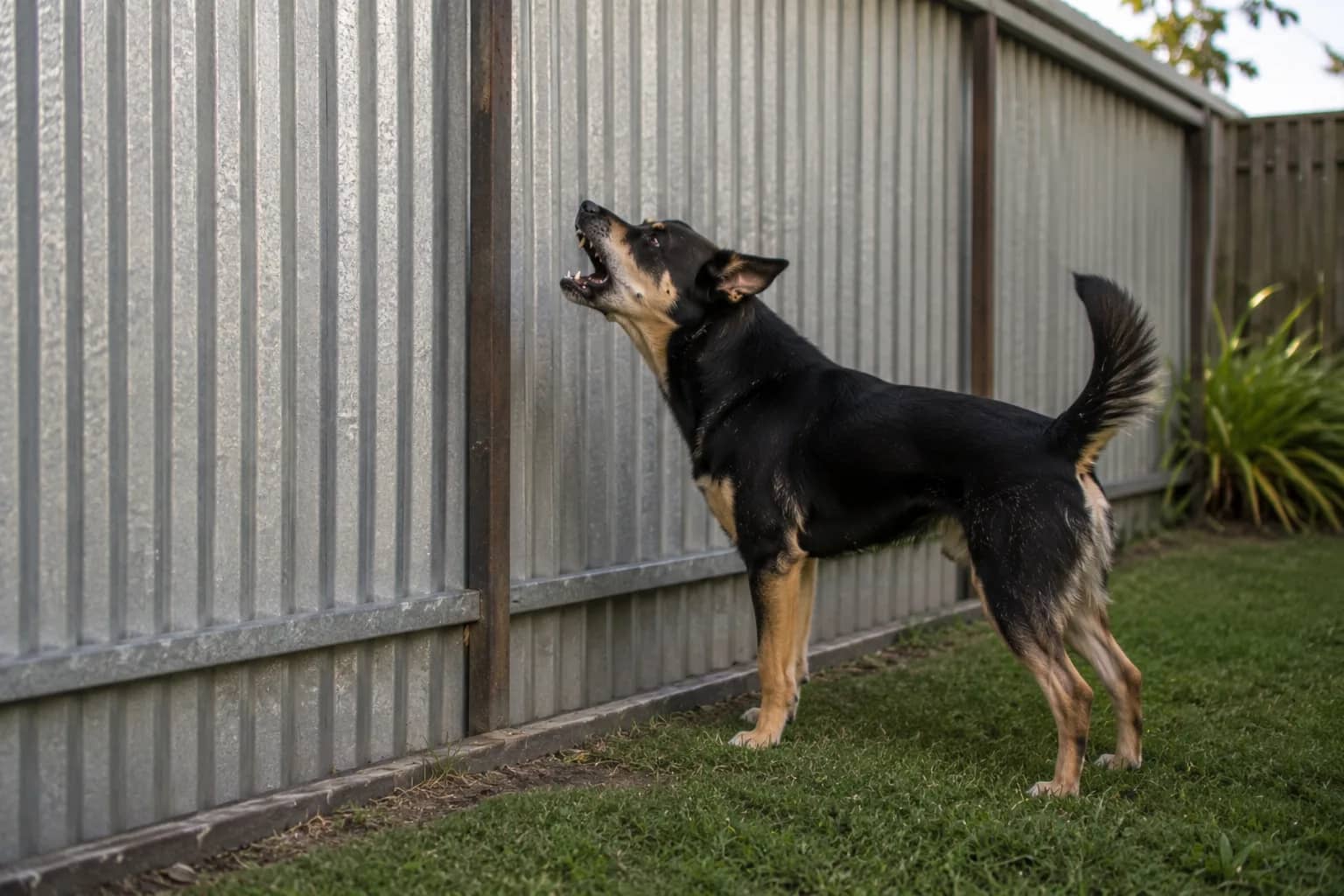
If you come home to destroyed door frames, frantic neighbours, or "complaint received" notes from council — and your dog is otherwise fine when you're home — you may be dealing with separation anxiety.
Or you may not be. Half the cases I see described as "separation anxiety" turn out to be boredom barking or under-stimulated chewing. The treatments are completely different. Getting the diagnosis right is the first step.
This article covers both — and the rural and FIFO realities that make this issue particularly common across Port Augusta, the Upper Spencer Gulf, and regional SA generally.
What separation anxiety actually is
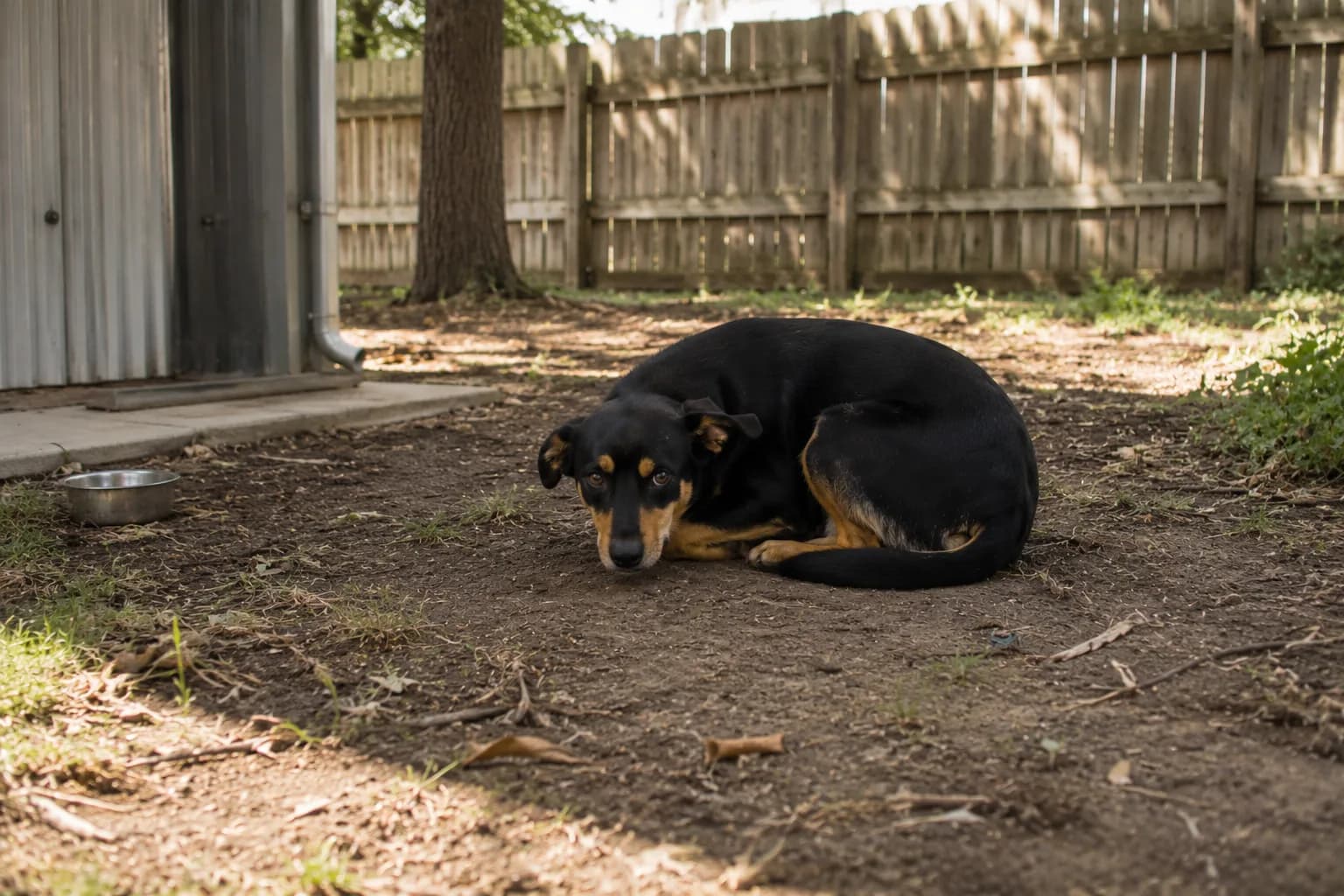
True separation anxiety is a panic response triggered by separation from a specific attachment figure (usually one or two humans). The dog is not naughty. It is not "bored." It is in genuine, measurable distress — heart rate elevated, cortisol elevated, often hypersalivating, sometimes self-injuring.
This is not the same as a dog that mildly wines for two minutes and then settles. It's also not the same as a dog that chews things while you're out (most of those are boredom or under-exercised dogs).
True SA shows:
- Distress that escalates during the absence rather than settling
- Frantic departure response (often before you've left)
- Inability to eat or drink while you're gone
- Physical signs — heavy panting, drooling, dilated pupils
- Self-harm in severe cases (paw chewing, frantic scratching, broken teeth from cage bars)
- Destruction focused on exit points (front door, gates, window frames) rather than random items
The dog that comes to your bed when you're sad, follows you to the bathroom, and barks for ten minutes when you leave but settles afterwards — that's normal attachment. Not SA.
How to tell — the video diagnostic
The single most useful diagnostic is a video.
Set up your phone or laptop facing the dog's main resting area. Press record. Leave the house. Stay away for 45 minutes. Come back. Watch the footage.
What to look for:
- Settling time: how long until the dog stops vocalising or pacing? Less than 15 minutes — probably not SA. More than 30 minutes of escalating distress — likely SA.
- Settling at all: SA dogs often don't settle. They cycle through pacing, vocalising, scanning for return cues.
- Physical signs: hypersalivation, panting, hyperventilation, dilated pupils
- Exit-point focus: SA dogs return repeatedly to where you left, often scratching or chewing the exit
- Recovery on return: SA dogs typically take 30+ minutes to fully calm after you return. Normal dogs recover immediately.
Without this video, we're guessing. With it, we usually know within 5 minutes of watching whether SA is the issue.
Why regional SA — and FIFO households — get this more
A few specific risk factors are over-represented in regional South Australia:
FIFO and shift-work households
Many Port Augusta and Whyalla families have one partner working 2-on-2-off rotations to mine sites or industrial roles. The dog adjusts to one routine, then has to adjust again two weeks later. For attachment-prone dogs, this triggers anxiety.
Lockdown puppies
Dogs raised during 2020–2022 in households that never left often never learned that alone-time is normal. Many regional SA owners adopted during that period and the dogs hit adolescence with zero tolerance for solitude.
Rescue dogs with attachment histories
Many regional SA pounds re-home dogs with limited history. Dogs that were surrendered for "not coping" often have undiagnosed SA, and the new owner inherits it without knowing.
Return to office after years of remote
Common across all regions. Dogs accustomed to constant human company are suddenly alone, every day, for 8+ hours.
Things that don't work — and why
"Just let them get used to it"
Throws the dog past threshold every time. Each panic event reinforces the panic. Months of this approach create dogs whose SA is far worse than when you started.
Crate training a panicking dog
For SA dogs, the crate becomes a trap. Self-injury rates skyrocket. Never crate an SA dog without specific behaviourist guidance.
Getting a second dog
Almost never works. If your dog is anxious about you, another dog rarely substitutes. You've doubled the responsibility and the new dog often learns the old dog's anxiety.
"Tire them out" exercise
Hyper-exercised dogs are fitter, not calmer. SA is a regulation issue, not an energy issue.
Calming chews, ThunderShirts, diffusers
Sometimes mild support. Never solutions. Useful adjuncts; not treatments.
In-person first; online when geography rules in-home out
For any anxiety case, in-home is always my preferred format. Sitting in the actual room your dog panics in, watching the household interact in real time, and reading the dog in its real environment gives me information no video can. If you're inside the regional SA drive radius, that's the format I'll recommend.
For owners outside that radius — Eyre Peninsula, the Far North, or interstate — online coaching is a legitimate alternative. SA work translates reasonably well because so much of it is owner-habit and video-readable: the goodbyes, the build-up cues, the dog's response to your absences. I've taken plenty of cases entirely online and produced strong outcomes. It's not better than in-home, but when geography or scheduling makes in-home impossible, it's the right call.
What does this actually look like in practice?
A real example from Port Augusta. A FIFO household: husband on 2-on-2-off, wife and kids at home full-time. The dog was a 4-year-old Border Collie cross adopted at 18 months from a country pound.
When the husband left for shift, the dog destroyed the laundry door, hyperventilated for 4+ hours, and refused food until he returned. Bark collars made it worse. The previous trainer had tried "let her work through it" — six months of escalation.
We:
- Took video to confirm true SA (not boredom)
- Restructured departures (calm goodbyes, calm returns, separation rituals removed)
- Built leadership across both shifts — same rules whether husband was home or not
- Started desensitisation at 30 seconds (which was as long as she could stand)
- Built the desensitisation ladder over 12 weeks, extending only when she could succeed at the current step
- Held the line — no skipping ahead, no medication, no quick-fix detours
By month 4, she could be alone for a full work day with mild anxiety, calm enough not to destroy or hyperventilate. By month 6, she was completely fine — and she was fine without any pharmaceuticals in the system, which meant we knew the state had genuinely resolved.
This case wasn't unusual. Real SA work takes months. The owners did 90% of the work; I provided the framework and the check-ins.
Where to start
If you suspect SA — even mildly — the first step is the video diagnostic. The second is the Free Behaviour Test so we can confirm which of the four sub-types you're dealing with.
For dedicated separation anxiety work, contact me directly. I take these cases across regional SA — in-home or online — and they're some of the most rewarding to resolve. The household that thinks it can never leave the house again, six months later is going out to dinner. That's the work.
Not sure where to start with your dog?
Take the Free Dog Behaviour Test.
Two minutes. You’ll find out exactly what’s driving your dog’s behaviour — and what to do next.
Frequently asked questions
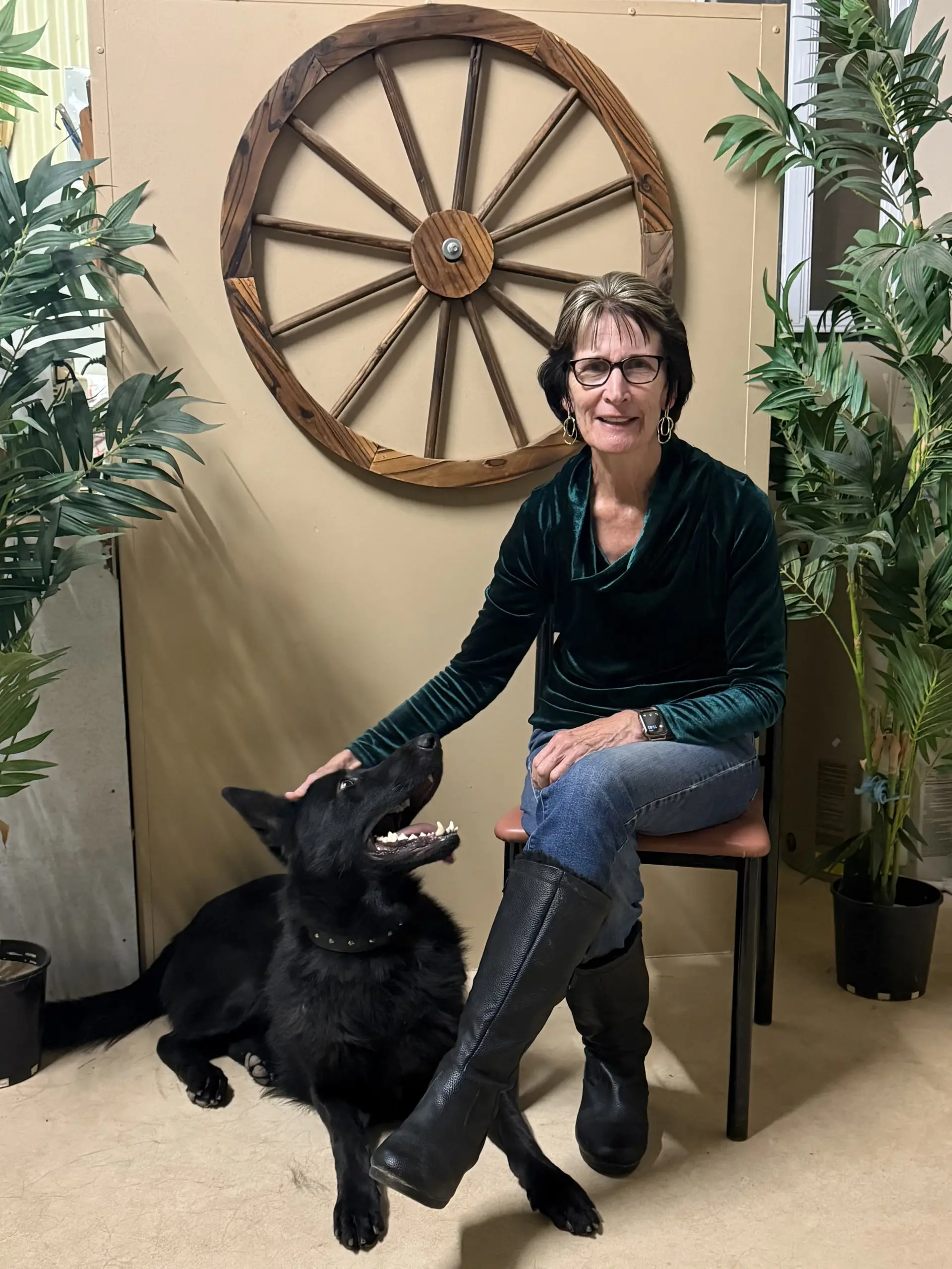
Written by
Pauline Cowey
Accredited Dog Behaviourist, Communicator, Owner Educator and Trainer based at Crystal Brook, South Australia. Decades of hands-on work resolving aggression, reactivity, anxiety and obedience cases across regional SA — through ethical, leadership-based methods.
Read Pauline’s full story →