
Port Augusta · Iron Triangle
Separation Anxiety Help in Port Augusta — Shift Work, FIFO, Rescue Dogs
Separation anxiety is the second most common case I take in Port Augusta, after aggression — and the two are not unrelated. Augusta's working population runs on rotation: FIFO, mine shifts, hospital rosters, transport runs through the night. Dogs in those households spend months being asked to settle to a schedule that keeps changing on them. Some adapt. Some develop a separation problem that compounds quietly for a year and then explodes when something else in the home shifts — a new partner, a new puppy, kids leaving home, a move from Stirling North to Augusta West.
The local angle
The Augusta separation cases I work are almost always exacerbated by environment as much as by routine. The brutal summer heat shuts dogs in for most of the day from December through February, the foreshore wind makes outside crating unworkable in winter, and a lot of Augusta housing has been retrofitted with sliding doors and reverse-cycle units in ways that change a dog's access pattern through the house. We design a separation protocol that survives the actual Augusta home and the actual Augusta roster, not a textbook one.
Separation Anxiety in Port Augusta
What this work actually looks like in Port Augusta
By the time most Port Augusta households call me about separation anxiety, the dog has been escalating for six to eighteen months. The pattern is usually: mild whining at the door, then panting and pacing when the car leaves, then a chewed door frame or a soiled crate, then the neighbours start mentioning the howling. The owners have tried a crate, then no crate, then a second dog for company, then a Kong, then leaving the radio on. The dog gets worse in increments and the household gradually rearranges around it.
The pattern is more common in Augusta than in most regional towns I cover, and the reasons are environmental. A high proportion of Augusta dogs live in households where someone works rotating shifts — FIFO out of Roxby or Olympic Dam, fly-in mining contracts, hospital rosters, transport, refinery shutdown work. The dog spends the first six months trying to predict who will be home when, fails, and gradually develops an arousal baseline that never quite comes down. Then a triggering event — the partner moves out, the kids leave for high school in Adelaide, a new dog arrives — pushes it over.
Roughly a third of my Augusta separation cases are also rescue or rehomed dogs whose original separation pattern was already laid down before the household ever met them. These dogs are not "ungrateful" or "still adjusting" — they are running an old protocol from a previous life and they need a structured rewrite, not more affection.
The in-home consultation is essential for separation anxiety because the actual home is where the protocol has to live. I walk through your house with you — the rooms the dog uses through the day, the doors it watches, the windows it can see the driveway from, where the crate is, where the bed is, what the dog does in the five minutes before you leave and the five minutes after you return. Most of what I find is invisible to the household because it has built up too slowly to notice. By the end of the first hour we have a map of what is actually feeding the anxiety.
The protocol itself is structured separation training, not gradual exposure as it is usually described. We build genuine independence inside the home first — a dog that cannot be on the other side of a closed laundry door for ten minutes is not ready to be left in the house alone, no matter how good it has historically been. Then we extend, in measured increments, around your actual roster. For a FIFO household the protocol assumes a fourteen-day rotation. For a hospital shift worker we build around the actual roster you work. Generic protocols that ignore the rotation pattern fail in Augusta within a fortnight; protocols that are built around it hold.
Augusta households often ask whether they should get a second dog for company. The honest answer is usually no — most cases of separation anxiety are about the missing person, not the missing dog, and a second dog is more likely to develop matched anxiety than to resolve the first dog's. I will tell you specifically for your case after the first hour.
I do not support medicating dogs for separation anxiety. Medication suppresses the symptom while the underlying pattern continues to be rehearsed, and the dogs I see who arrive on long-term anxiolytics have universally been more difficult to resolve than those who have not. The work resolves the state; the state stops generating the behaviour. That is the order.
Realistic timeline for an Augusta separation case: meaningful reduction in two to four weeks, stable hold inside three months for most cases, six months for the more severe rescue-history cases. I schedule Augusta consultation days about every three weeks; lead time is usually two to four weeks.
The service
Separation Anxiety across regional SA
A dog that panics when you leave is not being naughty. It is genuinely afraid — and forcing through it makes it worse, every time.
See the full service pageThe town
All services in Port Augusta
Port Augusta sits at the meeting point of three regions — the Upper Spencer Gulf, the Iron Triangle, and the gateway to the Eyre Peninsula. From my Crystal Brook base it's a 75-minute drive, and I cover the city in-home regularly.
See the Port Augusta overviewThe region
Iron Triangle dog training
The Iron Triangle — Port Pirie, Port Augusta and Whyalla — is one of the densest regional dog populations in South Australia. Heart of the Pack is based 25 minutes south of Port Pirie at Crystal Brook and runs regular in-person consultation days across all three towns, with bookings grouped together for the longer Whyalla trips so the drive carries multiple cases.
See the Iron Triangle overviewMore behaviour services in Port Augusta
Other Port Augusta behaviour pages
Real owners. Real change.
Owners in Port Augusta and surrounds who've worked with Pauline
“We are both really pleased with Arthur's progress and it's only day 3. He's almost like a new dog! Understanding the why behind Pauline's method then being consistent in our actions as pet owners is the most important takeaway we gained from our session with Pauline. Highly recommended.”
“I only wish we had engaged Pauline sooner! Our family found her in-home training session to be informative and invaluable in helping us make real change to our relationship with our 7 year old Border Collie. It was so beneficial to complete the training in person and be able to ask questions along the way. We gained a much better understanding of how our own habits and behaviors were unintentionally reinforcing the behaviors we didn't want. In just a few short weeks, by following Pauline's simple rules, we have already seen a noticeable change in our dog. The literature provided by Pauline has also been an excellent resource, helping us stay on track and reinforce what we learned. We are looking forward to calm outings with our dog in the future!”
“very informative, simple but effective methods to use.”
Read more — separation anxiety & Port Augusta

anxiety barking
Port Augusta Separation Anxiety — FIFO & Shift Work
FIFO and shift-work households produce more separation anxiety cases in Port Augusta than anywhere else in regional SA. The drug-free protocol.
11 min read·June 2026
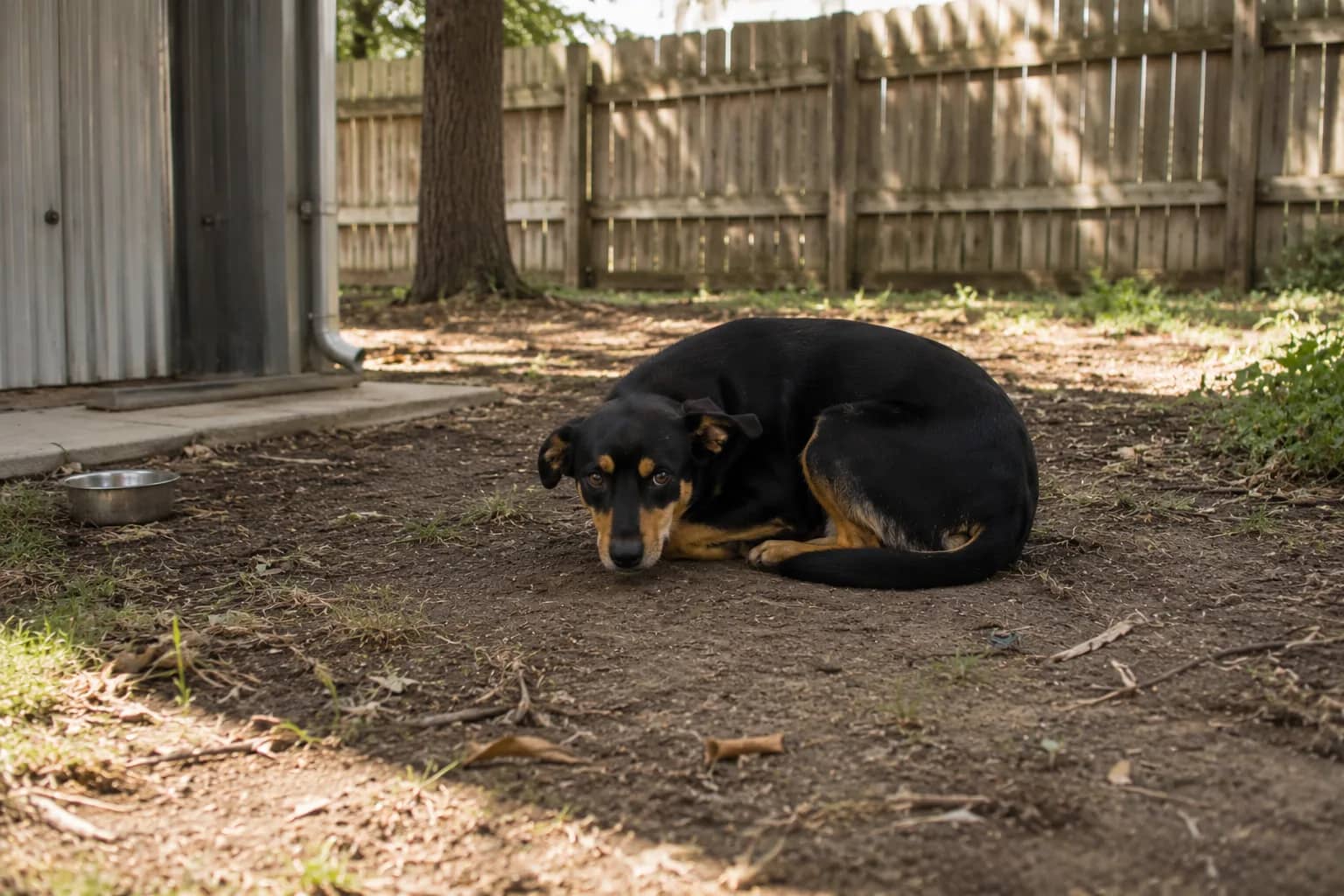
anxiety barking
Separation Anxiety in Dogs: How to Tell, How to Help
Boredom or genuine separation anxiety? How to tell, and the desensitisation approach that resolves SA in regional SA households (including FIFO families).
13 min read·Feb 2026
anxiety barking
How to Help a Dog With Separation Anxiety
What separation anxiety in dogs looks like, why the common fixes fail, and what professional help involves. For owners of genuinely anxious dogs.
12 min read·June 2026
Separation Anxiety in Port Augusta — frequently asked questions
Start here
Build a separation plan around your actual Port Augusta roster — not a textbook one.
The Free Dog Behaviour Test gives you (and Pauline) a clear starting point. No pressure, no spam, no obligation — just clarity.