Fireworks Anxiety in Dogs — A Regional SA Christmas & New Year Guide

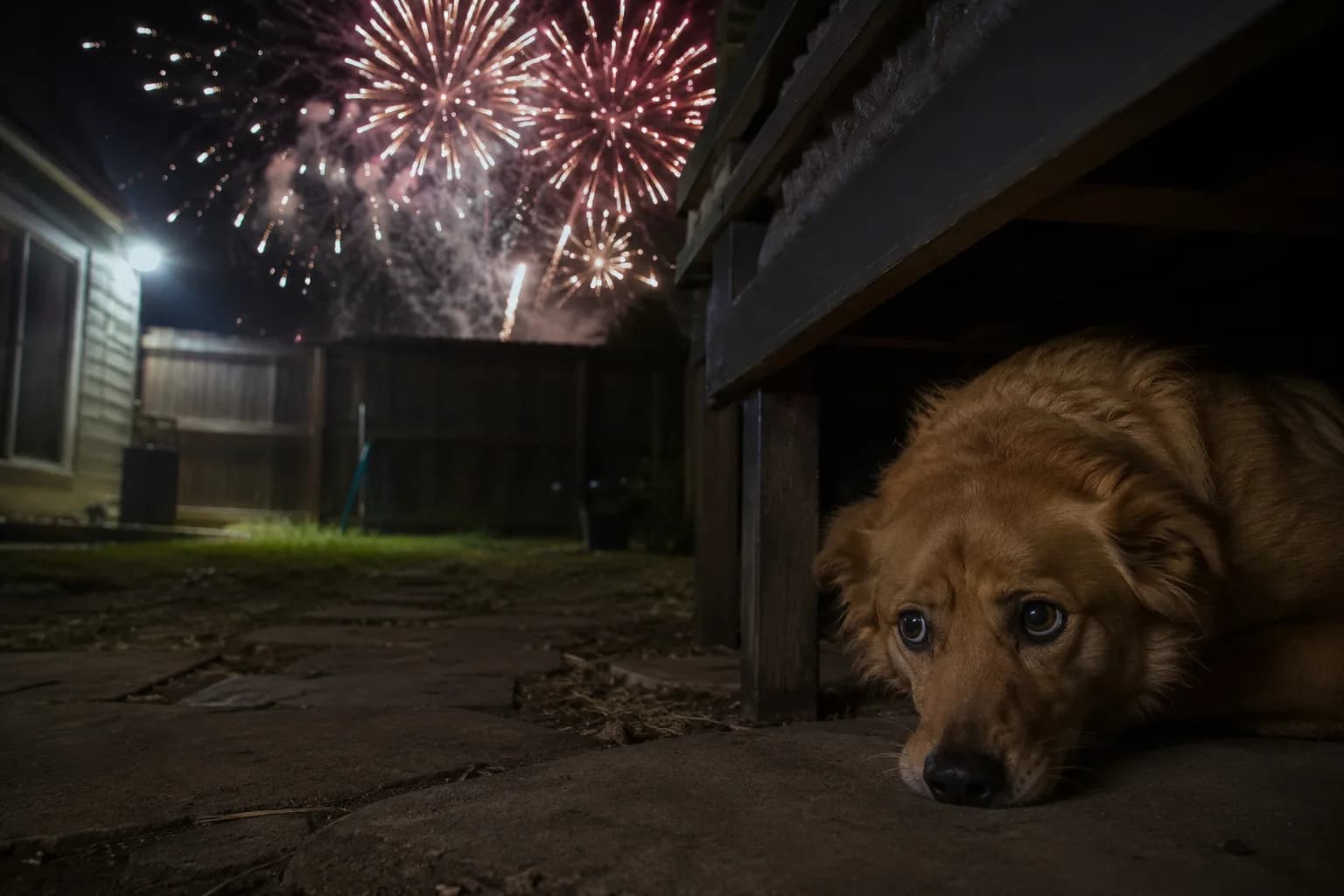
Fireworks panic is a noise phobia, not bad behaviour. On the night itself, short-term measures help — a safe familiar space, calm exercise earlier in the day, medication or sedation where appropriate. None of that resolves the underlying phobia. The lasting work is building the dog's confidence over months, so they can hear fireworks, sirens, gunshots and thunderstorms and stay regulated rather than just being shielded from them. Christmas Eve, New Year's Eve and Australia Day are predictable, so the planning starts now.
Every year I take a wave of calls between 23 December and 27 January. Dogs that bolted through screen doors. Dogs that scaled six-foot fences. Dogs picked up by council the next morning, kilometres from home, paw pads shredded. Dogs that won't sleep through the night for six weeks afterwards.
Fireworks panic is the most preventable behaviour emergency in the calendar. The dates are known. The triggers are known. The plan that works is known. What's usually missing is somebody telling regional SA owners that "she'll be right" is not a plan — and that the cost of doing nothing is sometimes the dog's life.
This is for owners across Port Pirie, Port Augusta, Whyalla, the Mid North, Clare Valley, Yorke Peninsula and the Eyre Peninsula — everywhere regional crowds put on a show and everywhere stations let off the rifle around midnight.
What fireworks panic actually is
True fireworks panic is a noise phobia. The dog hears the bang, registers it as a life-threatening event, and the entire sympathetic nervous system fires — heart rate spikes, breathing accelerates, pupils dilate, blood shunts to the muscles. The dog is preparing to flee or fight an imaginary predator.
This is not naughtiness. It is not "being dramatic." It is not something the dog can choose to stop. By the time you see the panic, the cortisol cascade has already started — and cortisol takes 48–72 hours to clear the body. That's why a dog that panics on New Year's Eve is still jumpy on the second of January.
True fireworks phobia shows:
- Sudden, frantic attempts to hide or escape
- Pacing, panting, drooling, trembling
- Refusing food or water
- Vocalising — whining, howling, sometimes high-pitched yelping
- Destructive escape behaviour — clawing at doors, chewing through fly-screens, scaling fences
- Self-injury — broken teeth from chewing crate bars, torn paw pads, lacerated noses
- Loss of toilet control
A dog that perks its head up, looks at the window, and goes back to sleep is not phobic. A dog that becomes a frantic, distressed animal you can't reach is.
Predicting the panic — who is most at risk
Most owners learn their dog is fireworks-phobic the first time fireworks happen near them. By then you're already in the event. The better approach is to identify risk early.
Higher-risk dogs include:
- Rescues with limited history — many regional SA pounds re-home dogs whose noise history is unknown
- Dogs with existing anxiety — separation anxiety and noise phobia commonly co-occur
- Herding and working breeds — kelpies, heelers, Border Collies, GSDs are often sound-sensitive
- Seniors — phobias frequently appear or worsen with age and cognitive decline
- Dogs with one prior bad noise event — a near-miss with a thunderclap, a backfiring ute, a starter pistol can sensitise for life
- Lockdown puppies — dogs raised 2020–2022 had reduced noise exposure during the critical window
If any of those apply to your dog and you don't already know how they react to fireworks, assume the worst and plan accordingly. The cost of over-preparing is a quiet evening. The cost of under-preparing is sometimes a missing dog.
Short-term support vs long-term progress
Some strategies can help your dog cope in the moment, including medication or sedation when appropriate, setting up a safe space, and planning calming exercise earlier in the day.
- A safe, familiar space can reduce stress during noisy events.
- Pre-event exercise may help your dog settle more easily.
These measures can be useful, but they are only part of the picture. Lasting progress comes from addressing the underlying anxiety rather than simply trying to block it out.
I have helped many dogs overcome anxiety issues by building confidence over time. The goal is not just to shield them from fireworks, sirens, gunshots, thunderstorms, and other loud noises, but to work with the dog so they can gradually adjust and become more resilient.
Where to start
If your dog has had even one bad fireworks event, the time to start the work is now, not the week before the next event. The Free Behaviour Test helps identify whether what you're seeing is true noise phobia, generalised anxiety, or something else entirely — and what to do about it before the next event lands.
For dogs already in a panic pattern, I take noise-phobia cases across regional SA in-home, at the Crystal Brook studio, and online for owners further afield. The cases that get sorted are the ones started months before the next event, not the week before. Plan early. Your dog cannot.
Not sure where to start with your dog?
Take the Free Dog Behaviour Test.
Two minutes. You’ll find out exactly what’s driving your dog’s behaviour — and what to do next.
Frequently asked questions
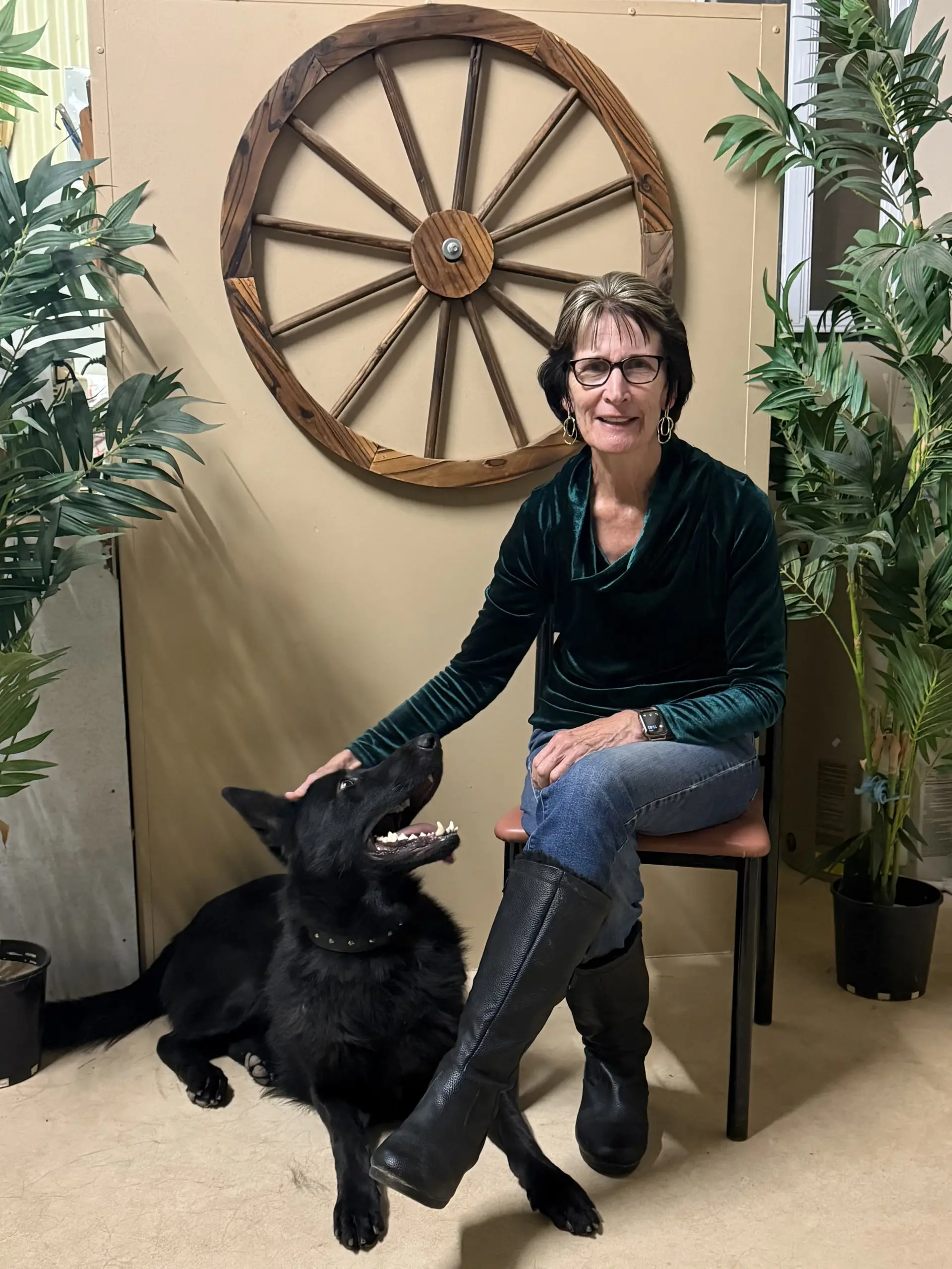
Written by
Pauline Cowey
Accredited Dog Behaviourist, Communicator, Owner Educator and Trainer based at Crystal Brook, South Australia. Decades of hands-on work resolving aggression, reactivity, anxiety and obedience cases across regional SA — through ethical, leadership-based methods.
Read Pauline’s full story →