
Port Augusta · Iron Triangle
Aggressive Dog Training in Port Augusta — Rescue & Re-Homed Cases
I run my Port Augusta in-home days about every three weeks from my Crystal Brook base — a 75-minute drive each way, so I block bookings together to make the trip work. The aggression cases I see in Augusta are heavily weighted toward two profiles: rescue and rehomed dogs whose history is partial or unknown, and shift-work households where the dog has built up arousal patterns that finally exploded into resource guarding or stranger aggression. Both are workable. Both require honest conversation up front about what rehabilitation actually looks like.
The local angle
Augusta's demographics drive its aggression cases. A high turnover of rehomed dogs through local pounds and informal rehoming, a substantial FIFO and shift-work population whose dogs are alone in unpredictable rotations, multi-generational households where the dog has self-appointed itself as the household enforcer — these are the patterns I work with here. The work is more structured than most aggression services elsewhere because the safety planning has to survive a shift roster, not just a normal week.
Aggressive Dog Training in Port Augusta
What this work actually looks like in Port Augusta
Every aggressive dog case I take in Port Augusta starts with a phone or video call before I drive up. That is non-negotiable for any aggression case and it matters more here because the drive is 75 minutes each way — I will not turn up to a situation I have not understood properly. We go through the history (bite incidents, near-misses, what the dog actually does versus what the owner is afraid it will do), the household (who is in it, who handles the dog, who the dog is most reactive around), and the environment (Port Augusta city, Augusta West, Stirling North, Davenport, the rural blocks toward Hawker or Quorn — the geography changes the management plan).
About 60% of the Augusta aggression cases I work are rescue or rehomed dogs. The story is usually some version of: dog was a stray or surrender, has been in the home three to nine months, has done one or two things that frightened the family — a snap at a visitor, a guarding incident with the kids around food, a fence-line escalation that crossed into a real attempt — and the family is now afraid of what comes next. Almost universally, these cases involve a dog whose previous life is partly unknown and whose current household has been improvising leadership without realising it. The fix is leadership reset plus environmental management plus a structured trigger-exposure plan, and the dogs respond fast once those three are in place.
The other 30% are long-term household dogs in shift-work or FIFO families whose aggression has emerged or escalated in the last six to twelve months. This is a pattern I see in Augusta more than almost anywhere else in regional SA, because the local economy runs on rotation work. The dog has spent months adjusting and re-adjusting to changing routines, the household leadership has become inconsistent without anyone noticing, and the dog has gradually moved up the household pecking order until something tips it over the edge — a new visitor, a new pet, a child of a certain age, a noise outside. The fix is more about the household than the dog, and the consultation looks correspondingly different.
The remaining 10% are working-breed cases where the drive is being mishandled — guarding-breed dogs whose owners did not realise what they were buying, or working-line shepherds whose intensity has been treated like ordinary obedience and has slowly escalated. These cases need breed-aware work and a different framing of what success looks like.
A Port Augusta aggression consultation runs three and a half to four hours. The first 30 minutes is environmental and dog-absent — I walk through the property with you, look at the trigger lines, the management possibilities, where the dog sleeps and eats, where the incidents have happened. Then we bring the dog in under management (leashed, muzzle if indicated, separated as appropriate) and I read it. By the end of the first hour you will know which of the three patterns above your case fits and what each implies for the work.
Safety planning for Augusta cases is more detailed than most. I write the protocol around your shift roster and your household reality, not a generic 9-to-5 assumption. Where a basket muzzle is part of the plan, I coach you through conditioning it properly — a properly conditioned muzzle is freedom, not punishment. The work itself is drug-free: I don't support medicating a dog, because the state has to be resolved rather than masked if the household is going to live with the result.
Realistic outcomes: most Augusta aggression cases reach a level of stable, manageable household life inside three months and continue to improve to a year. Genuine bite-history cases I review at six and twelve months. A small minority do not reach a safety threshold the household can live with, and where that is the case I tell you honestly and early so you can plan around the realistic outcome rather than chase one that is not there.
The service
Aggressive Dog Training across regional SA
Aggressive behaviour rarely starts as aggression — it is almost always fear or arousal wearing a louder coat. The work is calming the underlying state, not punishing the symptom.
See the full service pageThe town
All services in Port Augusta
Port Augusta sits at the meeting point of three regions — the Upper Spencer Gulf, the Iron Triangle, and the gateway to the Eyre Peninsula. From my Crystal Brook base it's a 75-minute drive, and I cover the city in-home regularly.
See the Port Augusta overviewThe region
Iron Triangle dog training
The Iron Triangle — Port Pirie, Port Augusta and Whyalla — is one of the densest regional dog populations in South Australia. Heart of the Pack is based 25 minutes south of Port Pirie at Crystal Brook and runs regular in-person consultation days across all three towns, with bookings grouped together for the longer Whyalla trips so the drive carries multiple cases.
See the Iron Triangle overviewMore behaviour services in Port Augusta
Other Port Augusta behaviour pages
Real owners. Real change.
Owners in Port Augusta and surrounds who've worked with Pauline
“We are both really pleased with Arthur's progress and it's only day 3. He's almost like a new dog! Understanding the why behind Pauline's method then being consistent in our actions as pet owners is the most important takeaway we gained from our session with Pauline. Highly recommended.”
“I only wish we had engaged Pauline sooner! Our family found her in-home training session to be informative and invaluable in helping us make real change to our relationship with our 7 year old Border Collie. It was so beneficial to complete the training in person and be able to ask questions along the way. We gained a much better understanding of how our own habits and behaviors were unintentionally reinforcing the behaviors we didn't want. In just a few short weeks, by following Pauline's simple rules, we have already seen a noticeable change in our dog. The literature provided by Pauline has also been an excellent resource, helping us stay on track and reinforce what we learned. We are looking forward to calm outings with our dog in the future!”
“very informative, simple but effective methods to use.”
Read more — aggressive dog training & Port Augusta
aggression reactivity
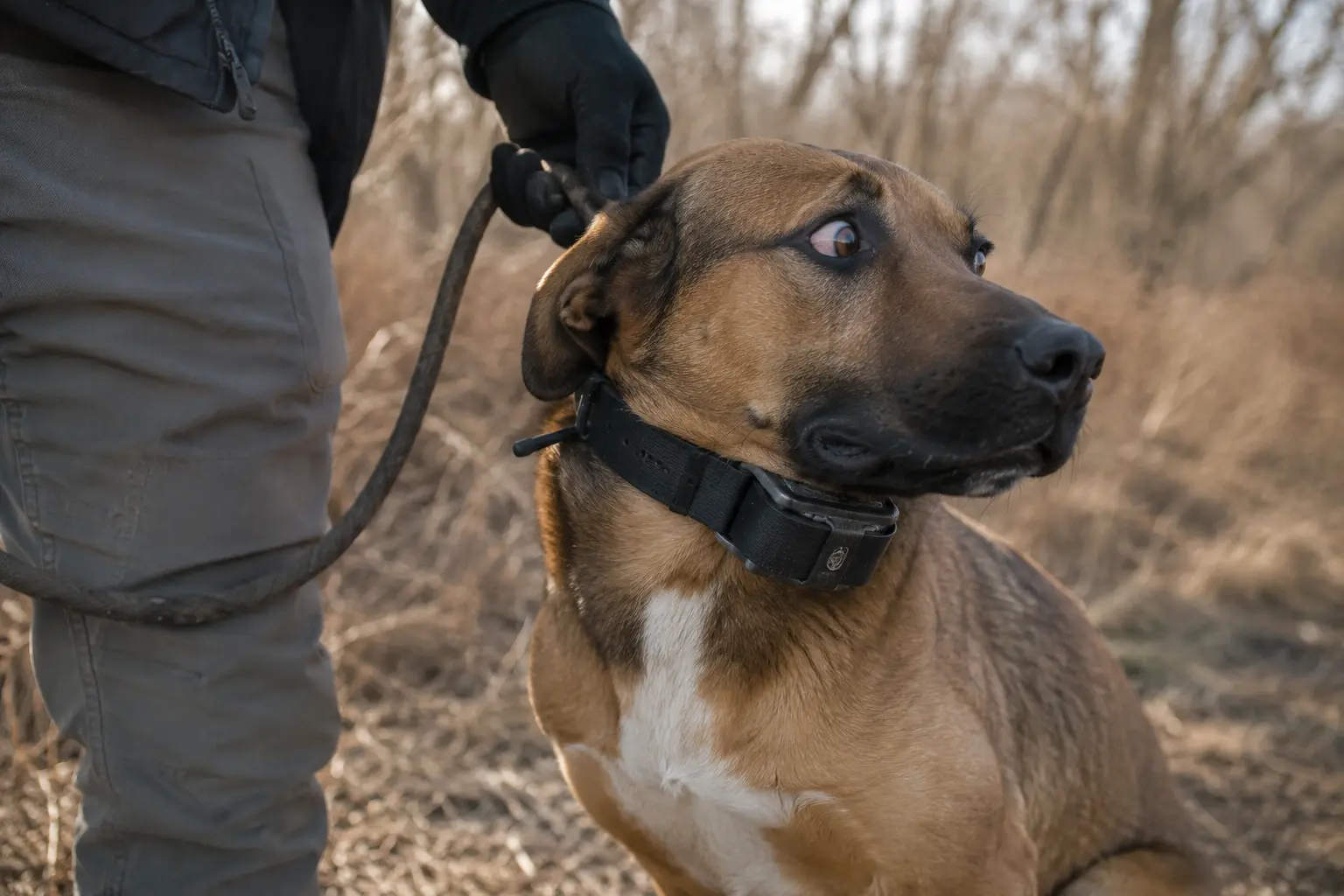
How to Rehabilitate a Dog After Aversive Training
Signs your dog is shut down or suppressed after aversive training, why the "regression" at week 3 is actually a win, and what real recovery looks like.
11 min read·Sept 2026
choosing a trainer
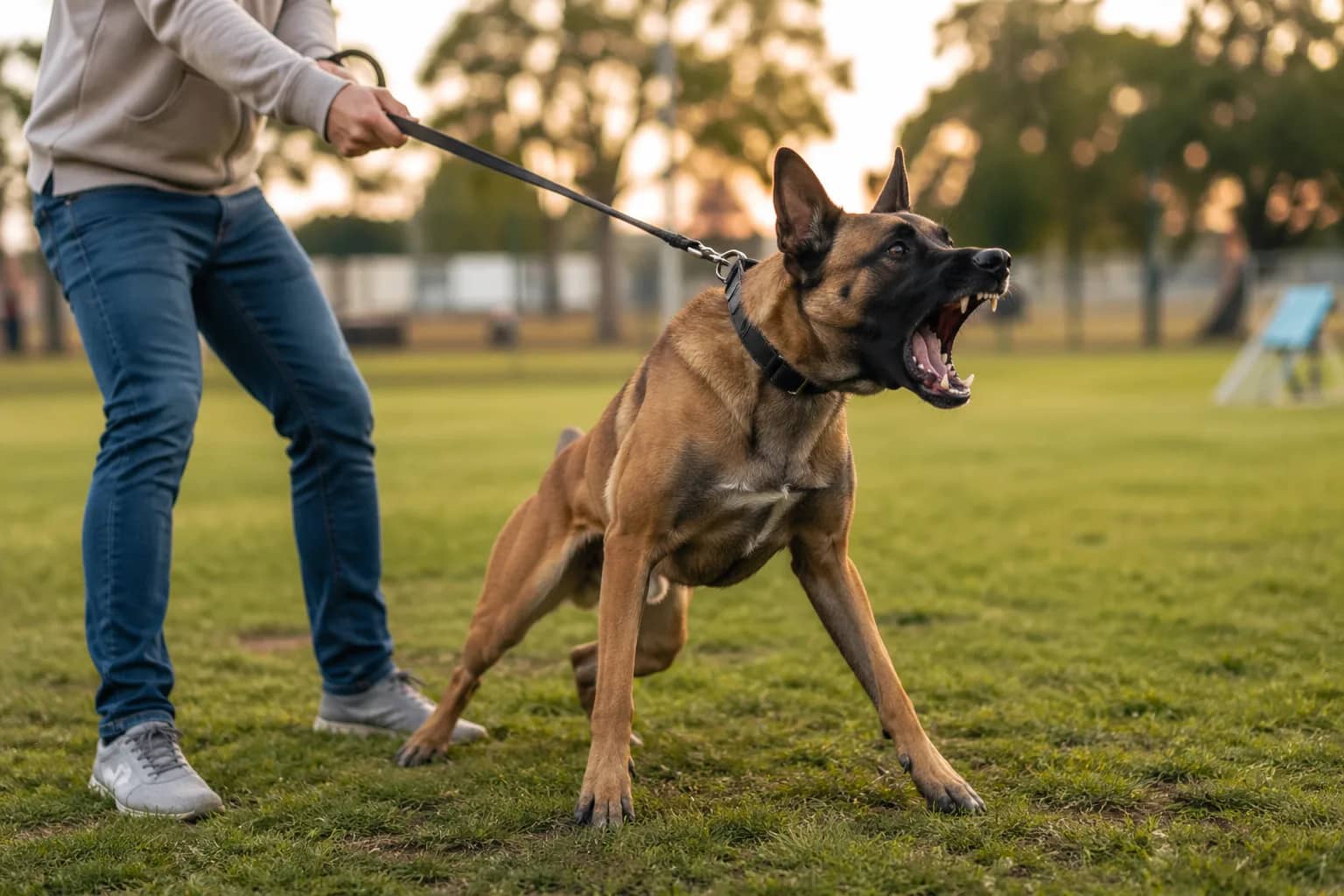
When to See a Dog Behaviourist (Not Just a Trainer)
The specific signs your dog needs a behaviourist rather than a trainer — book-now triggers, warning signs, and the cost of waiting to decide.
10 min read·June 2026
aggression reactivity
Dog Aggression Training — What Actually Works
Honest guide to dog aggression training — what aggression is, why punishment fails, what ethical rehabilitation looks like, and what to look for.
11 min read·June 2026
Aggressive Dog Training in Port Augusta — frequently asked questions
Start here
Ready to start the aggressive dog training work in Port Augusta?
The Free Dog Behaviour Test gives you (and Pauline) a clear starting point. No pressure, no spam, no obligation — just clarity.