
Whyalla · Iron Triangle
Reactive Dog Training in Whyalla — Foreshore, Dog Park, Fence Line
Reactivity is by far the most common case I see when I run my Whyalla rotation days. The town's geography concentrates the problem: a dense coastal city with a heavily-used foreshore, an active off-lead dog park, townhouse yards backing onto walking paths, and a steel-and-mining demographic that walks dogs hard and often in the wrong way. Most Whyalla reactivity cases I take on are not aggressive — they're over-aroused dogs whose owners have been told the answer is more socialisation or a tighter lead.
The local angle
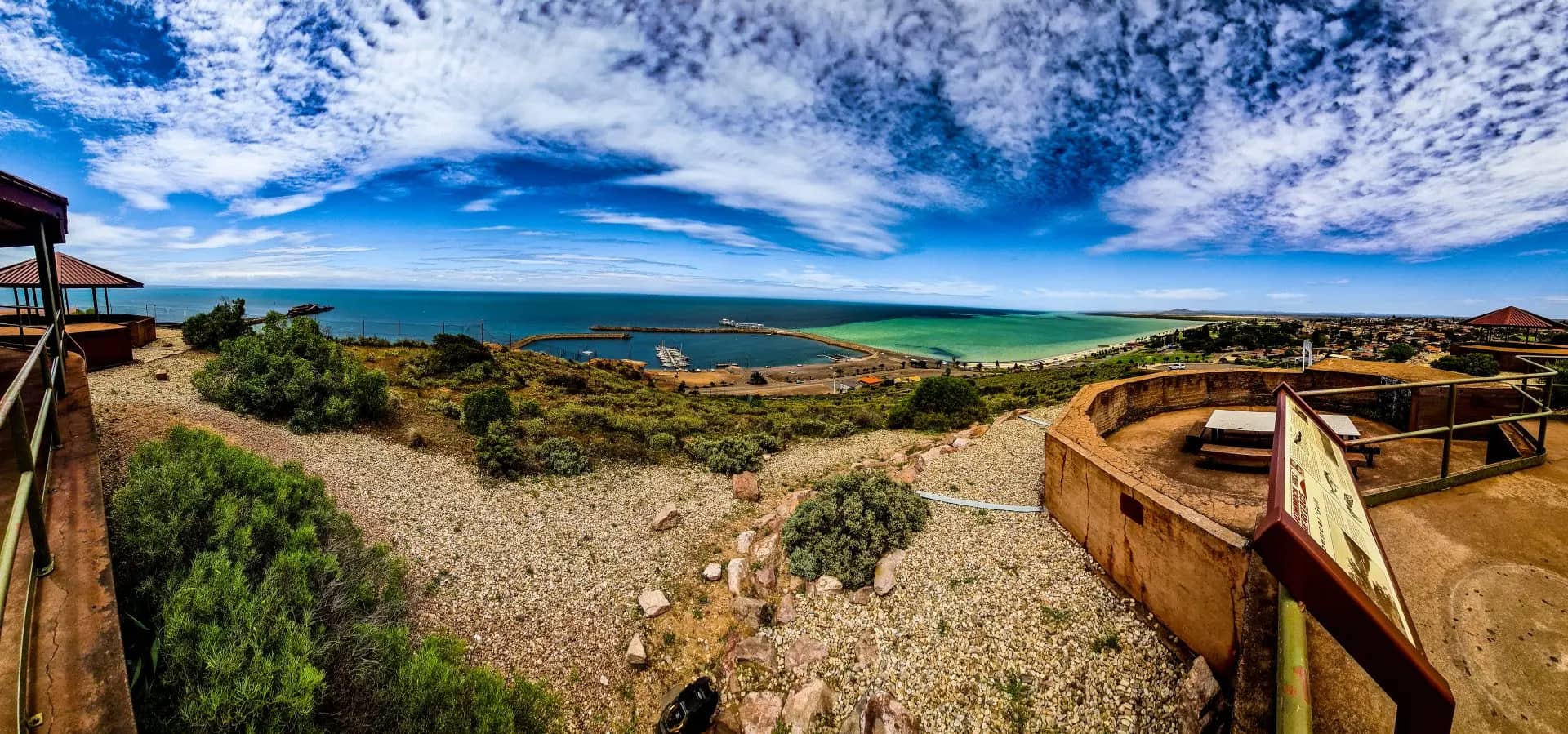
What makes Whyalla specifically tough on reactive dogs is line-of-sight. The foreshore walking track, Wilson Park, the Norrie and Stuart suburb fence lines, the dog park approach — they all push dogs past threshold before the owner has registered the trigger. We work with that geography rather than against it: we change the route, we change the time, we change the leadership pattern, and the dog stops exploding before we have even worked the trigger directly.
Reactive Dog Training in Whyalla
What this work actually looks like in Whyalla
Whyalla reactivity has a profile. The dogs are usually two to five years old, on lead they lunge and scream and the owners have stopped enjoying walks, off lead at the dog park they are mostly fine — sometimes a bit much, but fine. The owners have tried a head halter, a no-pull harness, treats from a pouch, ignoring it, correcting it, and crossing the street every time another dog appears. Nothing has held. Most have been to one of the larger metro behaviourists or done an online program, and the gains have not transferred to the foreshore.
The reason it does not transfer is that Whyalla reactivity is mostly arousal-driven, not fear-driven, and the standard counter-conditioning protocols assume fear. A frustrated greeter who explodes at a passing dog because it cannot get to it does not need a treat at a safe distance — it needs leadership that tells it the trigger is not its to handle. We rebuild that leadership at home first, before we ever go to the foreshore.
The in-home portion of a Whyalla reactivity consult is critical because the household is where the arousal baseline lives. A dog that is patrolling the back fence at the Norrie or Stuart cul-de-sacs, alerting at the postal worker, racing the kids around the yard and tracking every car down the street is already running at 70% of its ceiling before the lead goes on. The trigger merely tips it over. We restructure the household first — the leadership pattern, the settle pattern, the meal pattern, the access to the fence line — and the foreshore walks calm down before we have addressed them directly.
Then we go to the foreshore, or Wilson Park, or wherever the real walking problem lives. We work at the distance the dog can still think — often that is fifty metres, sometimes a hundred, occasionally across the bay on the other side of the road. We rebuild the response from that threshold inward. The first walk past a previously catastrophic trigger happens inside the consultation, every time. That single moment is the thing the rest of the work compounds from.
Whyalla's dog park is its own trigger category. I get a lot of cases where a dog has been fine for two years and then started reacting in the carpark before going in. That pattern is almost always frustration that has tipped over — the dog has learned that the lead is the one thing standing between it and the play it wants — and it responds beautifully to a leadership reset plus a short period of avoiding the carpark altogether while we rebuild. Most cases are back at the dog park inside a month, with calmer entries than they have ever had.
Fence-line reactivity in the Norrie and Stuart townhouse suburbs is the third category I see often. Two dogs over a fence, daily, for months — that is a practised behaviour, not a personality. The fix is environmental management first (visual barriers, structured access to the yard) and then the leadership work that lets the dog defer the alert to you. Most fence-line cases improve dramatically inside the first fortnight because the rehearsal opportunity has been removed.
I block consultation days for Whyalla specifically because the drive from Crystal Brook is two hours each way and I want each trip to carry multiple cases. These days fill two to four weeks out, so reactive dog work in Whyalla benefits from booking ahead. For acute cases — a dog that has just bitten, a household that has lost control of the walking entirely — I will prioritise where I can.
The service
Reactive Dog Training across regional SA
Reactivity is over-arousal wearing a leash. Calm the arousal, the reactivity collapses.
See the full service pageThe town
All services in Whyalla
Whyalla is the largest town in the Upper Spencer Gulf and a 2-hour drive from my Crystal Brook base. Close enough for in-home work; far enough that planning matters. I block consultation days specifically for Whyalla rotations.
See the Whyalla overviewThe region
Iron Triangle dog training
The Iron Triangle — Port Pirie, Port Augusta and Whyalla — is one of the densest regional dog populations in South Australia. Heart of the Pack is based 25 minutes south of Port Pirie at Crystal Brook and runs regular in-person consultation days across all three towns, with bookings grouped together for the longer Whyalla trips so the drive carries multiple cases.
See the Iron Triangle overviewMore behaviour services in Whyalla
Other Whyalla behaviour pages
Real owners. Real change.
Owners in Whyalla and surrounds who've worked with Pauline
“We are both really pleased with Arthur's progress and it's only day 3. He's almost like a new dog! Understanding the why behind Pauline's method then being consistent in our actions as pet owners is the most important takeaway we gained from our session with Pauline. Highly recommended.”
“I only wish we had engaged Pauline sooner! Our family found her in-home training session to be informative and invaluable in helping us make real change to our relationship with our 7 year old Border Collie. It was so beneficial to complete the training in person and be able to ask questions along the way. We gained a much better understanding of how our own habits and behaviors were unintentionally reinforcing the behaviors we didn't want. In just a few short weeks, by following Pauline's simple rules, we have already seen a noticeable change in our dog. The literature provided by Pauline has also been an excellent resource, helping us stay on track and reinforce what we learned. We are looking forward to calm outings with our dog in the future!”
“very informative, simple but effective methods to use.”
Reactive Dog Training in Whyalla — frequently asked questions
Start here
Ready to start the reactive dog training work in Whyalla?
The Free Dog Behaviour Test gives you (and Pauline) a clear starting point. No pressure, no spam, no obligation — just clarity.